Think your medicine cabinet is a safe haven for your pills? It might actually be one of the worst places to keep them. We’ve all been told to store meds in a cool, dry place, but most of us ignore that advice because it’s convenient to grab aspirin from the bathroom shelf or leave insulin in the car during a quick errand. The reality is harsher than we’d like to admit. Medication expiration isn’t just about the date printed on the bottle; it’s heavily dictated by the environment those pills live in every single day.
Heat and humidity are silent killers when it comes to pharmaceutical stability. They don’t just make pills expire faster; they can change the chemical structure of the drug entirely, turning a life-saving treatment into an ineffective placebo-or worse, a harmful substance. Understanding how these environmental factors work helps you protect your health and avoid dangerous surprises when you need your medication to work.
The Science Behind Drug Degradation
To understand why your meds fail, you have to look at chemistry. Medications are complex molecules designed to remain stable under specific conditions. Pharmaceutical companies test their products rigorously before release. According to standards set by the United States Pharmacopeia (USP), stability testing usually happens at controlled room temperatures between 20-25°C (68-77°F) with relative humidity kept between 35-65%. These are the "gold standard" conditions.
When you step outside this narrow window, things go wrong fast. Dr. Hani Jneid, a cardiologist at Baylor College of Medicine, explains that extreme heat and moisture alter medications, causing them to lose potency well before the expiration date. This isn't a gradual fade-out; it's often a rapid breakdown. For example, aspirin exposed to moisture doesn't just get soft-it decomposes into salicylic acid and acetic acid (vinegar). You might even smell it. That vinegar residue can irritate your stomach lining, turning a simple pain reliever into a source of gastric distress.
The FDA emphasizes that the expiration date is only a guarantee if the drug has been stored correctly. If you’ve been keeping your blood pressure meds in a hot garage, that date means nothing. The manufacturer cannot guarantee safety or efficacy once the storage conditions deviate from their tested parameters.
Why Your Bathroom Cabinet Is a Trap
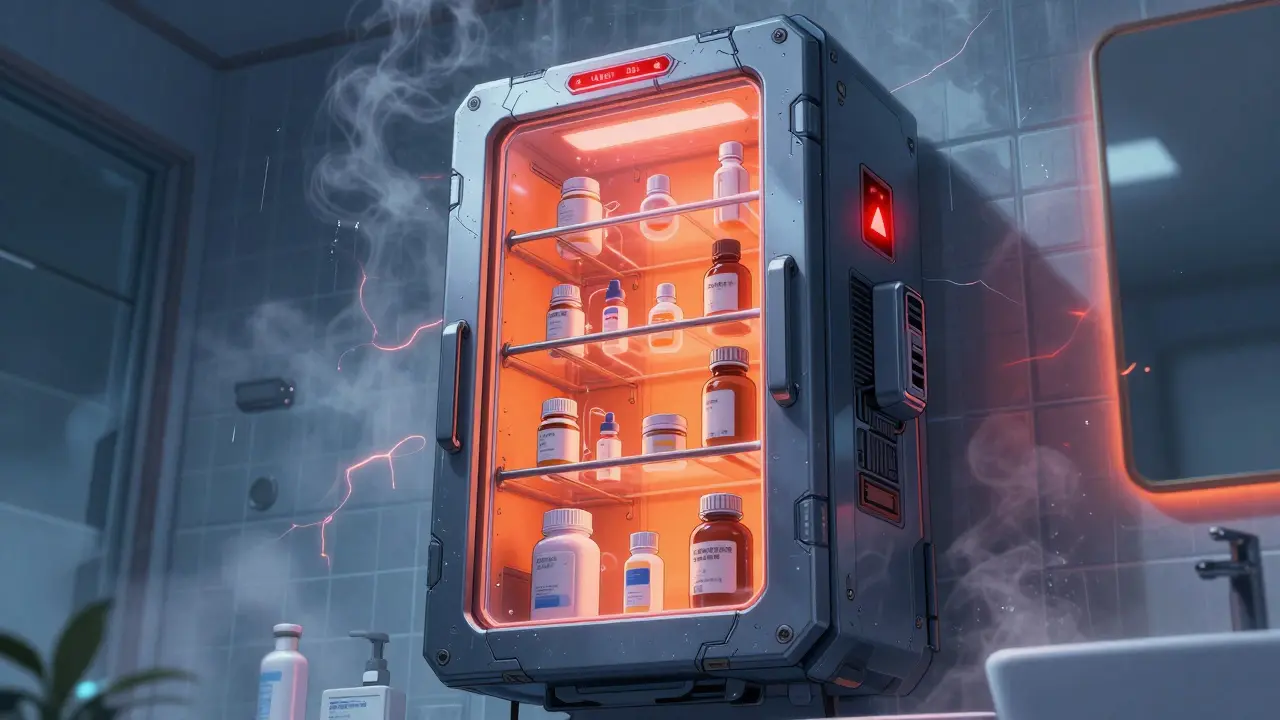
If you’re like many people, your medicine cabinet is mounted above the toilet or sink. This is a critical error. Showers create massive spikes in humidity, often pushing relative humidity levels to 70-90% in the room. Even if the door is closed, the heat and moisture seep in over time.
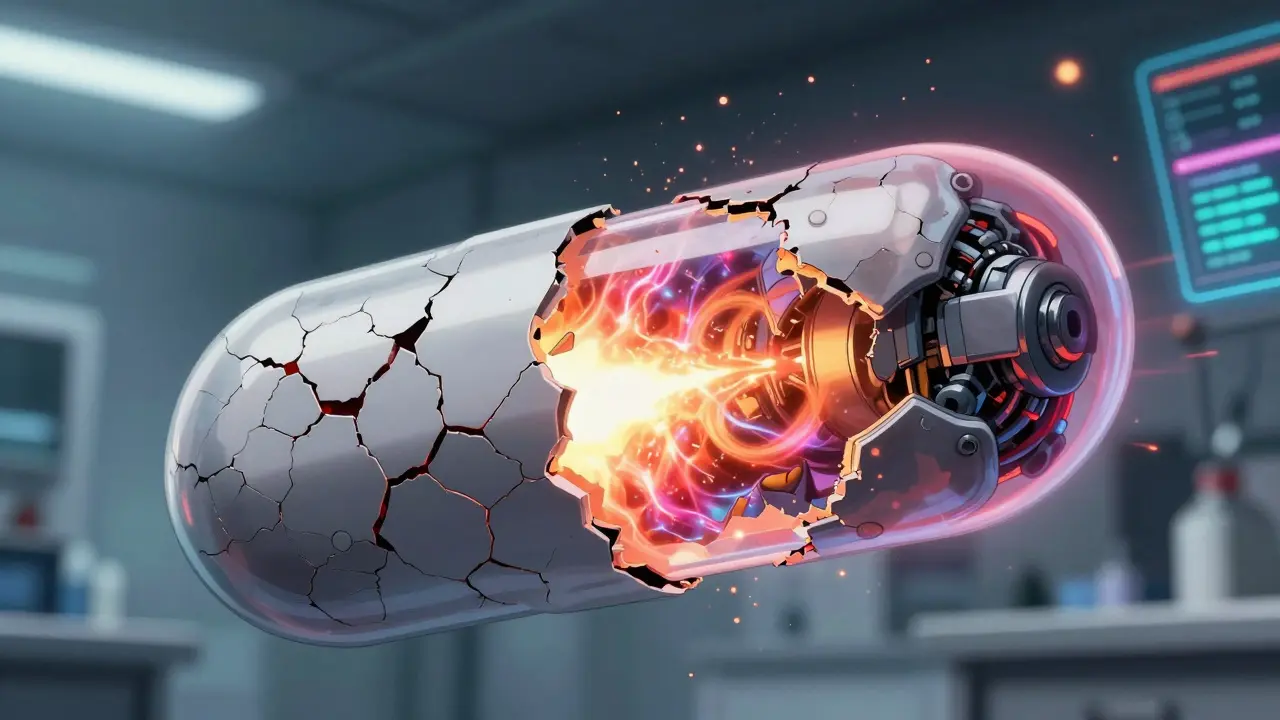
Abby Case, a clinical pharmacy specialist, points out that moisture damages the exterior coating of capsules. This coating isn't just packaging; it controls how the drug is absorbed. In extended-release medications, a compromised coating can cause the entire dose to dump into your system at once-a phenomenon known as "dose dumping." This can lead to toxic side effects rather than steady relief. Conversely, some drugs may simply disintegrate too quickly, rendering them useless before they reach your bloodstream.
Kitchens are equally problematic. Storing meds near the stove, oven, or dishwasher exposes them to temperature swings exceeding 32°C (90°F) and high humidity. The ideal spot is a dark, interior closet away from appliances, where the temperature stays consistent and below 25°C (77°F).
Who Loses Out Most? Vulnerable Medication Types
Not all drugs are created equal. Some are tough as nails; others are incredibly fragile. Knowing which category your meds fall into can save you from serious health risks.
| Medication Type | Stability Level | Risk of Heat/Humidity Exposure |
|---|---|---|
| Insulin | Very Low | Loses up to 20% potency in 24 hours at 37°C (98.6°F). Uncontrolled blood sugar results. |
| EpiPens | Low | Mechanical failure rate of 15-20% above 30°C (86°F). Can fail during anaphylaxis. |
| Inhalers | Low | Propellant expands; risk of explosion above 49°C (120°F). Dose accuracy lost. |
| Nitroglycerin | Low | Rapid decomposition above 25°C. May fail to relieve angina attacks. |
| Antibiotic Suspensions | Medium | Amoxicillin loses 30-40% potency in 72 hours at room temp. Risk of resistance. |
| Solid Tablets (e.g., Ibuprofen) | High | Maintain 85-90% potency up to 40°C for short periods. More resilient. |
Biologics, such as monoclonal antibodies, are proteins. Think of them like egg whites. If you heat an egg white, it turns solid and opaque-that’s denaturation. Once a biologic drug denatures due to heat excursions outside its refrigerated range (2-8°C), it is permanently ruined. There is no way to reverse this process.
Even common thyroid medications are sensitive. Dr. Jneid notes that hypothyroidism drugs should be stored away from light and moisture at temperatures no higher than 86°F (30°C). Failure here can disrupt your metabolic balance, leading to fatigue, weight changes, and heart issues.
The Danger Zone: Cars and Travel
Leaving medication in a car is perhaps the most common mistake people make. On a sunny day, the interior of a parked car can exceed 60°C (140°F) within minutes. This isn’t just uncomfortable; it’s catastrophic for drugs.
If you’re traveling, Patricia Vandercruys from Montreal Children’s Hospital advises taking only the quantity you need for the trip. Leave the bulk supply in a climate-controlled home. For sensitive items like insulin, use specialized cool packs available at pharmacies. Never place ice directly against the vial, as freezing can also destroy certain formulations. The goal is to maintain that sweet spot between 15-25°C (59-77°F).
When flying, keep your meds in your carry-on luggage. Cargo holds are not temperature-controlled and can freeze or overheat, ruining your supply for the duration of your vacation or business trip.
Signs Your Medicine Has Gone Bad
You can’t always taste degradation, but you can often see or smell it. Before taking any medication, do a quick visual inspection. Look for these red flags:
- Color Changes: Tablets that have faded, darkened, or developed spots.
- Texture Issues: Capsules that are cracked, chipped, or stuck together. Tablets that feel unusually hard or crumble easily.
- Odor: A strong vinegar smell indicates aspirin breakdown. Any unusual or chemical scent is a warning sign.
- Liquid Clarity: Suspensions that won’t mix after shaking or show separation that doesn’t resolve.
However, rely on caution more than senses. As Vandercruys warns, "You can't necessarily tell if the medication has been altered." Just because a pill looks fine doesn’t mean it’s potent. If you suspect exposure to heat or humidity, assume it’s compromised and replace it.
Best Practices for Safe Storage
Protecting your health starts with better habits. Here is how to optimize your storage environment:
- Choose the Right Location: An interior bedroom closet or a drawer in a hallway is ideal. Avoid bathrooms, kitchens, and windowsills.
- Keep Original Containers: Blister packs and bottles with desiccants (those little silica gel packets) offer protection. Don’t transfer pills to weekly organizers until you’re ready to take them.
- Control Humidity: Keep caps tightly closed. Consider using a dehumidifier in humid climates if storing large quantities of meds.
- Monitor Temperature: If you live in a region with extreme heat waves, consider a small thermometer in your storage area. If it regularly exceeds 25°C (77°F), move your meds or consult your pharmacist about refrigeration options.
- Dispose Properly: When in doubt, throw it out. Use local drug take-back programs to dispose of expired or damaged medications safely, preventing environmental contamination and accidental ingestion.
The cost of replacing a bottle of medication is far lower than the cost of treating a failed infection, uncontrolled diabetes, or a missed asthma attack. Treat your medicine with the respect it deserves, and it will work for you when you need it most.
Can I put my regular pills in the fridge to keep them safe?
Generally, no. Refrigerators are often too cold and too humid for most solid oral medications. The condensation when you open the door can introduce moisture, leading to degradation. Only refrigerate medications if the label explicitly says "Store in refrigerator" or if your pharmacist instructs you to do so. For most drugs, a cool, dry cupboard is better than a fridge.
Is it safe to take medication past its expiration date?
It depends on the drug and how it was stored. While some studies suggest certain solid tablets retain potency for years past expiration, this is not guaranteed. For critical medications like insulin, nitroglycerin, or antibiotics, never use them past the date. The risk of reduced efficacy or harmful breakdown products is too high. Always follow the manufacturer's guidance.
What happens if my EpiPen gets too hot?
Heat can cause mechanical failure in EpiPens. Research shows a 15-20% failure rate when exposed to temperatures above 30°C (86°F) for extended periods. The epinephrine inside may also degrade. If your EpiPen has been left in a hot car or direct sunlight, replace it immediately. Do not wait for an emergency to find out it doesn’t work.
Why shouldn't I store medicine in the bathroom?
Bathrooms experience significant fluctuations in temperature and humidity, especially during showers. Relative humidity can spike to 90%, which damages capsule coatings and promotes bacterial growth in liquid medications. The heat from hot water further accelerates chemical breakdown. Move your meds to a dry, temperature-stable room like a bedroom closet.
How do I know if my liquid antibiotic has gone bad?
Liquid antibiotics, like amoxicillin suspension, are highly unstable. They often require refrigeration and lose 30-40% of their potency within 72 hours at room temperature. Check for changes in color, odor, or texture. If the liquid separates and doesn’t mix back together after shaking, discard it. Always adhere strictly to the "discard after" date provided by the pharmacy.