
Quick Wins for Lowering Your Pharmacy Bill
Before getting into the heavy-duty software, here are the fastest ways to start saving. If you are in a rush, follow these three steps:- Check your insurance portal first. About 78% of large employers now provide built-in tools that show your specific coverage.
- Search for "therapeutic alternatives." These are different drugs that do the same job but often cost 70% less.
- Verify the price with a quick phone call. Digital estimates are great, but a 30-second confirmation prevents "sticker shock" at the counter.
The Best Tools for Comparing Medication Costs
Not all transparency tools do the same thing. Some are designed to show you what your insurance will pay, while others help you find the cheapest generic version of a drug. Depending on your goal, you'll want to use a different platform.If you are using a standard insurance plan, Optum Rx is a primary resource. By accessing your myCompass account, you can see estimates based on your specific formulary, which prevents the confusion of seeing a "list price" that doesn't apply to you. For those looking for a broader view, Turquoise Health is a powerhouse, processing over 1.2 million queries monthly. It allows you to filter drug and device rates across various payers and providers.
Then there is Rx Savings Solutions (RxSS), which is widely considered one of the most effective pharmacy-specific tools. Unlike a simple search engine, RxSS actively identifies lower-cost alternatives and allows for one-click changes to your prescription. A 2023 case study showed that this platform identified saving opportunities for 83% of its users. If you are looking for a tool that doesn't require an insurance login, FAIR Health offers a standalone consumer portal that helps you understand general pricing trends without needing to share your private policy details.
| Tool Name | Best For... | Key Feature | User Experience |
|---|---|---|---|
| Optum Rx | Plan-specific costs | myCompass Integration | High accuracy for members |
| Rx Savings Solutions | Finding alternatives | One-click prescription changes | Highly effective (4.6/5 stars) |
| Turquoise Health | Market research | Customizable filtering | Data-heavy and comprehensive |
| Healthcare Bluebook | Elective procedures | "Fair Price™" identification | Strong for services, less for drugs |

How to Use These Tools Step-by-Step
To get the most out of these platforms, you can't just type in a drug name and hope for the best. You need a structured approach to ensure the price you see is the price you pay.- Identify Your Gateway: Start with your insurance provider's tool. Since they have your specific deductible and co-pay information, their estimates are usually more accurate than third-party sites.
- Be Precise with Data: Enter the exact medication name, the specific dosage (e.g., 20mg vs 40mg), and the quantity. A small typo in the dosage can lead to a price estimate that is off by hundreds of dollars.
- Compare Three Levels of Pricing: Look at the List Price (the sticker price), the Negotiated Rate (what the insurance company agreed to pay), and your Out-of-Pocket Cost (what you actually pay). Many people make the mistake of only looking at the list price, which is rarely what the patient actually pays.
- Audit Your Alternatives: Use a tool like Rx Savings Solutions to see if there is a generic or a different brand in the same therapeutic class. You might find a drug that is just as effective but costs a fraction of the price.
- The Final Check: Once you find the cheapest pharmacy within a reasonable distance (usually a 10-mile radius), call them. Ask specifically: "I saw a price of $X on [Tool Name]; can you confirm this is the current price for my insurance plan?"
The Trap: List Price vs. Out-of-Pocket Cost
One of the biggest frustrations for users is the "price gap." You might find a tool that says a drug is $10, but when you get to the pharmacy, the bill is $50. Why does this happen? Most transparency tools rely on list prices-the price the manufacturer suggests. However, the real cost is determined by the negotiated rate between the pharmacy and your insurance company. If a tool doesn't have your specific insurance data, it's giving you a general estimate, not a guaranteed price. This is why Dr. Karen Van Nuys of the USC Schaeffer Center has cautioned that overemphasizing list prices can create massive confusion for consumers. Furthermore, some tools don't account for pharmacy discount programs like those offered by GoodRx, while others might not reflect real-time insurance processing delays. To avoid this, always prioritize tools that require an insurance login, as they pull data directly from your policy's specific formulary.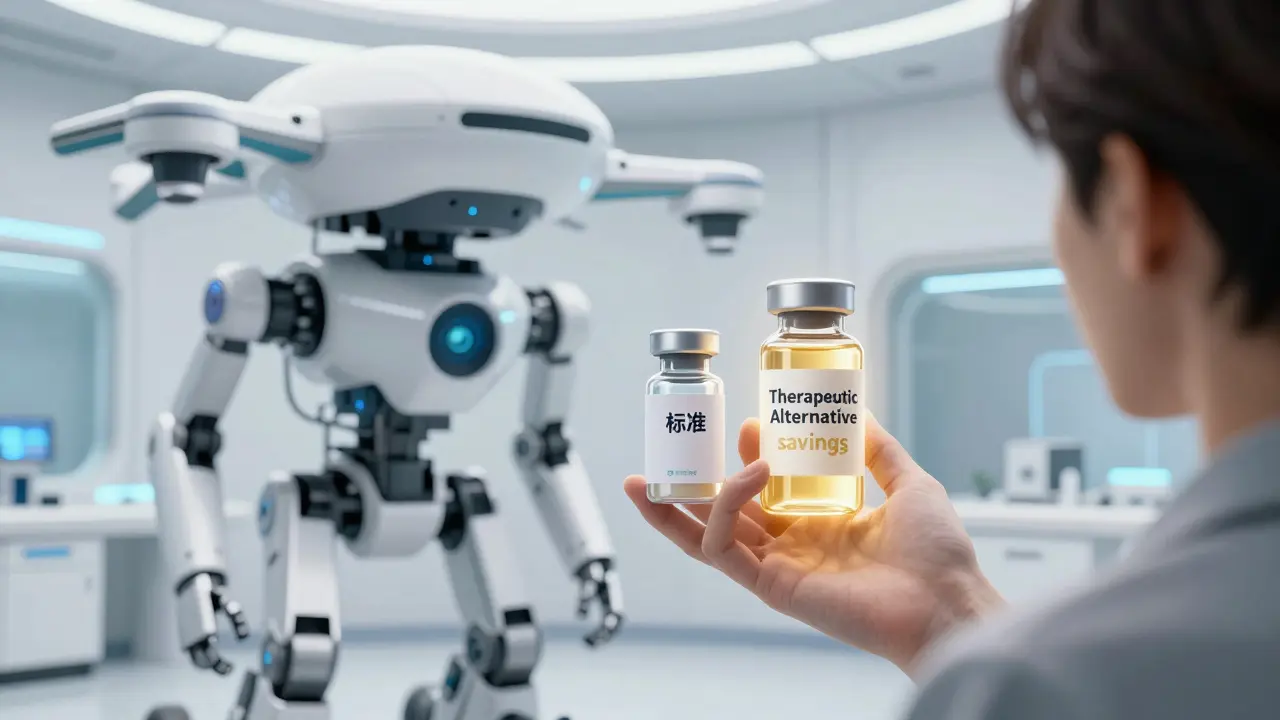
What the Future Holds for Drug Pricing
We are moving toward a world where price shopping for meds is as normal as price shopping for a new TV. The market for these tools is exploding, with projections suggesting it will reach $3.8 billion by 2028. We are already seeing the transition from simple lists to AI-powered predictive modeling. Some companies are piloting tools that can predict price changes before they happen, and there is a push toward blockchain-based verification to ensure the prices listed are 100% honest. By 2026, analysts predict that 90% of prescription purchases will involve some form of comparison tool. This shift isn't just about convenience; it's about financial survival. When patients actively use these tools, they can reduce their costs by 15-20% on average. In some extreme cases, as reported by Kaiser Health News, patients have used these methods to slash invoices from thousands of dollars down to a few hundred.Will my doctor be upset if I ask for a cheaper alternative found on a tool?
Actually, most doctors appreciate it. Using tools like Rx Savings Solutions allows you to bring a specific, lower-cost alternative to your provider. Since these tools often suggest drugs within the same therapeutic class, your doctor can quickly determine if the alternative is safe and effective for your specific medical needs.
Why do different pharmacies charge different amounts for the same generic drug?
Pharmacies negotiate different rates with Pharmacy Benefit Managers (PBMs) and insurance companies. Some pharmacies may have higher overhead costs or different bulk-buying agreements, leading to significant price disparities for the exact same medication.
What is a "machine-readable file" and how does it help me?
A machine-readable file is a massive data set that insurance companies are legally required to publish. While these files are too big for a human to read, price transparency tools "read" them to give you a simple, searchable interface to compare costs.
How much time does it actually take to use these tools?
The first time you use a tool, it might take 15-20 minutes to set up your account and enter your insurance info. However, usability studies show that after about three uses, the process drops to just 5-7 minutes per query.
Are these tools accurate for specialty medications?
Specialty medications are trickier because they often require prior authorization from your doctor. While transparency tools can give you a ballpark figure, they are less accurate for these drugs than they are for standard generics. Always confirm specialty pricing directly with your insurance case manager.
Next Steps for Different Patients
- For those with high-deductible plans: Focus on tools like Turquoise Health or FAIR Health to find the lowest raw price, as you'll be paying most of the cost out-of-pocket anyway.
- For chronic medication users: Set up a recurring check every six months using Optum Rx or RxSS. Drug prices and insurance formularies change frequently, and a drug that was cheap last year might have a cheaper alternative today.
- For those without insurance: Prioritize tools that integrate with discount programs and focus on finding the lowest retail price at local pharmacies within a 10-mile radius.



dallia alaba
April 20, 2026 AT 11:41Checking for therapeutic alternatives is a total game changer for anyone on a tight budget. It's wild how a slight shift in the molecule can drop the price by 70% while doing the exact same thing for your health.
Lynn Smith
April 21, 2026 AT 15:36I totally agree with the part about calling the pharmacy first. I've had so many times where the app said one thing and the cashier said another, so just a quick call saves a lot of stress!
Don Drapper
April 22, 2026 AT 22:56The absolute audacity of the pharmaceutical industry to maintain these arbitrary price gaps is a systemic failure of the highest magnitude. This entire exercise of "price shopping" is a pathetic band-aid on a severed limb, forcing patients to do the clerical work that the government should have handled decades ago. It is an utterly grotesque manifestation of corporate greed masquerading as a free market.
Truman Media
April 24, 2026 AT 11:13It is wonderful to see more tools helping people save money! 😊 Hope everyone stays healthy and happy. 🌟
Shalika Jain
April 25, 2026 AT 00:19Please, as if these basic tools are some kind of revolutionary breakthrough. Anyone with a shred of digital literacy already knows about GoodRx or checking the insurance portal. Calling this a "wave of digital platforms" is just an overblown way to describe a simple search bar. I've been optimizing my drug spend for years without needing a "structured approach" from a blog post. Honestly, the level of hand-holding here is just embarrassing for anyone who actually knows how the system works.
caesar simpkins
April 26, 2026 AT 04:58Man, the part about the 500% price gap is just heartbreaking. It's actually insane that someone's health depends on which side of the street they buy their meds from. That is just a straight-up tragedy in the middle of a modern city.
Mike Beattie
April 27, 2026 AT 16:33The PBM vertical integration is the real issue here. Until we address the rebate traps and the spread pricing mechanisms that incentivize high list prices, these transparency tools are just surface-level noise. You're essentially looking at a filtered output of a rigged algorithmic game where the patient is always the liquidity provider.
Aman Tomar
April 29, 2026 AT 11:59I am truly touched by how much thiz helps poor people who can't afford basic laif saving medicines. The struggle is realy real and seeing these tools give hope is simply overwhelming in a lavely way!
Tokunbo Elegbe
May 1, 2026 AT 04:04The point about precise data entry is so critical!!! One tiny mistake in the dosage and the whole estimate is garbage!!! Be careful people!!!
Bob Collins
May 1, 2026 AT 10:07Seems fair enough. Just keep it simple and call the shop before you head out.
Charlotte Boychuk
May 2, 2026 AT 15:14This is a bit of a wild ride, honestly. Who knew pharmacy shopping was like hunting for a bargain at a thrift store? Just super trippy that we live in a world where you gotta be a detective just to get your pills without going broke. Totally bizarre but hey, gotta do what we gotta do to keep the vibes good and the wallet full.
aman motamedi
May 2, 2026 AT 22:40The provided data is quite comprehensive.
Lucy Kuo
May 3, 2026 AT 15:31It is an absolute triumph of patient advocacy that we are finally seeing these machine-readable files enter the public sphere. The sheer magnitude of the struggle for transparency in healthcare has been a long and arduous journey, yet here we are, witnessing a paradigm shift. By empowering the individual with data, we are not merely saving dollars, but we are restoring a sense of dignity and agency to the patient who has long been a passive recipient of opaque pricing. It is truly a beacon of hope for global healthcare reform that such transparency is now possible. One cannot overstate the emotional weight of knowing a life-saving medication is suddenly accessible because of a digital tool. This is a victory for every single person who has ever felt defeated by a pharmacy bill. Let us embrace this new era of clarity and continue to push for a world where health is a right, not a luxury. The transition to AI-powered modeling will only further this noble cause. We must ensure that no one is left behind in this digital transition. It is a magnificent step forward for humanity.