Imagine forgetting your morning blood pressure pill. Just once. Now imagine doing it three times a week for months. For millions of people managing chronic conditions, this isn't a hypothetical scenario-it's daily life. The World Health Organization found back in 2003 that roughly half of patients with chronic diseases fail to take their medications as prescribed. Today, that problem costs the U.S. healthcare system up to $289 billion annually. But there is a solution sitting in your pocket. Medication reminder apps have evolved from simple alarms into sophisticated digital health interventions that can significantly improve how we manage our health.
If you are struggling to keep up with a complex prescription regimen, or if you care for an aging parent who forgets doses, these tools might be exactly what you need. They do more than just buzz on your phone. They track history, predict interactions, and even connect with your doctor. Let’s look at how they work, which ones actually deliver results, and how to choose the right one for your specific needs.
How Medication Reminder Apps Actually Work
At their core, medication reminder apps are digital health applications designed to send timely notifications and track medication intake via smartphones. However, the technology behind them has matured significantly since the first generation launched around 2012. Modern apps operate on both iOS (requiring version 13.0 or later) and Android (version 8.0 or later), using cloud-based synchronization to ensure your data stays safe and accessible across devices.
The primary function is straightforward: you input your prescriptions, and the app sends push notifications when it’s time to take them. But the value lies in the details. These apps log whether you took the dose, skipped it, or delayed it. This creates a visual history that you can share with your pharmacist or doctor. Some advanced platforms, like Medisafe, a leading medication management platform founded in Israel in 2012, now integrate with electronic health records using FHIR APIs. This means your adherence data can flow directly into your medical chart, giving providers a real-time view of your compliance without you having to manually report it.
Security is also a major component. Reputable apps follow HIPAA compliance standards, using AES-256 encryption for data stored on servers and TLS 1.2+ for data moving between your phone and the cloud. This ensures that your sensitive health information remains private while still being useful for clinical decision-making.
Do They Really Improve Adherence?
Skeptics often ask if a notification on a screen can really change behavior. The data suggests yes, but with nuances. A 2025 systematic review published in JMIR analyzed 14 randomized controlled trials and found that 10 demonstrated statistically significant improvements in medication adherence. Meta-analyses confirm that these apps yield a Cohen's d effect size of 0.40 for adherence improvement. To put that in perspective, this is higher than traditional interventions like motivational interviewing (0.23) or standard educational pamphlets (0.33).
Real-world evidence backs this up. A 2023 study by the National Institutes of Health (NIH) tested Medisafe in federally qualified health centers serving medically underserved populations. Users saw a 43% improvement in medication adherence compared to just 10% in the control group. Participants specifically praised the ability to customize reminders and access drug information instantly. Interestingly, the study noted very low attrition rates, contradicting the assumption that digital literacy barriers would cause users to drop out quickly.
However, effectiveness varies. The NIHR Alert 2023 evaluation noted that while patients using apps were twice as likely to report taking meds as prescribed, five of the nine studies showed only small, non-significant effects. Researchers attribute this variability to patient demographics, the level of personalization in the app, and how adherence was measured. Personalized apps, particularly those using AI to tailor information based on a patient’s beliefs, mood, and disease duration, tend to perform better than generic timers.
| App Name | Key Feature | Best For | User Rating (iOS/Android) |
|---|---|---|---|
| Medisafe | AI-powered predictions, caregiver sharing | Complex regimens, families | 4.7 / 4.6 |
| MyTherapy | Visual tracking, symptom logging | Chronic condition monitoring | 4.6 / 4.5 |
| Round Health | Insurance integration, refill alerts | Patient advocacy, cost savings | 4.8 / 4.7 |
| CareZone | Family dashboard, lab result storage | Caregivers, multi-patient households | 4.5 / 4.4 |
Choosing the Right App for Your Needs
With over 1,200 medication management apps available, choosing the right one can feel overwhelming. The top five apps-Medisafe, MyTherapy, Round Health, CareZone, and Mango Health-account for 63% of downloads, suggesting that market leaders have earned user trust through reliability and features.
If you manage multiple chronic conditions, such as hypertension and diabetes, a general-purpose app might suffice. However, research indicates that condition-specific apps often demonstrate higher efficacy. For example, four of the nine specialized applications reviewed in JMIR 2025 targeted hypertension management specifically. These apps provide tailored educational content relevant to high blood pressure, which can reinforce the importance of adherence beyond just the alarm.
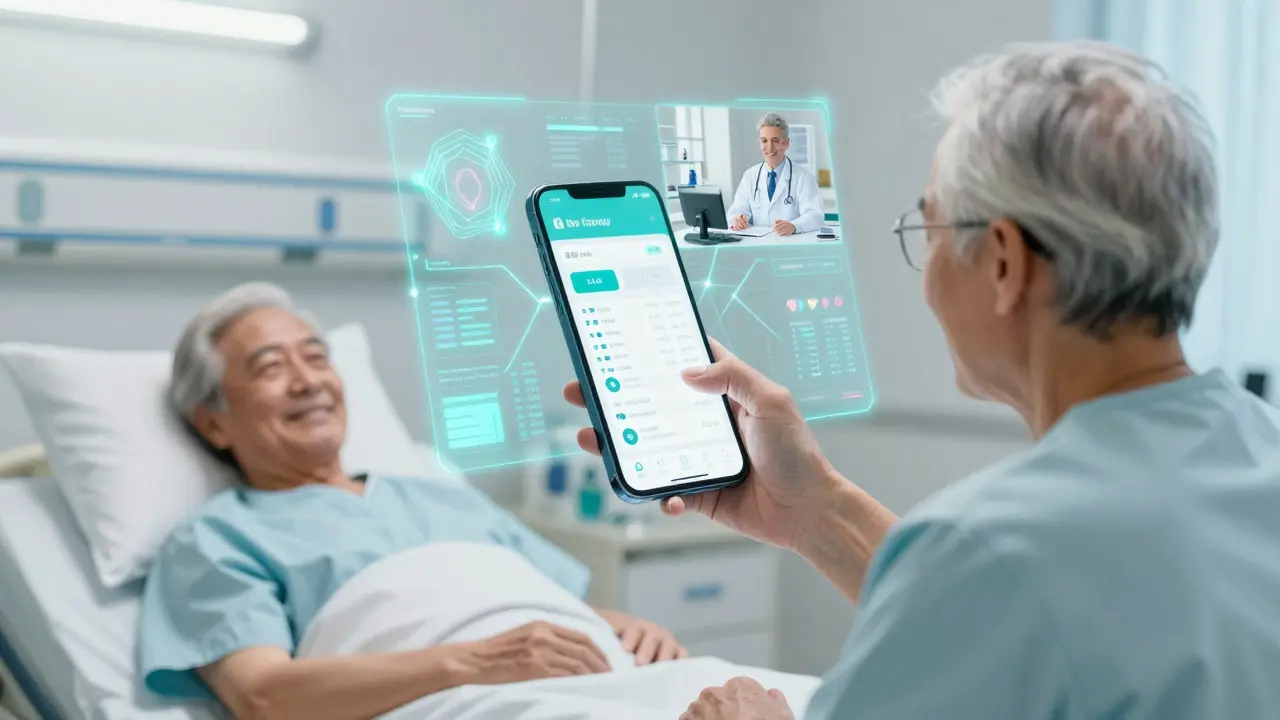
For caregivers, look for apps with robust sharing features. Medisafe and CareZone allow family members to receive alerts if a dose is missed. This is crucial for elderly parents who may live alone. The NIH study highlighted that while social support features didn’t always improve knowledge scores, the peace of mind for caregivers was invaluable.
Consider your tech comfort level. Older adults, who represent only 29% of app users according to the 2024 National Health Interview Survey, may find simpler interfaces less daunting. MyTherapy is often cited for its clean, visual design that makes tracking easy without excessive tapping. If battery life is a concern, note that 23% of negative iOS reviews for some apps cite battery drain. Check recent user feedback before committing.

Implementation Tips for Success
Downloading the app is only the first step. Successful implementation requires a bit of effort upfront. The NIH study documented that medically underserved patients needed an average of 22 minutes for initial setup. Eighty-seven percent could complete this after a single 15-minute training session. You don’t need a trainer, but you do need patience.
- Start Simple: Input your most critical medications first. Don’t try to migrate every vitamin and supplement on day one.
- Customize Notifications: Use different sounds for different meds if possible. Link the reminder to a daily habit, like brushing your teeth, to build routine.
- Enable Interaction Checks: Most top apps warn you if two drugs shouldn’t be taken together. This feature alone can prevent dangerous side effects.
- Share Access: Add a trusted family member or friend as a caregiver contact. Knowing someone else is watching can boost accountability.
- Review Weekly: Set aside ten minutes each week to review your adherence history. Identify patterns where you consistently miss doses and adjust your schedule accordingly.
Interoperability remains a challenge. A Q1 2025 American Medical Association survey found that 41% of healthcare providers reported issues integrating pharmacy systems with these apps. While this doesn’t affect your daily use, it means you might still need to manually show your app history to your doctor during visits until full EHR integration becomes universal.
The Future of Digital Adherence
We are just scratching the surface of what these tools can do. The global medication adherence solutions market is projected to reach $7.3 billion by 2029, driven by innovations in AI and connected devices. Medisafe’s June 2025 update introduced AI-powered adherence prediction, analyzing usage patterns to identify when a user is likely to skip a dose and intervening proactively. Early data shows a 15% improvement in sustained engagement.
Looking ahead, the Digital Medicine Society predicts that 35% of medication reminder apps will incorporate smart pill bottle connectivity by 2027. Imagine a bottle cap that closes automatically if you haven’t taken your pill, or opens only when the timer says it’s time. This hardware-software integration removes the human error factor entirely.
Regulatory landscapes are also shifting. The FDA’s 2023 guidance classifies basic reminder apps as low-risk wellness products, but apps making treatment efficacy claims now require clearance under the 21st Century Cures Act. This means the apps you download today are becoming more rigorously vetted, ensuring higher quality and safety standards.
Despite these advances, the digital divide persists. Dr. Michael Johnson of the American Pharmacists Association cautioned in 2024 that elderly and low-income populations may lack smartphone proficiency or reliable internet access. As we embrace these digital tools, we must ensure they remain accessible to those who benefit most from improved adherence.
Are medication reminder apps free to use?
Most top-rated apps like Medisafe and MyTherapy offer robust free versions with essential reminder and tracking features. Premium subscriptions usually unlock advanced capabilities like unlimited medication lists, detailed analytics, and priority customer support. For most individuals, the free tier is sufficient for basic adherence management.
Can these apps replace my pharmacist's advice?
No. While apps provide excellent reminders and basic interaction checks, they cannot replace professional medical advice. Always consult your pharmacist or doctor for questions about dosage changes, side effects, or new prescriptions. Apps are tools to support, not substitute, professional care.
Is my health data safe in these apps?
Reputable apps adhere to strict security standards, including HIPAA compliance in the U.S. and GDPR in Europe. They use encryption (AES-256) to protect your data. However, always review the privacy policy to understand how data is stored and shared. Avoid apps that sell user data to third parties without explicit consent.
What if I miss a notification?
Most apps allow you to log a missed dose retroactively. This is important because accurate data helps you and your doctor understand adherence patterns. If you frequently miss notifications, check your phone’s permission settings to ensure the app can send background alerts, and consider setting multiple reminders for critical medications.
Do these apps work for mental health medications?
Yes, medication reminder apps are highly effective for psychiatric medications, where adherence is often challenging due to stigma or side effects. Some apps, like MyTherapy, include mood tracking alongside medication logs, helping users correlate their emotional state with their treatment regimen.