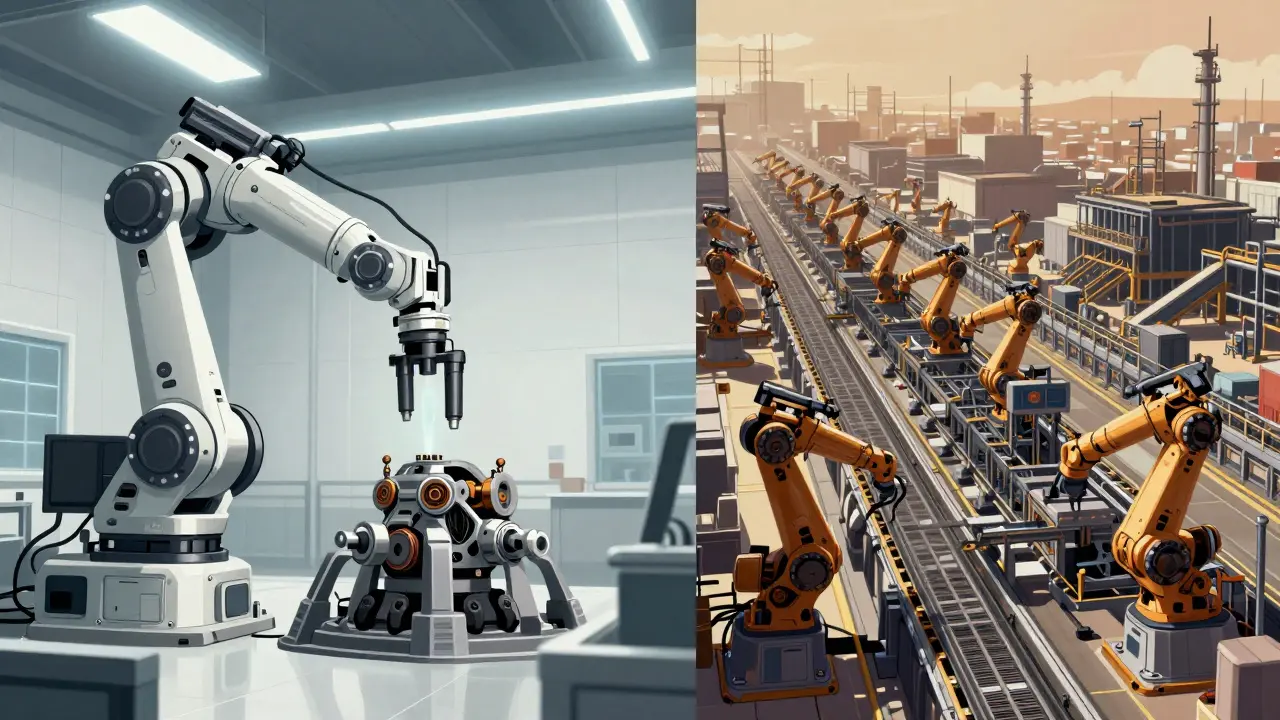
Choosing where to make your product isn't just about finding the lowest price per unit. It's a high-stakes balancing act between your budget, your timeline, and how much sleep you're willing to lose over quality control. While the allure of low labor costs in Asia is strong, the hidden costs of shipping delays and communication breakdowns can eat your margins alive. If you're deciding between a factory in your own backyard and one across the ocean, you need a framework that looks beyond the initial quote to see the total cost of ownership.
The Bottom Line: Cost vs. Control
When you look at the raw numbers, overseas manufacturing usually wins on price. Labor in places like Vietnam or Thailand can be as low as one-tenth of U.S. rates. In fact, electronics produced in Shenzhen often see a 45% cost reduction compared to U.S.-made equivalents. However, generic manufacturing is the production of non-branded, standardized goods or pharmaceutical equivalents that follow a set formula. Because these products often compete on price, that 20-60% lower unit cost can be the difference between a profitable product and a failed launch.
But here is the catch: domestic manufacturing typically costs between $300 and $3,000 more per unit, but it buys you an immense amount of control. You can walk into the factory, check the line, and fix a mistake in real-time. With overseas production, you're often relying on third-party inspectors who charge $300 to $500 per visit-an extra 3-5% cost that many first-timers forget to budget for. If you have a product that requires constant tweaking or a very tight launch window, the "expensive" domestic option might actually be the cheaper one in the long run.
Speed, Lead Times, and the "Shipping Trap"
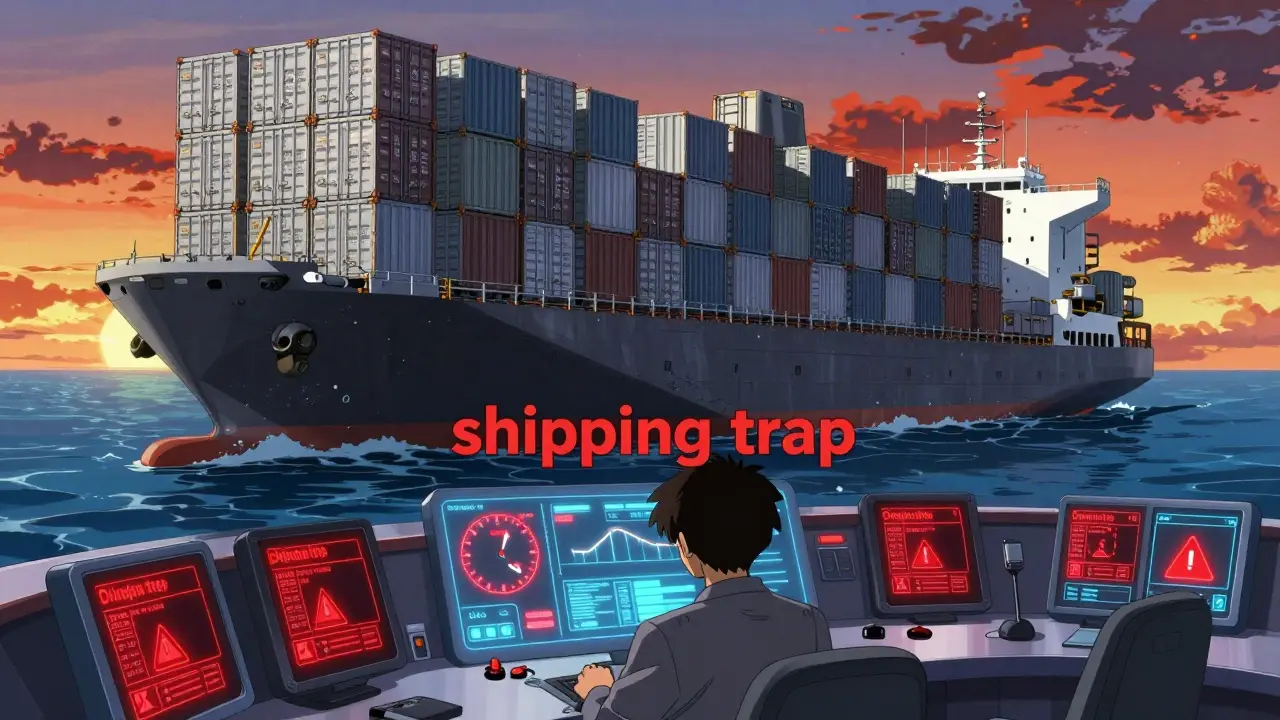
Timing is where the overseas model often falls apart. A domestic run usually takes 45 to 60 days from order to delivery. An overseas order? You're looking at a minimum of three months. That's 45-60 days for production and another 30-45 days for shipping and customs. This is the "shipping trap" that can kill a business. For example, a fashion startup called LuxeThreads saved 52% on production by going to Vietnam, but they missed their entire Q4 holiday window because of an 8-week shipping delay, losing $187,000 in revenue.
If you're in a market that moves fast-like promotional products-domestic is non-negotiable. About 83% of companies in that sector rely on local production because they need orders turned around in under 30 days. When you manufacture domestically, design changes can be made in 3-5 days; overseas, that same change takes 14-21 days because of time zones and language barriers. In a world where trends change weekly, three weeks of waiting for a prototype is an eternity.
| Feature | Domestic (U.S.) | Overseas (Asia) |
|---|---|---|
| Average Lead Time | 45-60 Days | 90+ Days |
| Minimum Order Quantity (MOQ) | 100-500 units | 1,000-5,000 units |
| Labor Costs | High (Baseline) | 1/8th to 1/10th of U.S. rates |
| Design Iteration Speed | 3-5 Days | 14-21 Days |
| Shipping Emissions | Low (62% lower) | High |
Navigating Risk and Intellectual Property
If your product is a generic version of an existing item, IP risk is low. But if you've added a unique twist, moving production overseas increases your risk of product replication by roughly 37%. The legal safeguards in the U.S. are significantly stronger, making domestic production the safer bet for proprietary designs.
Then there's the "hidden" administrative burden. Domestic production is simple: a purchase order and a check. Overseas manufacturing requires a mountain of paperwork: Commercial Invoices, legal documents issued by the seller to the buyer that describe the goods and the price, packing lists, certificates of origin, and potentially FDA or FCC documentation. This adds roughly 15 to 20 hours of admin work per shipment. For a small team, those hours are a real cost.
The Hybrid Approach: A Strategic Middle Ground
You don't have to pick just one. Many mid-sized manufacturers now use a "hybrid model." They produce core, critical components domestically to ensure quality and IP safety, then outsource non-critical, high-volume elements overseas. This strategy is currently used by about 44% of mid-sized manufacturers to balance resilience with cost.
Another growing trend is "nearshoring," specifically moving production to Mexico. This is a strategic compromise. Mexican manufacturing costs are only about 12-15% of U.S. rates, but shipping takes 7-10 days instead of 40. It gives you the cost benefit of overseas work with the speed of domestic delivery. It's essentially the best of both worlds for companies that have outgrown small domestic batches but can't risk the volatility of Asian shipping lanes.

Sustainability and the Modern Consumer
We can't ignore the "green" factor. Domestic manufacturing generates 62% fewer shipping emissions. This isn't just about ethics; it's about marketing. Recent data shows that 68% of consumers are willing to pay a 5-12% premium for products that are locally made. If you can market your product as "Made in the USA," you can often offset the higher production cost by raising your retail price.
However, the gap is closing. Some hubs in Vietnam are now using ISO 14001, an international standard that specifies requirements for an effective environmental management system, certified facilities, which brings the emission gap down to 28%. If you're committed to a global footprint, look for these certifications to ensure your overseas partner isn't a liability to your brand's image.
Is overseas manufacturing always cheaper?
Not necessarily. While the per-unit cost is lower, you must account for "hidden costs" like inventory carrying costs, expedited shipping fees, and third-party quality inspections. For some product categories, the traditional 30% cost advantage has narrowed to just 12-15% once these factors are included.
How do I handle quality control with an overseas factory?
The most effective way is to hire a third-party inspection service. This prevents the "Alibaba disaster" where a company receives a shipment with a high defect rate (sometimes as high as 37%) after the money has already been sent. These inspectors visit the factory and verify the batch before it leaves the port.
What is the 'China Plus One' strategy?
It's a diversification strategy where companies maintain their primary production in China but open secondary facilities in other countries (like Vietnam or India). This reduces the risk of total supply chain failure if one country faces political instability, tariffs, or natural disasters.
Which is better for prototypes?
Domestic is almost always better for prototypes. The ability to make design changes in 3-5 days versus 21 days allows for much faster iteration. While some overseas factories offer small prototype runs at a fraction of the cost, the time lost in communication usually outweighs the savings.
Do tariffs affect the choice between domestic and overseas?
Yes, significantly. Section 301 tariffs on Chinese goods can increase costs by 7.5% to 25% depending on the product. This often erases the labor cost advantage, making domestic or nearshore (Mexico) options much more attractive.
Next Steps for Decision Makers
If you're still unsure, start with a pilot run. If you're a seed-stage startup on a shoestring budget, a small-batch overseas run (e.g., 300 units) can prove your concept without burning through your capital. But once you scale, evaluate your supply chain strategy based on your risk tolerance.
For those prioritizing speed and quality: stick with domestic production or look into nearshoring in Mexico. For those prioritizing sheer volume and the lowest possible unit price: explore the China Plus One strategy to ensure you aren't putting all your eggs in one basket. Regardless of the path, budget at least 120-150 hours of management time if this is your first time importing-it's a steep learning curve that requires mastering HS codes and Incoterms before the first ship leaves the dock.





Sam Hayes
April 5, 2026 AT 06:07nearshoring to mexico is definitely the way to go for most small to mid sized shops because it cuts out the customs nightmare you get with asia while keeping the costs manageable
Lawrence Rimmer
April 5, 2026 AT 16:24The obsession with "efficiency" is just a mask for our collective inability to value patience. We treat supply chains like fast food and then act shocked when the quality is garbage. Who actually cares about a 3-day iteration window when the end product is just another piece of plastic destined for a landfill in six months? It is all just a race to the bottom of a very shallow pool.
The Charlotte Moms Blog
April 7, 2026 AT 05:36The math here is absolutely abysmal!!! Who actually believes a 12-15% margin is enough to cover the risk of a total supply chain collapse??? It is laughable to suggest that "hidden costs" are the only issue when the geopolitical volatility is a complete ticking time bomb!!!
Rob Newton
April 8, 2026 AT 10:15Domestic is overpriced. Overseas is risky. The hybrid model is just indecision disguised as strategy.
HARSH GUSANI
April 10, 2026 AT 03:19India is way better than Vietnam or China for this stuff! 🇮🇳 Our tech hubs are growing and we have the best engineers in the world. Why is everyone always talking about Shenzhen when they should be looking at Gujarat or Bangalore? Stop following the old trends and look at the future! 🚀🔥🇮🇳
Vicki Marinker
April 12, 2026 AT 00:29It is remarkably naive to assume that ISO certifications in Vietnam actually translate to a lower emission gap. The verification process is often a bureaucratic exercise in check-boxing rather than a genuine commitment to the environment. Furthermore, the claim that consumers will pay a premium for domestic goods is largely an urban myth sustained by a few niche marketing agencies. Most people simply buy whatever is cheapest and available, regardless of the flag on the label. The entire premise of "green marketing" in manufacturing is a fragile facade designed to make shareholders feel less guilty about their profit margins. It fails to account for the actual carbon footprint of domestic energy grids which are often just as dirty as the overseas ones. I find the optimism regarding nearshoring equally tedious. Mexico has its own set of systemic instabilities that are conveniently glossed over in these simplistic frameworks. The reality is that global trade is a mess of exploitation and inefficiency, and switching the zip code of your factory does not change the fundamental nature of the beast. One might as well argue that rearranging the deck chairs on the Titanic improves the ship's buoyancy. It is an exercise in futility and a waste of intellectual energy.
Dipankar Das
April 12, 2026 AT 16:13You must realize that the pursuit of excellence requires an aggressive commitment to quality regardless of the origin. It is imperative that entrepreneurs stop seeking shortcuts and instead build robust systems of accountability! Only through rigorous discipline and an uncompromising standard of production can a business truly scale in the global marketplace!
Sakshi Mahant
April 14, 2026 AT 13:04I think it's lovely to see more people considering the human element and the environmental impact. Whether it's in India or the US, finding a partner who respects the workers and the land is what truly matters in the long run. Let's try to find a balance that benefits everyone involved.