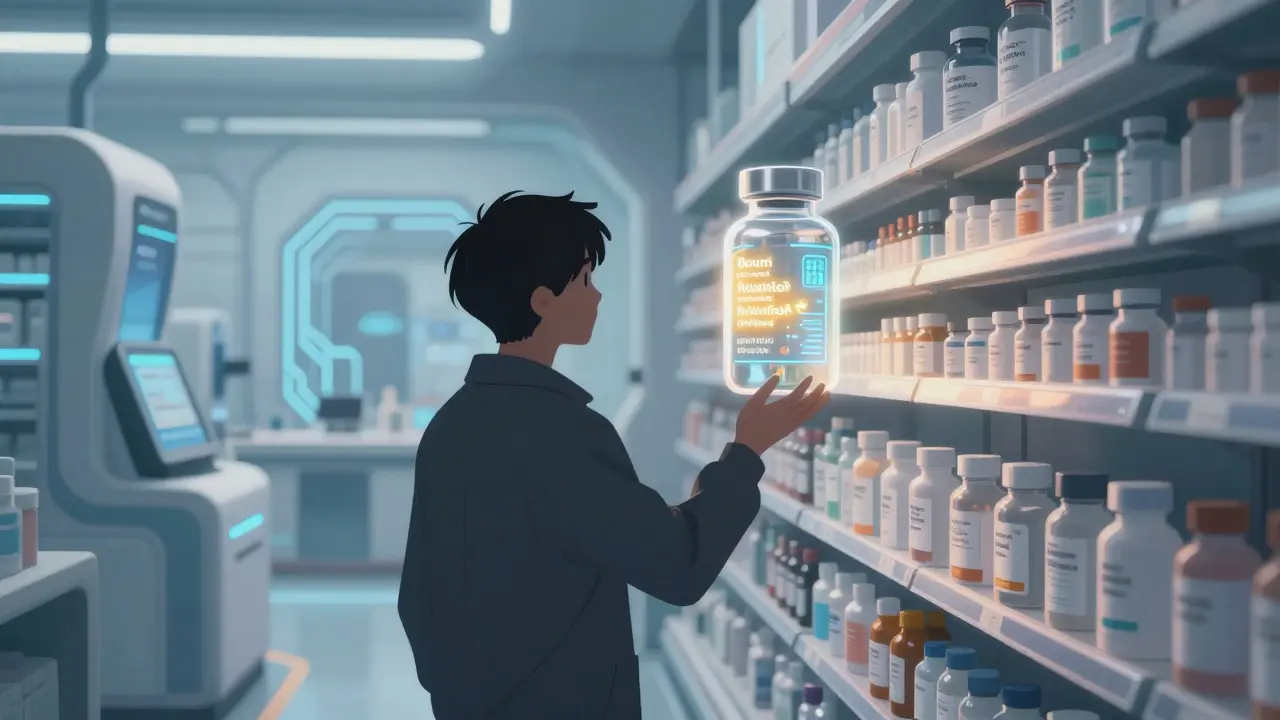
You stand in the pharmacy aisle, staring at the back of a cough syrup bottle. You see a list of chemical names that look more like a chemistry exam than something safe to swallow. One name stands out because you know it treats your cough, but the other ten names are listed under "Other Ingredients." What do they do? Are they safe? And honestly, does it really matter? For most people, the answer used to be a quick "no." But recent science suggests that story is changing.
The distinction between the powerful part of a medicine and the rest of the pill is critical, yet often ignored until something goes wrong. Understanding these components isn't just for chemists; it is essential for anyone managing long-term health conditions, children's medications, or specific dietary restrictions.
What makes a medicine work?
To understand the composition of your pills, you first have to identify the primary agent responsible for the healing effect. In the pharmaceutical world, this is known as the active ingredient. Without this component, the product would essentially be a placebo. Think of it like a car engine. If you put a fancy hood ornament on a vehicle, it looks nice, but nothing happens unless the engine starts.
Active Pharmaceutical Ingredients (APIs) are components of a drug product intended to furnish pharmacological activity or other direct effect in the diagnosis, cure, mitigation, treatment, or prevention of disease. They are the only parts of the medication that directly interact with your body's biology to produce the therapeutic result you paid for. For example, when you take Tylenol for a headache, acetaminophen is the active ingredient blocking pain signals. In prescription cholesterol medications like Lipitor, the active compound is atorvastatin.
The regulatory path for these substances is strict. Agencies like the U.S. Food and Drug Administration (FDA) require extensive proof before allowing an active ingredient onto the market. Developers must show the compound is both safe and effective through rigorous testing phases. Statistically, failure rates exceed 90% during development according to FDA statistics from 2022. This high barrier ensures that the substance doing the heavy lifting has been vetted thoroughly.
The support crew: Inactive ingredients
If active ingredients are the engines, inactive ingredients are the chassis, the tires, and the dashboard. These are substances added to the drug formulation that do not deliver the main therapeutic benefit but are absolutely necessary for the drug to exist in a usable form. Scientists often refer to these as excipients. Without them, modern medicine simply wouldn't function well enough for patients.
Technically, Inactive Ingredients are defined as any component of a drug product other than the active ingredient. They serve structural and functional roles to ensure stability, absorption, and palatability.
Let's break down what is inside that little white tablet you pop in the morning. An active ingredient often weighs only milligrams. Imagine trying to swallow a speck of dust; it is nearly impossible to manufacture or distribute. This is where fillers come in. Substances like lactose or microcrystalline cellulose add bulk, typically making up 50-90% of the tablet weight, giving it enough mass to handle during production.
Beyond size, the pill needs to hold together. Binders such as gelatin or acacia act like glue, keeping the powder compressed. Then there are lubricants like magnesium stearate. Sounds dangerous, but it is used in tiny amounts (0.25-5%) to prevent the powder from sticking to the manufacturing equipment. Finally, you have the coating. Shellac or hydroxypropyl methylcellulose creates a smooth layer that makes swallowing easier and protects the active drug from stomach acid until it reaches the right spot.
| Feature | Active Ingredient | Inactive Ingredient |
|---|---|---|
| Primary Role | Treats or prevents disease | Stabilizes or delivers drug |
| Regulatory Approval | New Drug Application (NDA) | Generally Recognized As Safe (GRAS) |
| Clinical Testing | Rigorous efficacy trials required | Safety history or toxicity data |
| Example | Ibuprofen (Advil) | D&C Red 7 Lake (Coloring) |
The myth of total inertness
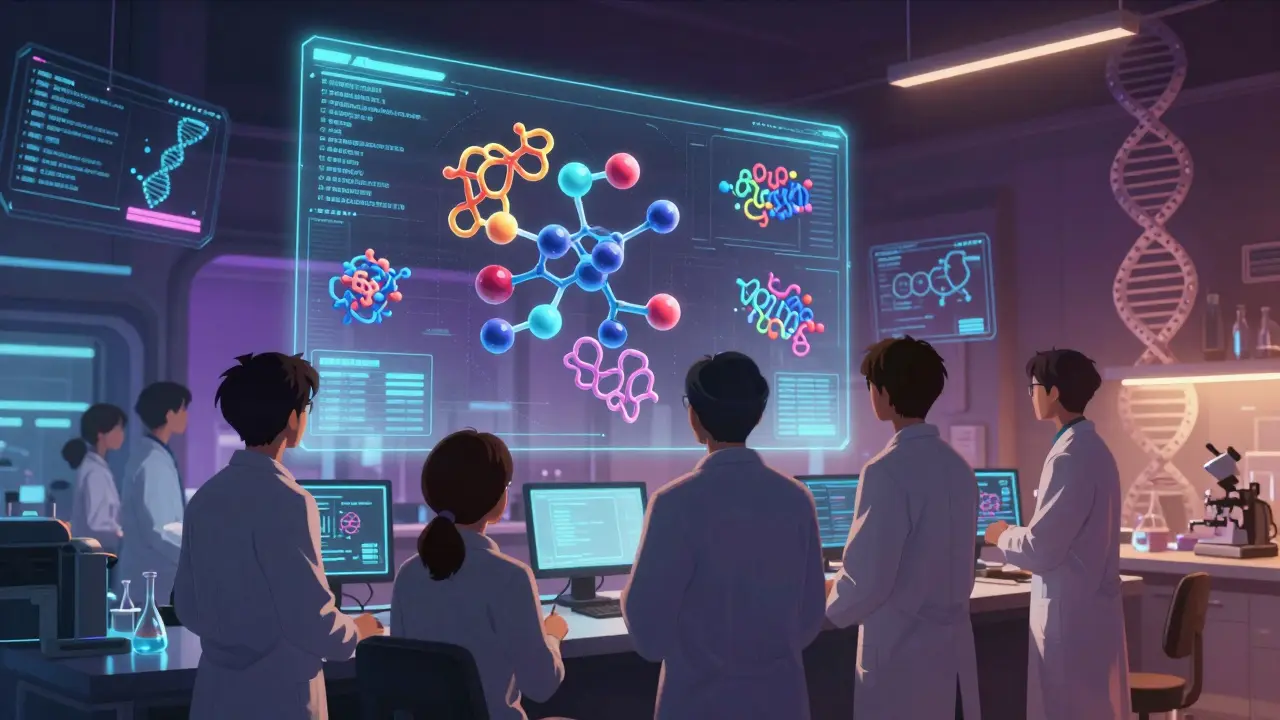
For decades, medical professionals operated under the assumption that these filler materials were biologically inert. They were considered chemically passive passengers. However, recent research challenges this comfortable binary view. A significant study published in Nature in March 2021, led by researchers at the University of California, San Francisco, and Novartis Institutes for Biomedical Research, shook up the industry. Dr. Brian K. Shoichet and his team computationally screened 639 FDA-approved inactive ingredients against over 3,000 human protein targets.
The results were startling. Approximately 14% of the tested inactive ingredients exhibited previously unrecognized biological activity. While they may not cure your headache, some compounds like propyl gallate (a preservative) and D&C Red 7 calcium lake (a color additive) showed significant binding activity. This suggests that the label "inactive" might be scientifically inaccurate for a subset of chemicals. It doesn't mean these medicines are unsafe, but it implies we need to be more precise about how these molecules interact with our bodies over time.

Safety regulations and oversight
So, how does a regulator handle something that changes the definition of itself? The framework dates back to the Federal Food, Drug, and Cosmetic Act of 1938, refined significantly by the Kefauver-Harris Amendments of 1962. These laws established that active ingredients must prove efficacy. Inactive ingredients, however, follow a different track called Generally Recognized As Safe (GRAS).
This pathway relies on historical usage data rather than new clinical trials for every formulation. The FDA maintains an Inactive Ingredient Database updated quarterly. As of late 2023, this database contained information on approximately 1,000 distinct inactive ingredients across 54 dosage forms. While less rigorous than active ingredient approval, the requirement remains that they must be safe at the levels of exposure intended. The FDA acknowledges that adverse reactions occur, citing FAERS data from 2020-2022 which attributes approximately 0.5% of adverse drug reactions specifically to inactive ingredients.
When sensitivities strike
Even a low percentage represents many people. This is where personal health history matters most. Consider lactose intolerance. About 65% of the global population cannot digest lactose effectively. If your blood pressure pill uses lactose as a filler, every time you take it, you might experience unnecessary bloating or gas without realizing the cause.
Allergies also play a massive role. Around 15% of the population has celiac disease or gluten sensitivity. While wheat gluten isn't common in drugs, starches derived from grain can sometimes be an issue. Furthermore, sulfite sensitivity affects 8% of people, often triggered by preservatives in injectable medications. Some patients even react to dyes like tartrazine (yellow 5), which is used to distinguish pills visually.
Dr. Paul Thompson, a clinical pharmacist with Banner Pharmacy Services, explains that inactive ingredients can help your body absorb the active ingredients so they can work properly, but he notes they "often help stabilize the medication in a tablet or capsule." The balance is delicate. A manufacturer must choose excipients that do not trigger reactions while ensuring the drug remains stable on your shelf.
Navigating your medication labels
Practical steps exist for checking your own prescriptions. Over-the-counter medications are legally mandated to list both active and inactive ingredients on the external packaging. Prescription medications provide this information in the package insert, though often hidden deep in the box. The American Society of Health-System Pharmacists reported that 22% of medication switches in 2022 were due to inactive ingredient concerns rather than active ingredient issues. This indicates pharmacists are increasingly aware of these nuances.
Pharmacists play a critical role here. If you have known sensitivities, ask them to check the excipient profile. They can access the FDA's Structured Product Labeling (SPL) system, which requires electronic submission of ingredient information using standardized terminology. This improves accessibility, allowing professionals to quickly verify if a formulation contains problematic agents like benzyl alcohol in intravenous formulations, which has much stricter limits (1mg per dose) compared to oral tablets (50mg per dose).
Future directions in formulation
The landscape is shifting toward more transparency. The FDA launched the Excipient Safety Initiative in 2022, allocating $4.2 million for research into potential biological activities of commonly used excipients. By October 2023, assessment criteria had been updated to require additional testing for certain excipients in high-dose or chronic-use medications. Pharmaceutical manufacturers are adopting "excipient screening" protocols, with 68 of the top 100 companies implementing computational screening similar to the NIH study.
We are moving toward a more nuanced vocabulary. Future labels might replace broad terms like "inactive" with descriptors reflecting actual biological impact or utilize an "activity spectrum" classification system. Artificial intelligence is also entering the picture to predict excipient interactions during early development stages, potentially flagging risky combinations before a pill ever hits the market.
Are inactive ingredients always safe?
Most inactive ingredients are approved under Generally Recognized As Safe (GRAS) guidelines and have a strong safety history. However, recent studies show some exhibit biological activity. While generally safe, individuals with specific allergies or sensitivities (like lactose or gluten) should verify the list.
Why do drugs contain so many ingredients?
Inactive ingredients like binders, fillers, and coatings are essential for the manufacturing process. They give the pill its shape, protect the drug from stomach acid, ensure it dissolves correctly, and prevent machinery from jamming during production.
How can I find out what is in my prescription?
You can ask your pharmacist to review the package insert or use the FDA's Structured Product Labeling system. For over-the-counter products, the label on the bottle usually lists ingredients clearly under the "Drug Facts" panel.
Can inactive ingredients affect absorption?
Yes. Certain surfactants and fillers can significantly change bioavailability. For instance, specific micronized formulations of fenofibrate increased absorption by 35% compared to older versions due to different excipient combinations.
Is the term "inactive" misleading?
Scientific research from 2021 suggests it can be. About 14% of screened excipients showed biological interaction with protein targets. Industry leaders now advocate for replacing truly active molecules with genuinely inert alternatives where possible.