
Key Takeaways
- Bioavailability measures how much of a drug reaches your bloodstream and how fast it gets there.
- Bioequivalence is a comparison showing that a generic drug performs essentially the same as the brand-name version.
- The FDA uses the "80/125 rule" to ensure that the difference in absorption between two drugs is statistically insignificant.
- Most generic drugs are therapeutically equivalent, though some "narrow therapeutic index" drugs require stricter testing.
What Exactly is Bioavailability?
Imagine you swallow a pill. That pill doesn't just teleport into your blood. It has to survive the stomach acid, get absorbed through the intestinal wall, and pass through the liver-which often tries to break it down before it ever reaches the rest of your body. Bioavailability is the rate and extent to which an active ingredient is absorbed from a drug product and becomes available at the site of action. In simpler terms, it's the percentage of the dose that actually makes it into your systemic circulation.
There are two ways scientists look at this. First, there's absolute bioavailability. This compares the drug to an intravenous (IV) injection. Since IV drugs go straight into the vein, they have 100% bioavailability. If an oral pill has 50% bioavailability, it means half the dose is lost during the journey from the mouth to the blood. Then there is relative bioavailability, which compares two different versions of the same drug (like a tablet vs. a liquid) to see which one is absorbed better.
To track this, experts look at two main numbers: Cmax (the peak concentration of the drug in your blood) and the AUC (Area Under the Curve), which represents the total amount of drug your body is exposed to over time. If you change the formula of a pill, these two numbers will likely shift.
Moving from Single Drugs to Bioequivalence
While bioavailability is about one drug, Bioequivalence is a comparison. It is the absence of a significant difference in how a generic drug and a brand-name drug are absorbed. For a generic to be approved, the manufacturer must prove that their version is bioequivalent to the Reference Listed Drug (RLD), which is the original brand-name product.
Think of it as a mirror test. If the brand-name drug creates a specific curve of concentration in the blood over 24 hours, the generic drug must create a nearly identical curve. If the AUC and Cmax of the generic are practically the same as the brand, the drugs are considered bioequivalent. This is the scientific foundation that allows pharmacists to swap drugs safely without needing a new prescription every time.

The 80/125 Rule: How the FDA Decides
The FDA doesn't require the generic to be a 100.0% perfect match-that's statistically impossible due to natural human variation. Instead, they use the 80/125 rule. This means that the 90% confidence interval of the ratio between the generic and the brand drug must fall between 80% and 125%.
Why this specific range? Because human bodies react to drugs in a multiplicative way, not an additive one. A 20% difference in absorption is generally considered clinically insignificant for most medications. For example, if you're taking a standard blood pressure pill, a tiny fluctuation in how fast it hits your peak (Cmax) won't change whether your blood pressure drops or not.
| Feature | Bioavailability | Bioequivalence |
|---|---|---|
| Core Focus | Single drug performance | Comparison of two drugs |
| Primary Question | "How much reaches the blood?" | "Is this generic like the brand?" |
| Key Metrics | AUC and Cmax | Ratio of AUC and Cmax |
| Regulatory Goal | Determine drug dosage | Approve generic substitutes |
When the Standard Rules Aren't Enough
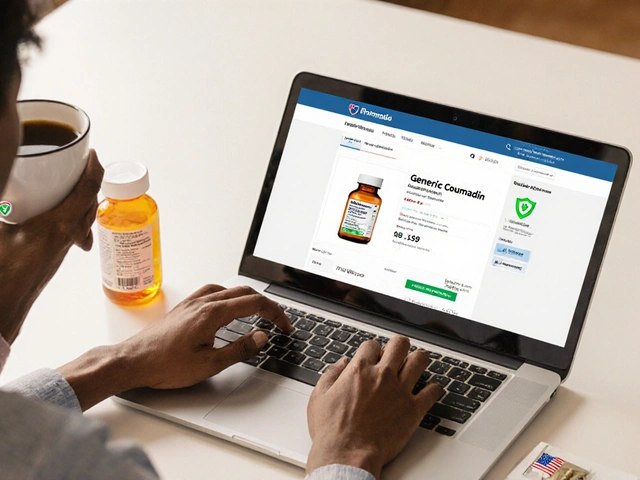
For most drugs, the 80/125 range is plenty. However, some medications are what we call Narrow Therapeutic Index (NTI) drugs. These are medications where a tiny increase in dose could be toxic, and a tiny decrease could make the drug stop working. Think of Warfarin (a blood thinner) or Levothyroxine (for thyroid issues).
For these high-stakes drugs, the FDA tightens the leash. For Warfarin, for instance, the acceptable range for the AUC is narrowed to 90-112%. This ensures that patients aren't swinging between "too much" and "too little" medication when they switch from a brand to a generic. This is why some patients report feeling "off" when switching generics of thyroid meds, even if the drug technically passed the standard bioequivalence tests.

How Bioequivalence is Actually Tested
Testing isn't just a lab experiment with beakers; it involves real people. A typical study uses a crossover design. A group of 24 to 36 healthy volunteers is recruited. Half take the brand drug, and half take the generic. After a "washout period" (to make sure the first drug is completely gone from their system), they switch. Those who took the brand now take the generic, and vice versa.
Researchers draw blood at 12 to 18 different time points over 72 hours to map out exactly how the drug enters and leaves the body. They also have to account for "food effects." Some drugs are absorbed way differently if you've just eaten a high-fat meal. For example, with Voriconazole , high-fat meals can spike the peak concentration (Cmax) by 36%, meaning a separate "fed-state" study is required to ensure the generic behaves the same way under those conditions.
Real-World Impact: Does it Actually Work?
You might wonder if these mathematical ranges actually translate to health. The data suggests they do. In one documented instance, a physician switched over 1,200 patients from brand to generic antihypertensives; only about 1.36% reported any issues, and only a tiny fraction of those were actually caused by the drug itself rather than a placebo effect or a change in how the patient took the medicine.
Still, the system is evolving. As we develop more complex generics-like creams, inhalers, or injectable depots-traditional blood tests (pharmacokinetics) aren't always enough. You can't always measure the concentration of a skin cream in the bloodstream to know if it's working. Because of this, regulators are starting to use PBPK (Physiologically Based Pharmacokinetic) modeling and advanced dissolution tests to ensure that the drug is hitting the target tissue, not just the blood.
Is a generic drug exactly the same as a brand-name drug?
Not exactly. While the active ingredient is the same, the inactive ingredients (fillers, binders, dyes) often differ. Bioequivalence testing ensures that despite these different fillers, the active ingredient reaches your bloodstream at the same rate and extent as the brand-name version.
Why do some people feel a difference when switching to a generic?
This can happen for a few reasons. For some, it's a placebo effect (or "nocebo" effect). For others, especially with Narrow Therapeutic Index (NTI) drugs, even a small difference within the 80-125% range can be noticeable. Additionally, different fillers in generics can cause different side effects in sensitive individuals.
What does the 80/125 rule actually mean?
It means that when comparing the generic to the brand, the statistical confidence interval for the average difference in absorption must fall between 80% and 125%. This ensures that the two drugs are close enough that they will produce the same therapeutic effect in the vast majority of patients.
Can a drug have high bioavailability but not be bioequivalent?
Yes. Bioavailability is a measure of one drug. A generic could have very high bioavailability (meaning it gets into the blood easily), but if the brand-name drug has even higher bioavailability, the two are not bioequivalent because they aren't the same.
How is absolute bioavailability measured?
Absolute bioavailability is measured by comparing the drug's absorption from an oral dose to its absorption when given intravenously (IV). Since IV administration is 100% bioavailable, it serves as the gold standard for comparison.
Next Steps and Troubleshooting
If you are a patient and feel a difference after switching to a generic, don't stop your medication abruptly. Instead, track your symptoms for a week and bring that data to your doctor. Mention specifically if you are taking an NTI drug, as your physician may decide to keep you on a specific brand or request a specific generic manufacturer to maintain consistency.
For those interested in the technical side, the FDA's Bioequivalence Tool is a great resource for understanding how different study designs are chosen based on the drug's properties. If you're tracking a complex drug, look into whether it requires "fed-state" studies, as this often explains why some generics feel different when taken with food.




Simon Jenkins
April 11, 2026 AT 22:10Absolutely typical that we're discussing this as if the 80/125 rule is some kind of gold standard when it's clearly just a convenient compromise for pharmaceutical conglomerates. The sheer audacity of suggesting that a 20% variance is "clinically insignificant" for a wide swath of the population is simply laughable. I've seen firsthand how these "bioequivalent" disasters wreak havoc on patients who actually possess a refined sensitivity to their medication. It is an absolute tragedy that we prioritize corporate efficiency over the meticulous precision that true medicine demands. The systemic failure to acknowledge individual metabolic variance is a crime against science!
Doug DeMarco
April 13, 2026 AT 13:43Interesting read! Always good to see the science broken down like this 😊
Chad Miller
April 14, 2026 AT 00:45pharma companies just want more money and dont care bout the people rly
Rakesh Tiwari
April 14, 2026 AT 03:24Oh sure, because a "statistically insignificant" difference is exactly what I want when I'm trusting a pill with my life. Brilliant system we have here.
Julie Bella
April 15, 2026 AT 18:52I totaly agree that the fillers are the real issue!! My sister tried a generic and broke out in hives because of some random dye they used 😱 it's just so wrong that they don't list every single tiny ingredient more clearly for us! We deserve better transparancy in healthcare!!
emmanuel okafor
April 17, 2026 AT 17:40it is interesting how our bodies are all different and the math tries to make us the same but we are not the same
Camille Sebello
April 18, 2026 AT 01:24Exactly!!! Nature is varied... Math is rigid!!
Sarina Montano
April 18, 2026 AT 17:07The nuance here is really in the excipients. While the active pharmaceutical ingredient (API) is the mirrored image, the delivery vehicle-the binders and coatings-can fundamentally alter the dissolution profile in a way that a standard AUC curve might gloss over. It's like swapping a gourmet cake for a store-bought one with the same amount of sugar; the calories are the same, but the experience and the way your body processes the fats are entirely different. Many people overlook how the pH of the gut can interact with these different fillers, creating a personalized pharmacokinetic dance that varies from person to person. This is why the NTI drugs are such a precarious tightrope walk. When you're dealing with something like Levothyroxine, a microscopic shift in absorption can lead to a cascade of metabolic chaos. I've seen patients fluctuate wildly just because the pharmacy switched the generic manufacturer mid-month. It's not necessarily that the drug is "bad," but that the biological symphony is being played by a different orchestra. The industry is moving toward more sophisticated PBPK modeling, which is a breath of fresh air because it treats the human body as a dynamic system rather than a static beaker. We need to move away from the "average person" metric and toward a more granular understanding of patient-specific responses. Only then can we truly say a drug is a safe substitute. It's a fascinating intersection of chemistry, biology, and regulatory law that often gets oversimplified in patient pamphlets.