
Every year, Americans fill over 3.9 billion prescriptions for generic drugs. That’s nine out of every ten prescriptions written. And yet, these pills and capsules cost only 12% of what brand-name drugs do. The result? A trillion-dollar shield against runaway healthcare costs.
The Real Cost of Generic Drugs
In 2024 alone, generic and biosimilar medications saved the U.S. healthcare system $467 billion. That’s not a guess. It’s from the Association for Accessible Medicines and IQVIA’s January 2025 report. Over the last decade, those savings added up to $3.4 trillion. To put that in perspective, that’s more than the entire GDP of Canada or Australia. And it’s all because of pills that look different but work the same.Here’s how it breaks down: in 2024, patients spent $98 billion on generics. Meanwhile, they paid $700 billion for brand-name drugs - even though brand drugs made up just 10% of prescriptions. That’s a 700% difference in cost for the same treatment. A generic version of Lipitor, for example, costs $4 a month. The brand? Over $200. Same chemical. Same effect. Just no marketing budget.
Why Generics Are So Much Cheaper
The reason is simple: generics don’t need to pay for research, clinical trials, or ad campaigns. The original drug company already did that. Once a patent expires, other manufacturers can step in and make the same medicine. They don’t have to prove it works again - just that it’s the same. The FDA approves them quickly, often in months, not years.This system started with the Hatch-Waxman Act of 1984. It created a legal shortcut for generics while giving brand companies a little extra patent time to recoup their investment. It was a compromise. And it worked. Since then, over 1,145 new generic drugs were approved in 2024 alone - up 7.3% from the year before.
Biosimilars: The Next Wave of Savings
Not all drugs are easy to copy. Biologics - drugs made from living cells, like Humira or Enbrel - are complex. You can’t just replicate them like a pill. But you can make biosimilars: near-identical versions that work the same way.Since the first biosimilar hit the market in 2015, they’ve saved $56.2 billion. In 2024, they saved $20.2 billion in one year. That’s a huge jump. And it’s accelerating. The biosimilar market grew 22.7% last year and is projected to keep growing at that pace through 2029. These drugs are changing the game for cancer, autoimmune diseases, and diabetes - conditions that used to cost tens of thousands per year.
One patient on Reddit shared how switching from a $800 monthly biologic to a $120 biosimilar saved their family from bankruptcy. That’s not rare. It’s becoming standard.
Who’s Saving the Most?
The biggest savings come from the most common chronic conditions. The top 10 generic drugs - treating high blood pressure, diabetes, cholesterol, and depression - saved $216.5 billion in 2024. That’s more than the annual budget of most U.S. states.Some drugs stand out. Metformin for diabetes? A generic version costs under $5 a month. Insulin? Still expensive, but new generics are coming. Lisinopril for high blood pressure? $4. Atorvastatin (Lipitor generic)? $3. These aren’t niche drugs. They’re daily medicines for millions. And when you scale that across the country, the math becomes undeniable.
State by State: The Savings Divide
Savings aren’t spread evenly. California saved nearly $38 billion in 2023. Alaska? Just $600 million. Why? Population. Healthcare access. Pharmacy rules. California mandates pharmacists to substitute generics unless the doctor says no. Texas doesn’t. So California’s generic fill rate is 98%. Texas is at 87%.States with strong substitution laws save more. States with weak rules or pharmacy benefit manager (PBM) restrictions save less. Express Scripts, one of the biggest PBMs, saved $18.3 billion in 2023 just by pushing generics in their formularies. But other PBMs still steer patients toward pricier brands - sometimes because they get kickbacks.
Why Aren’t We Saving Even More?
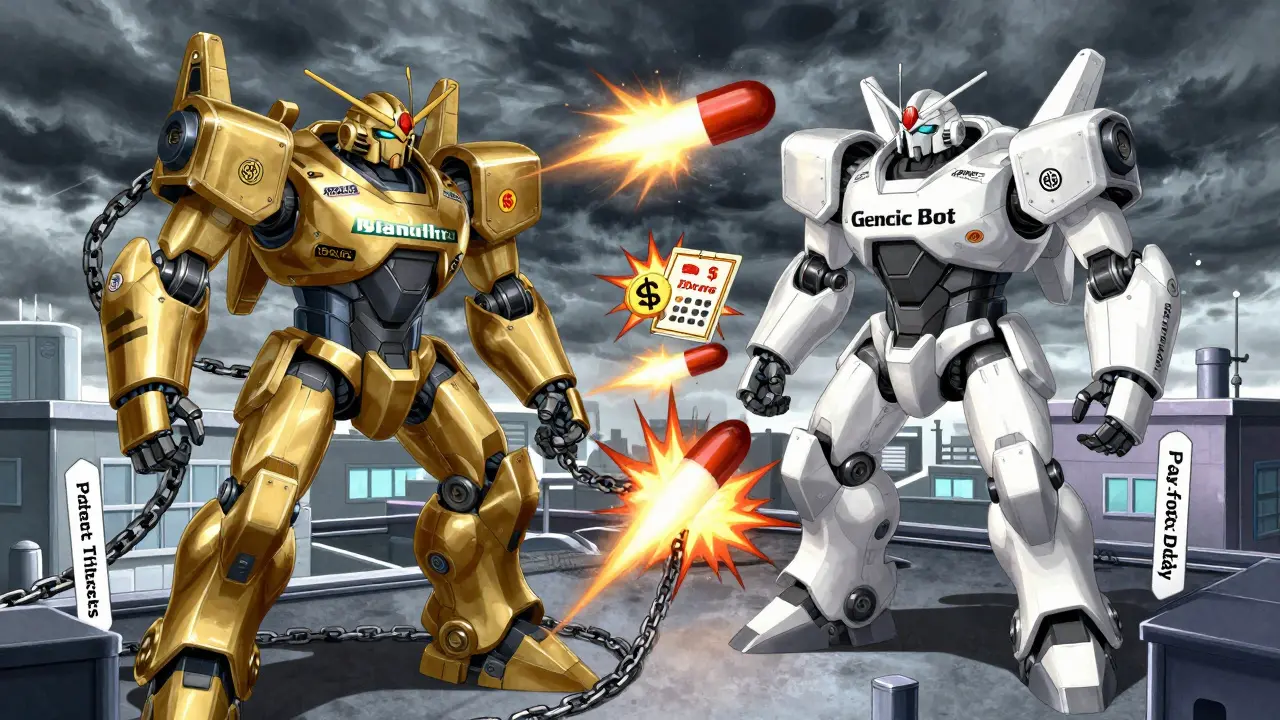
Here’s the problem: Big Pharma isn’t giving up without a fight. They use legal tricks to delay generics. One tactic? Patent thickets. Instead of one patent, they file dozens - on packaging, dosing, delivery methods - anything to extend their monopoly. A 2024 JAMA study found just four drugs used this trick to cost the system over $3.5 billion in two years.Another? Pay-for-delay deals. Brand companies pay generic makers to stay off the market. The Congressional Budget Office says these deals cost $12 billion a year. $3 billion of that comes from Medicare and Medicaid.
Then there’s product hopping. A company makes a tiny change to their drug - say, switching from a pill to a capsule - and gets a new patent. The generic can’t copy it yet. Patients are forced to stay on the expensive version. The CBO estimates ending this practice would save $1.1 billion over ten years.
And don’t forget the administrative barriers. Prior authorization for generics? Up 47% since 2019. Pharmacists now need extra paperwork just to give you the cheaper option. That slows things down. It frustrates patients. And it costs money.
What Patients Really Think
Most people love generics. On Drugs.com, 87% of 15,000 reviews gave generics high marks for cost. But only 63% said they felt the generics worked just as well. Why the gap?Some patients report subtle differences - a pill that doesn’t dissolve the same way, a side effect that feels different. In rare cases, it’s real. But for 99% of drugs, the FDA says generics are bioequivalent. That means they deliver the same amount of active ingredient into the bloodstream at the same rate.
Still, trust matters. If a patient was on a brand for years and switched to a generic, they might blame the new pill for feeling “off.” It’s often psychological. But it’s real to them. That’s why education matters.

The Bigger Picture: Healthcare Spending
The U.S. spent $4.9 trillion on healthcare in 2023. Prescription drugs made up $490 billion of that - about 10%. But brand drugs took up 88% of that $490 billion. Generics? 12%. That’s the imbalance. We’re paying almost seven times more for the same medicine just because of the label.Medicare saved $142 billion in 2024 thanks to generics. Medicaid saved $62.1 billion. That’s money that could go to home care, mental health services, or preventive screenings. Instead, it’s going to pharmaceutical marketing.
What’s Next?
The future looks bright - if we fix the roadblocks. The FDA approved over 1,100 generics last year. Another $24 billion in drug spending is waiting for generic entry by 2025. That includes complex injectables, inhalers, and even some cancer drugs.Legislation like S.1041 - the Affordable Prescriptions for Patients Act - could crack down on patent abuse and add $7.2 billion in annual savings. It passed the Senate committee with bipartisan support. That’s rare these days.
But there’s a warning sign: drug shortages. As of December 2024, 287 generic medications were in short supply. Most are made overseas. And the market is consolidating. The top 10 generic manufacturers now control 63% of the market - up from 51% in 2015. Less competition means less pressure to lower prices.
What You Can Do
You don’t need to wait for Congress to act. Ask your doctor: “Is there a generic?” Ask your pharmacist: “Can you switch me?” Check your Medicare Part D plan - some still push brands even when generics are available. If you’re paying over $10 a month for a drug that has a generic, you’re overpaying.Every time you choose a generic, you’re not just saving money. You’re helping the whole system. That $147 a month you save on one medication? Multiply that by millions of people. That’s how we get to trillions.
The system works - if we let it. Generics aren’t a compromise. They’re the smartest, most proven tool we have to make healthcare affordable. And they’ve already saved more than most people realize.




MARILYN ONEILL
January 20, 2026 AT 14:15Ugh, generics? Please. I once took a generic ibuprofen and felt like my brain was melting. The brand one? Smooth. Like velvet. These people don’t get it-your body knows the difference. It’s not just chemistry, it’s soul.
michelle Brownsea
January 21, 2026 AT 11:36Let us be unequivocally clear: the systemic erosion of pharmaceutical integrity is not merely an economic issue-it is a moral catastrophe. The FDA’s bioequivalence standards are statistically convenient, not biologically sacred. When a patient’s serotonin receptors respond differently to a 2% impurity in a generic SSRI, who bears the responsibility? The pharmacist? The doctor? Or the faceless conglomerate that lobbied for Hatch-Waxman?
And yet-we are told to be grateful. Grateful that our lives are being rationed by cost-per-milligram. Grateful that our insulin, our epinephrine, our antiretrovirals, are now commodities in a warehouse in Mumbai. This is not healthcare. This is commodified survival.
Do you know what happens when a 78-year-old woman switches from brand-name Lipitor to a generic made in a factory with no quality control? She doesn’t just save $196. She loses trust. In science. In medicine. In the system that promised her safety.
And don’t get me started on the “biosimilars.” You think a monoclonal antibody is just a molecule? It’s a symphony of protein folding. One wrong hydrogen bond-and it’s not just ineffective. It’s dangerous. And yet, we call it “equivalent.”
This isn’t saving money. This is gambling with human lives-and calling it innovation.
Roisin Kelly
January 23, 2026 AT 07:45Yeah right. And I’m supposed to believe the FDA isn’t in bed with Big Pharma? You think they don’t get kickbacks? My cousin’s kid got seizures after switching to a generic ADHD med. They buried it. The hospital said it was ‘coincidental.’ LMAO. They’re killing people and calling it ‘savings.’
Glenda Marínez Granados
January 24, 2026 AT 23:52So… we’re celebrating that we’re paying $3 for a pill instead of $200… and calling it a win? 😅
Meanwhile, the guy who invented the drug died broke in 1997. The shareholders? Richer than ever.
Also, the FDA approves generics in months? Bro, they approve a new TikTok filter faster.
shubham rathee
January 26, 2026 AT 02:18Gerard Jordan
January 27, 2026 AT 02:27Love this breakdown. 🙌
My grandma switched to generic metformin and now she’s hiking every weekend. She says, ‘If it works, why pay extra?’
Also, shoutout to pharmacists who actually push generics-they’re the real MVPs.
lokesh prasanth
January 29, 2026 AT 01:57Samuel Mendoza
January 29, 2026 AT 04:04Jerry Rodrigues
January 29, 2026 AT 04:57Stephen Rock
January 30, 2026 AT 17:51Ashok Sakra
January 31, 2026 AT 18:57Andrew Rinaldi
January 31, 2026 AT 21:15It’s fascinating how the same people who scream about corporate greed are okay with outsourcing drug manufacturing to countries with zero regulatory oversight.
We want cheap medicine. But we don’t want to know where it’s made, who made it, or what standards were used.
That’s not progress. That’s denial with a price tag.
Steve Hesketh
February 1, 2026 AT 11:08Brother, this is the kind of truth that changes lives!
In Nigeria, we don’t even have access to these generics. When I saw how much you save here, I cried. Not because it’s cheap-but because it’s *fair.*
If we could get this in Lagos, no one would die from high blood pressure because they couldn’t afford the pill.
Thank you for sharing this. This is justice.
MAHENDRA MEGHWAL
February 1, 2026 AT 20:39It is of paramount importance to acknowledge that the regulatory framework governing generic pharmaceuticals, while ostensibly efficacious, may not adequately account for inter-individual pharmacokinetic variability, thereby potentially compromising therapeutic outcomes in a non-negligible subset of the population.
Furthermore, the geopolitical concentration of active pharmaceutical ingredient manufacturing presents a systemic vulnerability that is not sufficiently mitigated by current policy instruments.