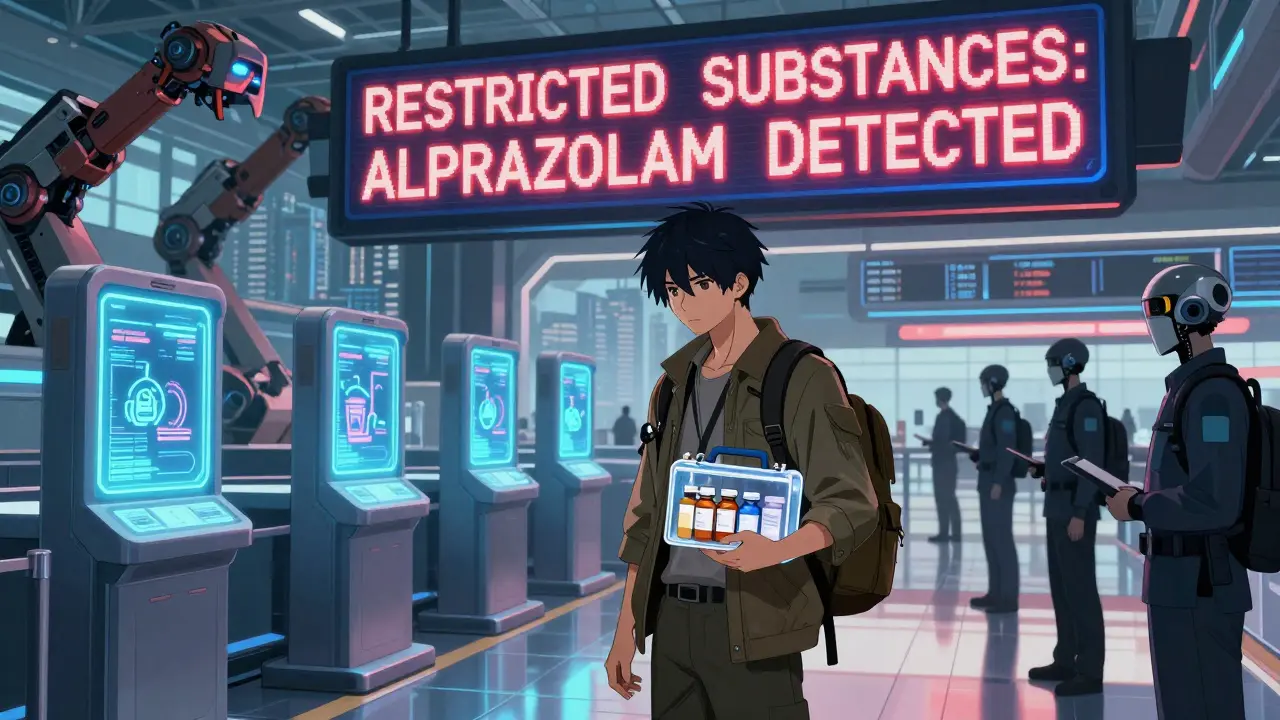
Running out of your medication halfway through a trip isn’t just inconvenient-it can be dangerous. Whether you’re on antidepressants, blood pressure pills, or painkillers, what works at home might be illegal, unavailable, or require paperwork you never heard of overseas. I’ve seen travelers get detained at airports for carrying their own prescriptions, and others forced to skip doses for days because local pharmacies wouldn’t fill their bottles. It doesn’t have to be this way.
Know What’s Allowed Before You Go
Every country has its own rules about what drugs you can bring in, and some are shockingly strict. For example, hydrocodone, a common painkiller in the U.S., is completely banned in Japan. Codeine is sold over the counter in Mexico but needs special permission in Australia. Even something as simple as pseudoephedrine-found in many cold medicines-is illegal in Australia, New Zealand, and the UAE because it can be used to make methamphetamine. In 2025 alone, Sydney Airport seized 387 packages containing this ingredient from travelers.The International Narcotics Control Board (INCB) tracks these rules, but their database only covers 68 countries as of October 2025. That means over 120 countries haven’t published official guidelines. If you’re flying to a place like the UAE, Singapore, or Thailand, don’t assume your meds are okay just because they’re legal at home. Check the embassy website of your destination. Many have dedicated pages for travelers with medical needs.
Carry the Right Paperwork
You can’t just toss your pills into your suitcase and hope for the best. Most countries require three things:- Your original prescription bottle with the pharmacy label showing your name
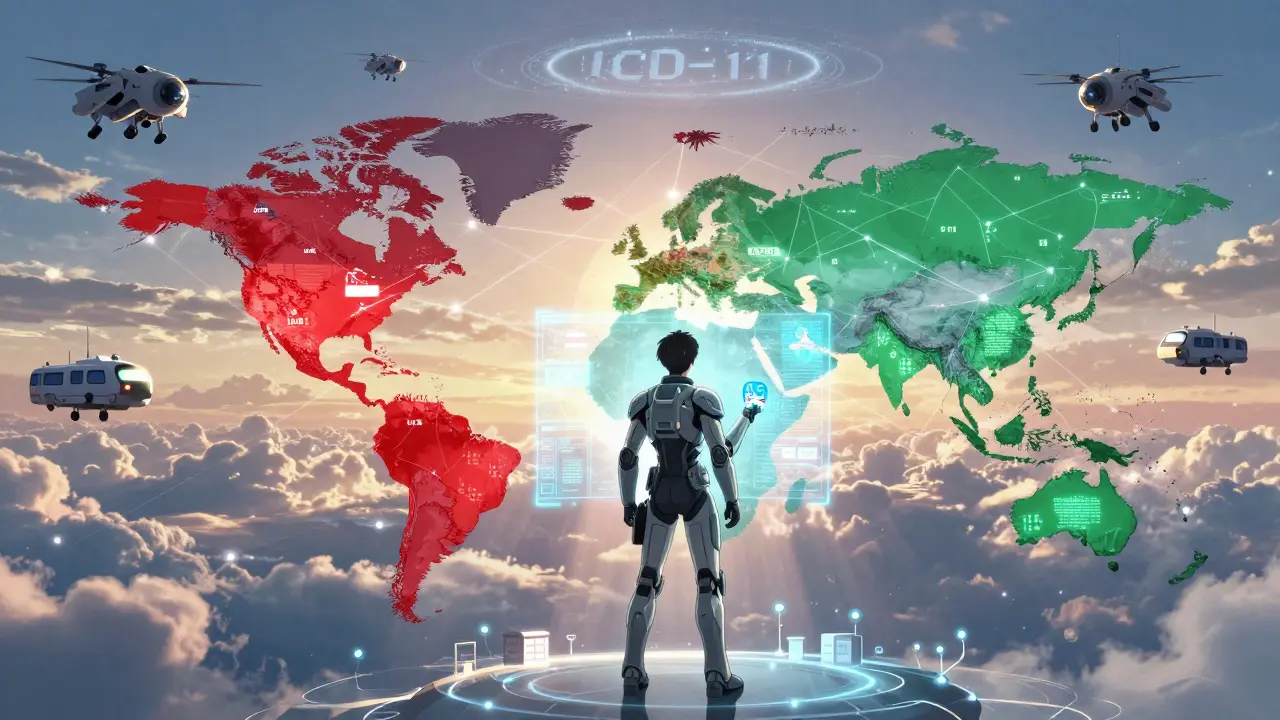
- A doctor’s letter on official letterhead listing your diagnosis (using ICD-11 codes) and the exact medication name, dose, and quantity
- A notarized translation if the country doesn’t use English
Over 97% of countries require the patient name on the prescription to match your passport exactly. That’s why so many people get turned away-their bottle says “J. Smith,” but their passport says “John Smith.” Always use your full legal name on prescriptions. If you’re taking controlled substances like alprazolam, zolpidem, or amphetamine/dextroamphetamine, the letter should also explain why you need it. Some countries, like the UAE, require pre-approval from their Ministry of Health before you even arrive. That process can take weeks.
Quantity Limits Are Real
Most countries allow you to bring in a three-month supply for personal use-that’s the global standard. But Japan limits narcotics to 30 days. Singapore caps it at 14 days. If you’re staying longer, you’ll need to arrange a local prescription. Don’t pack six months’ worth of medication and expect to get away with it. Customs officials aren’t just checking for illegal drugs-they’re looking for signs of trafficking. If you’re carrying 120 pills of a controlled substance, they’ll ask questions.Always keep your meds in their original containers. TSA and most international airports now require this. Even if you’re carrying liquid insulin or injectables, you can bring more than 3.4 ounces if you declare them at security. But if they’re in a plastic bag with no labels, you’ll be asked to throw them out-or worse, detained.
How to Get a Local Prescription Abroad
If you’re staying longer than 90 days-or your meds get confiscated-you’ll need to see a doctor in the country you’re in. This isn’t as hard as it sounds, but it requires planning.First, find a clinic that works with international patients. The International Association for Medical Assistance to Travellers (IAMAT) has a network of over 1,400 verified clinics worldwide. They know how to handle foreign prescriptions and often have English-speaking staff. Bring your original prescription, doctor’s letter, and any medical records. Some countries, especially in the EU, accept prescriptions from other member states. In France, Germany, or Spain, you can often walk into a pharmacy with your German prescription and get your medication filled within hours.
But in places like Malaysia or Thailand, even if you have a valid prescription, certain drugs are outright banned. Benzodiazepines like diazepam and alprazolam are illegal in Malaysia regardless of documentation. In Thailand, you can get most medications with a local prescription-but only if you’re seen by a licensed doctor. You can’t just show up with your U.S. script and expect them to fill it.

What to Do If Your Meds Are Confiscated
If customs takes your medication, don’t argue. Stay calm. Ask for a receipt. Request to speak with a supervisor. Document everything: who took it, when, and what they said. Then contact your country’s embassy immediately. They can’t force the country to return your meds, but they can help you find local alternatives or connect you with a doctor.Many travelers with chronic conditions report being forced to switch treatments. One woman from London lost her sertraline in Dubai and ended up on a different antidepressant that caused severe side effects. She didn’t feel better for six weeks. That’s why preparation matters.
EU vs. Non-EU: A Clear Difference
If you’re traveling within the European Union, you’re in the best position. The EU’s Falsified Medicines Directive lets you use your prescription from one member state in another. Over 98% of prescriptions transfer smoothly. A German patient can get their levothyroxine filled in Italy using the same script. That’s not possible in the U.S., Canada, or most of Asia.The U.S. is one of the worst countries for travelers with controlled medications. ADHD drugs like Adderall are Schedule II controlled substances here-and banned or heavily restricted in over 60 countries. Students studying abroad often end up going without, which affects their focus and mental health. Canada, on the other hand, just passed the Affordable and Safe Prescription Drug Importation Act in 2025, allowing travelers to bring in 90-day supplies from approved countries like the UK and Switzerland.
Top 5 Medications That Cause Problems
These are the drugs that cause the most trouble for travelers:- Alprazolam (Xanax) - Banned in Malaysia, Singapore, UAE
- Zolpidem (Ambien) - Requires pre-approval in UAE, restricted in Japan
- Amphetamine/Dextroamphetamine (Adderall) - Illegal in most of Asia and the Middle East
- Pseudoephedrine - Prohibited in Australia, NZ, UAE
- Codeine - OTC in Mexico, prescription-only in Australia, banned in some African countries
If you take any of these, start planning 3-4 months ahead. Don’t wait until the day before your flight.
Tools That Actually Help
There are services designed to make this easier:- MediFind - Works in 28 countries, helps locate pharmacies that accept foreign prescriptions. Success rate: 85%
- MyTravelMed - Covers 47 countries but only 62% success with controlled substances
- WHO’s 2025 Standardized Template - Coming in 2026, this will be a universal form for controlled medications. Use it early if your doctor offers it.
Also, use the TSA Cares program if you’re flying from the U.S. It gives you priority screening and help with medical items. Call 1-855-787-2227 at least 72 hours before your flight.
What to Pack: The Travel Medication Checklist
Before you leave, make sure you have:- Original prescription bottles with pharmacy labels
- Doctor’s letter with ICD-11 codes, generic drug names, dosage, and quantity
- Copy of the letter (keep it separate from the original)
- Notarized translation if required
- Embassy contact info for your destination
- Phone number of your pharmacy back home (in case you need to verify details)
- Extra 10-15 days’ supply in your checked luggage (in case carry-on gets lost)
Never pack meds in checked bags alone. Always carry them with you. And never, ever transfer pills to pill organizers unless you have a doctor’s note explaining why.
What Happens If You Don’t Prepare?
A 2025 survey of 1,243 international travelers found that 41% experienced medication shortages abroad. Of those, 29% had to change their treatment. People with opioid prescriptions were six times more likely to face problems than those on antibiotics. One man in Thailand ran out of his heart medication and couldn’t get a refill because his doctor’s letter didn’t include the ICD-11 code for hypertension. He spent three days in a hospital waiting room before someone helped him.It’s not just about comfort-it’s about safety. Skipping doses of blood pressure or psychiatric meds can lead to hospitalization. The CDC reports a 22% increase in benzodiazepine-related incidents in 2025, mostly in Southeast Asia and the Middle East.
Final Advice: Plan Early, Stay Calm
This isn’t something you can wing. If you’re taking controlled substances, start planning 8-12 weeks before your trip. Contact your doctor, check embassy websites, and get your paperwork in order. Don’t rely on apps or forums-official sources are your best bet.And if something goes wrong? Stay calm. Ask for help. Your embassy is there for you. And remember: you’re not alone. Millions of travelers face this every year. With the right prep, you’ll get your meds, avoid legal trouble, and keep your health on track-no matter where you are.




Dominic Suyo
December 19, 2025 AT 23:18Let’s be real-this guide is basically a 3,000-word panic attack dressed up as travel advice. I packed my Xanax in a Ziploc because I’m not paying $200 for a notarized letter in French just to get my brain to stop screaming on a flight to Paris. They’re gonna confiscate it anyway. Welcome to global healthcare capitalism, folks.
Kevin Motta Top
December 21, 2025 AT 14:59Good breakdown. The EU reciprocity point is critical-most Americans don’t realize how lucky they are to have that safety net. Outside the bloc? It’s a minefield. Always carry the ICD-11 codes. Always.
Alisa Silvia Bila
December 23, 2025 AT 12:49This is so important. I had a friend lose her lithium in Thailand and ended up in the ER. No one had heard of it. Don’t assume anything. Do the paperwork. It’s boring, but it saves lives.
Marsha Jentzsch
December 24, 2025 AT 03:52Wait-so you’re telling me the U.S. government doesn’t protect its citizens from being treated like drug smugglers just because they take antidepressants?!?!? This is a human rights violation!! They’re literally criminalizing mental health!! And what about the WHO template? It’s coming in 2026?!?!? Why not NOW?!?!? This is why I don’t trust ANY institution!!
Henry Marcus
December 25, 2025 AT 07:47Did you know the FDA and DEA are working with INTERPOL to track travelers with ADHD meds? That’s why they’re banning Adderall in 60+ countries-it’s a psyop to control the population. They want you off stimulants so you’re easier to manage. The ‘ICD-11 codes’? That’s just a front for biometric tracking. Don’t fall for it.
William Liu
December 27, 2025 AT 06:19Preparation is power. I’ve traveled to 47 countries with a chronic condition and never had an issue because I planned 6 months ahead. It’s not hard-it’s just not sexy. But you’ll thank yourself when you’re not in a Bangkok hospital begging for a refill.
Danielle Stewart
December 27, 2025 AT 12:41For anyone reading this and feeling overwhelmed-you’ve got this. Start with your doctor. Get the letter. Check the embassy site. One step at a time. You don’t need to be perfect. Just be prepared. And you’re not weird for caring about your health. You’re smart.
benchidelle rivera
December 27, 2025 AT 21:59This guide is essential. The fact that 41% of travelers experience medication shortages is a systemic failure. Governments, healthcare providers, and airlines must collaborate on standardized global protocols. This isn’t a ‘travel tip’-it’s a public health imperative. And if your doctor won’t give you the ICD-11 letter? Find a new one. Your life depends on it.
Tim Goodfellow
December 28, 2025 AT 23:13Man, I just got back from Bali and my blood pressure med got flagged because the bottle said ‘Lisinopril 20mg’ but my passport had ‘Lisinopril HCTZ 20mg’-they thought I was lying. Turned out the pharmacy label was missing the combo. Lesson? Always double-check the generic name on the bottle matches the doctor’s letter. And bring two copies. Always. And maybe a snack. You’ll need it.
mark shortus
December 30, 2025 AT 13:49Okay so I just got back from Dubai and I had to hand over my Xanax… and now I’m having panic attacks about my panic attacks… I mean, WHAT IS THIS WORLD?? I had a doctor’s letter, I had the bottle, I had the translation… and they still took it. Like, are we living in a dystopian novel?? This isn’t just bureaucracy-it’s psychological warfare.
Elaine Douglass
December 30, 2025 AT 15:48I’ve been traveling with depression meds for 10 years and I’ve learned to just carry extra in my checked bag and hope for the best. It’s not ideal but I’ve never been stopped. Still, I wish it didn’t feel like I’m smuggling something illegal just because I need to feel okay
Takeysha Turnquest
January 1, 2026 AT 10:48Medication is identity. When you lose it abroad, you don’t just lose a pill-you lose yourself. The world doesn’t care if you’re stable. It only cares if you’re compliant. And compliance is a luxury reserved for those who can afford the paperwork. The real crisis isn’t the ban-it’s the assumption that your mental health is negotiable
Laura Hamill
January 3, 2026 AT 04:04THEY’RE DOING THIS ON PURPOSE!! They want us to be sick so we buy more meds from Big Pharma!! And why is the WHO template coming in 2026?? Because they’re waiting for the next pandemic to sell us more surveillance tech!! I’m not flying anywhere until the U.S. stops letting other countries control our medicine!!
Alana Koerts
January 4, 2026 AT 04:09This guide is decent but incomplete. You didn’t mention that some countries require you to surrender your meds for testing before allowing a refill. Also, the ‘success rate’ stats for MediFind and MyTravelMed are cherry-picked. Real users report 30% failure on controlled substances. And you didn’t warn about the 72-hour window for embassy assistance-most people miss it because they’re too panicked to call.