
You stand at the pharmacy counter, the pharmacist hands you a price for your new prescription, and your heart sinks. It is way more expensive than you expected. You've probably heard that there are "generic" versions of most medicines that cost a fraction of the price, but you aren't sure if they actually work as well or how to bring it up with your doctor without sounding like you're compromising your health.
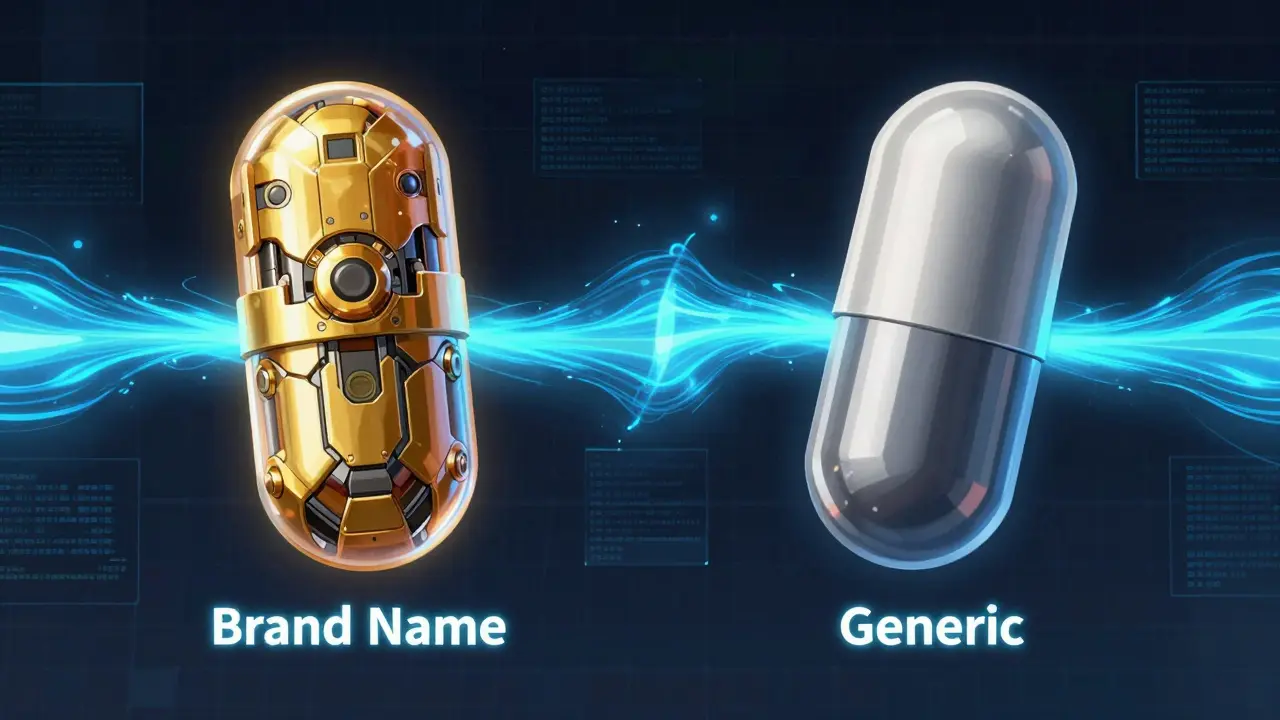
The truth is, for about 95% of medications, the generic version is virtually identical in performance to the brand-name one. Generic drugs are medications that contain the same active ingredients, dosage, and strength as the original brand-name version. They are approved by regulatory bodies like the FDA to ensure they deliver the same clinical benefit. If you're paying a premium for a brand name, you might be paying for the marketing and the original research costs, not for a better medical outcome.
Here is how to navigate that conversation with your healthcare provider to lower your bills without risking your health.
The Quick Strategy: How to Start the Conversation
Timing is everything. If you wait until you're at the pharmacy to realize a drug is too expensive, you're stuck in a loop of calling the doctor's office and waiting for a callback. The best time to talk about generic alternatives is during the actual appointment when the doctor is writing the prescription.
Instead of just asking "Can I get the generic?", try framing it as a goal for your overall care. A more effective approach is to say: "I want the most effective treatment available at the best price. Can we prioritize prescriptions for generic drugs whenever they are medically appropriate?" This tells your doctor that you care about efficacy first, but you're proactive about cost.
If you're already on a brand-name drug and want to switch, bring a simple comparison. For example, some patients have found that brand-name Nexium can cost hundreds of dollars, while the generic version, Omeprazole, might only cost a few dollars for a 30-day supply. Showing this gap makes it a practical financial decision rather than a vague request.
Understanding Bioequivalence: Why Generics Work
A common worry is that generics are "watered down" or lower quality. That's a myth. To be approved, generics must prove Bioequivalence, which means the active ingredient reaches the same concentration in your blood within the same timeframe as the brand-name drug. The acceptable variation is tiny-usually between 80% and 125% of the original's performance.
You might notice the pill is a different color, a different shape, or comes in a different bottle. These are "inactive ingredients" or excipients. While the active chemical is the same, the fillers or dyes can differ. For 78% of people switching common medications like lisinopril or sertraline, the experience is identical. A small number of people might notice a slight difference in side effects due to these fillers, but the core therapeutic effect remains the same.
| Feature | Brand-Name Drug | Generic Alternative |
|---|---|---|
| Active Ingredients | Original Formula | Identical to Original |
| FDA Approval | Rigorous Clinical Trials | Bioequivalence Testing |
| Cost | High (includes R&D/Marketing) | Low (Competitive Pricing) |
| Appearance | Consistent Branding | Varies by Manufacturer |
| Effectiveness | Gold Standard | Therapeutically Equivalent |
When a Generic Isn't the Right Choice
While generics are great for most, there are a few cases where your doctor might insist on the brand name. You should ask specifically if your medication is a Narrow Therapeutic Index (NTI) drug. These are medications where a tiny change in the dose or blood concentration can cause a huge shift in how the drug works-either making it ineffective or toxic.
Common examples of NTI drugs include certain blood thinners like Warfarin, some thyroid medications, and specific antiseizure drugs. In these cases, switching between different generic manufacturers can actually be risky because each manufacturer's version might vary slightly. If your doctor says "Do Not Substitute," it's often because you need the absolute consistency of one specific brand to keep your levels stable.
If your doctor is hesitant to switch you, ask: "Is this a narrow therapeutic index drug, or is there another clinical reason why the brand name is necessary for my specific condition?" This shows you're informed and helps you understand if the cost is a necessary trade-off for your safety.
Practical Questions to Ask During Your Visit
If you aren't sure how to start the conversation, keep these four questions on a note in your phone. They are designed to be direct and professional:
- "Is there a generic equivalent available for this specific medication?"
- "Would it be medically appropriate for me to use the generic version given my history?"
- "Are there any specific reasons I should stay on the brand-name drug for this particular condition?"
- "If a generic isn't available now, do you know if one is expected to enter the market soon?"
By asking these, you're engaging in "shared decision-making." You aren't telling the doctor how to do their job; you're providing them with the financial context they need to make the best prescription choice for your life.

The Role of the Pharmacist
Your pharmacist is your best ally in this process. In many regions, pharmacists are legally allowed to substitute a generic for a brand name unless the doctor has explicitly written "Do Not Substitute" on the script. If you're at the counter and the price is too high, ask the pharmacist if a generic is available and if they can contact your doctor to request a substitution.
Pharmacists often have a better real-time view of which generics are in stock and which ones are covered by your insurance plan. While your doctor knows the science, your pharmacist knows the market. Together, they can help you find the cheapest version of the drug that still does the job.
Are generic drugs less effective than brand-name drugs?
No. The FDA requires generic drugs to be bioequivalent to brand-name drugs. This means they must have the same active ingredients and deliver the same amount of medication into the bloodstream at the same rate. For the vast majority of medications, there is no clinical difference in effectiveness.
Why are generics so much cheaper?
Brand-name companies spend billions on research, development, and marketing. Once the patent for a drug expires, other companies can make the generic version without those massive upfront costs. When multiple companies compete to sell the same generic, prices typically drop by 50% to 95%.
Can I switch from a brand-name drug to a generic at any time?
In most cases, yes. However, you should always consult your doctor first, especially if you are taking medications for critical conditions like epilepsy or thyroid issues, where consistency in the exact formulation is vital.
What if my doctor refuses to prescribe a generic?
Ask them for the specific clinical reason. If the drug is a "narrow therapeutic index" medication, their caution is justified. If it isn't, you can express your financial concerns and ask if there is a different, generic-available medication in the same class that would work just as well.
Do generics have different side effects?
The active ingredients are the same, but the inactive ingredients (like binders or dyes) can differ. A small percentage of people may be sensitive to a specific filler in a generic version, which could lead to a different minor side effect, though the therapeutic action of the drug remains unchanged.
Next Steps for Your Next Appointment
If you have a check-up coming up, don't leave it to chance. Start by listing every medication you currently take and checking if a generic exists using a reputable drug database. Note which ones are costing you the most money. When you sit down with your provider, lead with your desire for both efficacy and affordability. By taking the lead on the cost conversation, you ensure that your treatment plan is sustainable for your budget and your health.




Steve Grayson
April 25, 2026 AT 14:41This is a really helpful breakdown. I've always felt a bit awkward bringing up money with my doctor, but the specific phrasing provided here makes it feel much more natural. It's good to know the science behind bioequivalence too.
Sharon Mathew
April 26, 2026 AT 22:24Absolute nonsense! Who actually believes these giant corporations are just giving us the 'same' stuff for cheaper? It's a total scam to make us feel like we're saving money while they secretly swap out the good ingredients for cheap fillers! I refuse to let some random factory decide my health fate just to save a few bucks!
Nigel Gosling
April 27, 2026 AT 03:43The sheer audacity of the pharmaceutical industrial complex to hold our well-being hostage behind a paywall is practically Shakespearean in its tragedy. We are reduced to begging for the 'generic' crumbs of health, dancing a choreographed ballet of 'shared decision-making' just to avoid bankruptcy. It is a moral vacuum where profit is the only deity. Truly, the human condition has reached a nadir where we must optimize our survival via a bulleted list of questions on a smartphone. How utterly bleak!
Trish Perry
April 28, 2026 AT 06:26It's interesting how we perceive value based on the label. If it's the same molecule, the brand is just a psychological safety blanket for some people. The real question is why the system is designed to make the 'default' the most expensive option in the first place.
prince king
April 28, 2026 AT 07:06Love the positive vibes here! 🌟 Saving money while staying healthy is a win-win for everyone! Thanks for sharing these tips! 😊🙌
Aubrey Johnson
April 29, 2026 AT 22:23Most people simply lack the discipline to manage their healthcare effectively. It is quite basic. If you cannot afford the brand name, you seek the generic. There is no need for an elaborate guide for something so elementary.
Dale Kensok
May 1, 2026 AT 15:39The systemic inefficiency of the PBMs-Pharmacy Benefit Managers-creates a perverse incentive structure that renders this advice almost quaint. We're talking about pharmacokinetic profiles and the AUC (Area Under the Curve) variations that a layman ignores, but the real issue is the algorithmic pricing bias. The bioequivalence standard is a baseline, not a peak. If you aren't analyzing the specific excipient matrix for potential allergenicity or metabolic interference, you're just gambling with a lower-cost variable. It's basic pharmacoeconomics, yet most people treat it like a coupon hunt at a grocery store.
Peter Minto
May 2, 2026 AT 02:15USA pharma is a mess but at least we got the best drugs first!! whoever thinks generics are better is just lyin to thierself lol!! just pay the money and get the real deal!!
Timothy Brown
May 3, 2026 AT 12:46Just go to the pharmacist and tell them you can't afford it. They deal with this every single day and will tell you if there's a cheaper version without you needing a script for how to talk to your doctor.
Michael Yoste
May 4, 2026 AT 09:59I totally get why you'd be nervous about this! It's all about finding that balance and feeling empowered in your health journey. Just trust your gut and your doctor!