
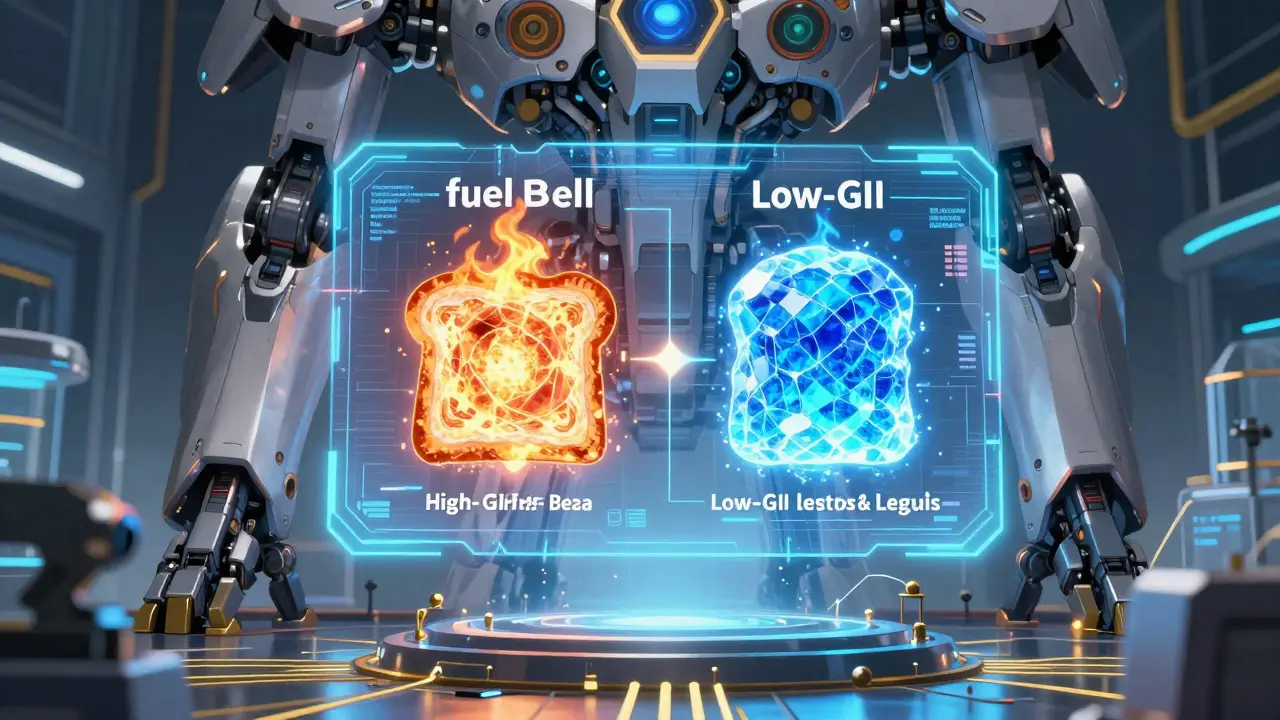
To understand how this works, we first need to look at the tool used to measure it. Glycemic Index is a ranking system (0 to 100) that classifies carbohydrate-containing foods based on how they affect blood glucose levels relative to pure glucose. Developed by Dr. David Jenkins at the University of Toronto, the system helps us distinguish between a "fast" carb (like a corn flake) and a "slow" carb (like a lentil). When you eat a low-GI food, your body digests it more slowly. This prevents the massive insulin spikes that tell your body to store fat and trigger the hunger pangs that lead to overeating.
The Breakdown: Low, Medium, and High GI
Not all carbohydrates are created equal. The GI scale divides foods into three main buckets. If you're aiming for better metabolic health, the goal is to lean heavily toward the low end of this spectrum.
| Category | GI Value | Typical Foods | Blood Sugar Impact |
|---|---|---|---|
| Low | 55 or less | Broccoli, Apples, Lentils, Barley | Slow, steady rise |
| Medium | 56-69 | Oats, Bananas, Basmati Rice | Moderate rise |
| High | 70 or higher | White Bread, Potatoes, Corn Flakes | Rapid spike and crash |
Why does a lentil behave differently than a potato? It usually comes down to fiber and structure. Low-GI foods often have a physical structure that's harder for enzymes to break down, or they contain healthy fats and acids that slow the emptying of the stomach. For instance, the fiber in Legumes (like chickpeas and beans) acts as a barrier, slowing the absorption of sugar into your bloodstream.
Does it Actually Help with Weight Control?
This is where the debate gets heated. If you look at the hormones, the logic is sound: lower insulin levels generally make it easier for your body to access stored fat for energy. Dr. David Ludwig from Harvard suggests that by reducing insulin secretion, a low-GI approach can actually increase your daily energy expenditure by 50 to 100 calories. When you aren't crashing, you aren't hunting for a snack at 3 PM.
However, science shows that calories still matter. The DIETFITS trial, a massive study funded by the NIH, found that people on low-GI diets didn't lose significantly more weight than those on high-GI diets over a year when total calories were similar. In other words, if you eat 3,000 calories of low-GI almonds, you're still going to gain weight. The real "win" for weight control is satiety. Low-GI foods keep you full longer, which naturally leads many people to eat fewer calories without feeling deprived.
Managing Blood Sugar and Metabolic Health
While the weight loss evidence is mixed, the impact on blood sugar is undeniable. For anyone dealing with Type 2 Diabetes or prediabetes, the Low-GI diet is a powerhouse. Research published in Nutrients indicates that this approach can significantly lower hemoglobin A1c levels-a key marker of long-term blood sugar control.
By reducing post-meal glucose peaks by as much as 30-40%, you reduce the strain on your pancreas. This doesn't just help with diabetes; it also lowers cardiovascular risk. The Academy of Nutrition and Dietetics has noted that these diets can help reduce LDL cholesterol, the "bad" kind that clogs arteries. It's a systemic upgrade for your heart and your metabolism.
The "Low-GI Trap": Pitfalls to Avoid
One of the biggest mistakes people make is assuming that "Low GI" equals "Healthy." This is a dangerous assumption. Consider this: chocolate cake and ice cream often have lower GI values than a baked potato because the high fat content slows down the absorption of sugar. You wouldn't want to build a diet around cake just because it doesn't spike your sugar as fast as a cracker.
Another tricky part is how you prepare your food. The GI value isn't fixed; it changes based on your cooking methods. For example, pasta cooked al dente (firm) has a lower GI (around 45) than pasta that is overcooked and mushy (GI 65). Similarly, a green, unripe banana has a GI of about 30, but once it turns spotted and sweet, that number jumps to 51. The more processed or "broken down" a food is, the faster it hits your bloodstream.
Practical Steps for Switching Your Plate
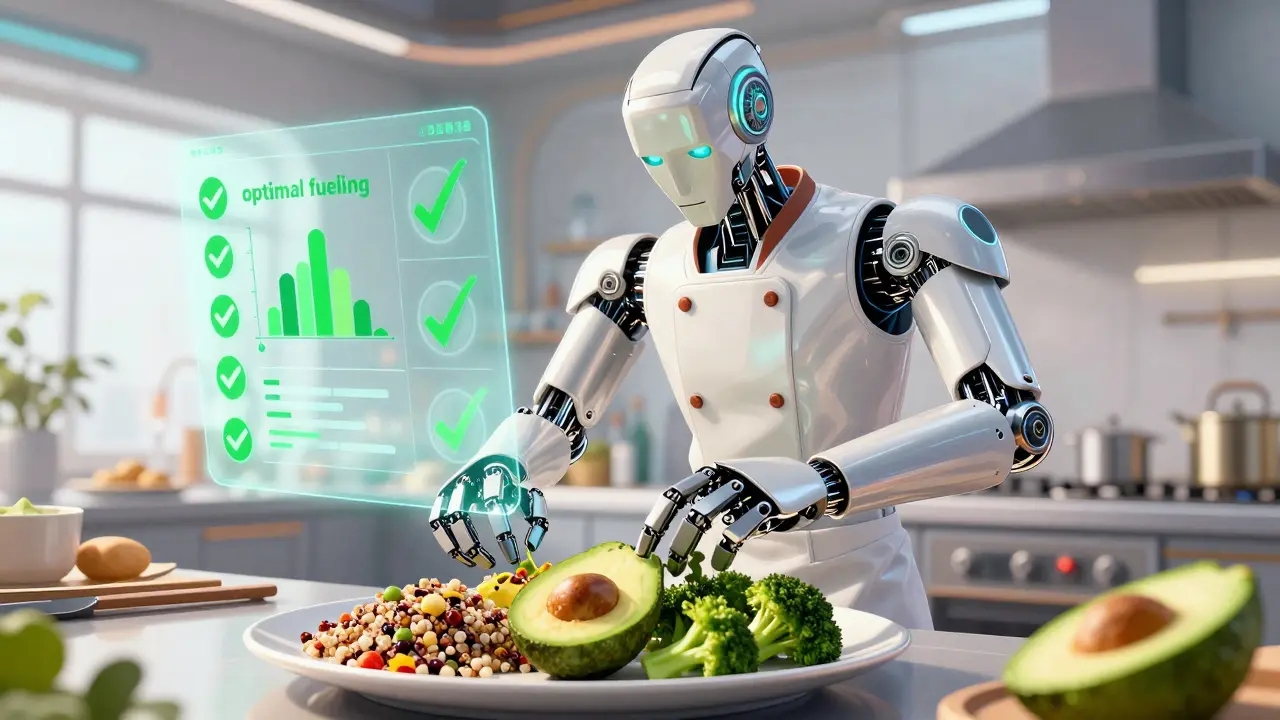
You don't need to carry a GI chart in your pocket to make this work. The goal is to make smart substitutions that satisfy your cravings without the crash. Start with your staples and swap them one by one.
- Swap White Rice for Barley or Quinoa: Instead of standard white rice, try barley (GI 25) or quinoa. You get more protein and a much slower glucose release.
- Choose Whole Fruits over Juices: An apple (GI 36) is far better than apple juice. The fiber in the whole fruit slows the sugar absorption.
- Rethink Your Bread: Move away from white loaves (GI 75) and toward sprouted grain or heavy rye breads.
- Add "Buffers": If you do eat a high-GI food, pair it with a healthy fat or protein. Adding avocado or olive oil to a potato dish lowers the overall glycemic load of the meal.
Most people find that after about two to four weeks, they stop thinking about the numbers and start recognizing the patterns. You'll begin to notice which foods leave you feeling energized and which ones make you sleepy after lunch. That's your body's internal GI meter at work.
The Future: Personalized Glycemic Responses
The most fascinating discovery in recent years is that we all react to carbs differently. A study from the Weizmann Institute found that two people can eat the exact same piece of bread, and one person's blood sugar will spike while the other's barely moves. This is why some people thrive on oats while others feel sluggish.
We are moving toward a world of personalized nutrition. New research in Nature Medicine shows that using machine learning to predict individual responses can improve dietary outcomes by 25% over standard guidelines. Until we all have real-time glucose monitors, the best strategy is to use the general Low-GI guidelines as a starting point and then tweak them based on how you actually feel.
Is a Low-GI diet the same as a Low-Carb diet?
No. A low-carb diet focuses on reducing the total amount of carbohydrates you eat. A Low-GI diet focuses on the type of carbohydrates. On a Low-GI diet, you can still eat plenty of carbs-like beans, lentils, and berries-as long as they are slow-digesting varieties.
Can I lose weight if I eat only low-GI foods?
Not necessarily. Weight loss depends on your total caloric balance. However, low-GI foods generally keep you full longer, which makes it easier to stick to a calorie deficit without feeling hungry all the time.
Do I need to track the exact GI number of every food?
Not at all. It's more practical to follow general rules: choose whole grains over refined ones, eat whole fruit instead of juice, and load up on non-starchy vegetables. The American Diabetes Association suggests focusing on whole food sources rather than meticulous counting.
Are there any risks to a Low-GI diet?
The main risk is focusing on the GI number while ignoring overall nutrition. For example, some high-fat processed foods have a low GI but are not healthy. Always prioritize nutrient-dense foods like vegetables and legumes over processed low-GI options.
How does cooking time affect the glycemic index?
The longer you cook starchy foods, the more the starch breaks down, making it easier for your body to digest and raising the GI. For example, al dente pasta has a lower GI than pasta that is cooked until soft.





Christopher Cooper
April 5, 2026 AT 15:32The section on personalized glycemic responses is absolutely fascinating. It really puts into perspective why some of us struggle with foods that others find perfectly healthy. I've always suspected that my body reacted differently to oats than my partner's, and seeing the Weizmann Institute research mentioned here validates that feeling. It makes the whole approach to nutrition feel much less like a one-size-fits-all formula and more like a personal experiment in wellness. I wonder how quickly the machine learning tech mentioned will actually become available for the average person to use in their daily life!
Jitesh Mohun
April 6, 2026 AT 23:03stop overthinking numbers and just eat real food
beans and greens win every time stop making it complex
Jay Vernon
April 8, 2026 AT 00:59I love the tip about adding avocado to potatoes! 🥑 That sounds like a yummy way to stay healthy. Thanks for sharing! 😊✨
Grace Lottering
April 9, 2026 AT 14:33The NIH studies are probably funded by the big sugar lobby anyway. Don't trust the official numbers.
Ethan Davis
April 10, 2026 AT 16:53Exactly. The whole GI scale is just a way to keep us confused while they sell us processed low-GI junk. Total scam.
Victoria Gregory
April 10, 2026 AT 17:05It is so interesting to think about how our bodies are just mirrors of what we put into them... 🌿 Maybe the focus shouldn't be on the index but on the harmony of the meal! ✨ I love the idea of listening to your own internal meter... it feels so mindful and grounded! 🌸
Michael Flückiger
April 11, 2026 AT 18:05This is such a great starting point for anyone looking to improve their health!!! You can absolutely do this!!! Just one small swap at a time and the results will be amazing!!! Keep going!!!
Timothy Burroughs
April 12, 2026 AT 02:45typical academic nonsense talking about 100 calories here and there while the real american diet is crumbling
this is why we need a total overhaul of our food system now not some fancy chart from toronto
dwight koyner
April 13, 2026 AT 01:46From a clinical perspective, the emphasis on the glycemic load-rather than just the index-is a critical distinction. When patients focus solely on the GI value, they often overlook the total quantity of carbohydrates consumed, which can lead to suboptimal glycemic control. It is also worth noting that the inclusion of protein and healthy fats, as mentioned in the buffers section, effectively lowers the overall glycemic response of a meal by slowing gastric emptying. This is a highly effective strategy for those managing insulin resistance.
Rupert McKelvie
April 13, 2026 AT 19:04Spot on. Simple swaps like quinoa instead of white rice make a massive difference in how you feel by the afternoon.
Laurie Iten
April 15, 2026 AT 15:48the idea that a potato is an enemy just because of how it is cooked is a strange way to view nature
it is more about the intention and the balance than the number on a scale
Vivek Hattangadi
April 15, 2026 AT 22:19I totally agree with the points made here! As someone who helps others with their fitness journeys, I always tell my clients that satiety is the real key to long-term success. When you aren't fighting hunger every two hours, the diet becomes a lifestyle rather than a chore. I've seen so many people transform their energy levels just by switching to lentils and chickpeas. It's all about finding those sustainable wins that make you feel great throughout the day!
Srikanth Makineni
April 17, 2026 AT 00:29too many details
just eat veg and walk more
Jamar Taylor
April 17, 2026 AT 14:09Let's get after it everyone! Swap those white carbs for the good stuff and feel that energy surge! You've got this! Power through your day with the right fuel and crush those goals!