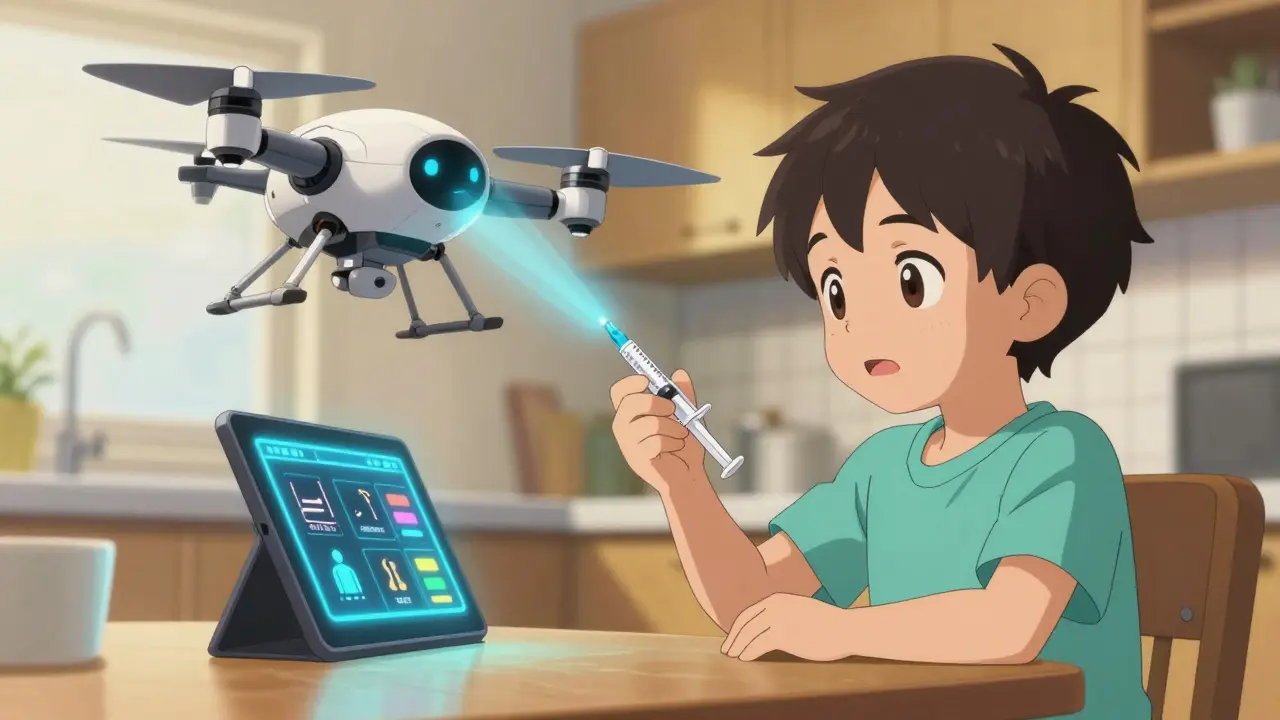
When your child starts a new medication, you’re not just giving them a pill or a liquid-you’re stepping into a new routine full of unknowns. Maybe they’re on antibiotics for an ear infection, or a cough syrup that makes them drowsy, or even a new ADHD medication that’s left them unusually hyper. Side effects are common, and while many are mild, some can be scary. The good news? Most can be managed safely at home-if you know what to look for and what to do.
Know the Most Common Side Effects
Not every reaction means something’s wrong. Some side effects are expected, even normal. According to data from Children’s Hospital of Philadelphia, about 42% of kids on medication get an upset stomach, 28% get diarrhea, and 19% feel unusually sleepy. Rashes show up in 23% of cases. These aren’t rare. They’re part of the process. But here’s what you need to watch for: pediatric medication side effects can look different than in adults. A child’s liver and kidneys are still developing, so they process drugs differently. A drowsy adult might nap; a drowsy toddler might be hard to wake up. A hyperactive adult might talk more; a hyperactive child might run around nonstop for 45 minutes without stopping. Documenting these behaviors helps your doctor decide if it’s a reaction or just a phase.Track Everything-Even the Small Stuff
Don’t rely on memory. Keep a simple log. Write down:- Time and date of each dose
- How much was given (use a 1mL oral syringe with 0.1mL markings-never a kitchen spoon)
- Any symptoms that appear, even if they seem minor
- What your child ate or drank before or after
- How they behaved-sleep patterns, energy levels, mood
Handle Gastrointestinal Reactions Right
Upset stomach, nausea, vomiting, or diarrhea are the most frequent complaints. If your child vomits once or twice, don’t panic. Wait 30 to 60 minutes, then start giving small sips of oral rehydration solution-5 to 10mL every 5 minutes. Don’t rush. Too much too fast can make it worse. For ongoing diarrhea or stomach upset, try the BRAT diet: bananas, rice, applesauce, and toast. These are easy on the gut. Avoid dairy, sugary drinks, and fried foods. Keep fluids coming. Dehydration is the real danger here. Look for dry lips, fewer wet diapers, or no tears when crying. If they haven’t peed in 8 hours, call your pediatrician.Recognize Allergic Reactions-Act Fast
Not every rash is an allergy. But if your child develops hives that cover more than 10% of their body, their face swells, their lips turn blue, or they start wheezing or breathing faster than 30 breaths per minute (over age 1), this is an emergency. Call 911 immediately. If your child has a known allergy or has been prescribed an epinephrine auto-injector (like an EpiPen), use it right away. Don’t wait to see if it gets worse. Epinephrine saves lives. Even if symptoms improve after the shot, you still need to go to the ER. Reactions can come back.
Stop Antibiotics Early? Don’t.
This is one of the biggest mistakes parents make. If your child is on antibiotics and starts feeling better after two days, it’s tempting to stop. But stopping early causes treatment failure in 29% of cases, according to Children’s Healthcare of Atlanta. Bacteria don’t die all at once. The first few days kill the weakest. The rest need the full course to be wiped out. If side effects like diarrhea or vomiting are making it hard to finish the prescription, talk to your doctor. They might suggest a probiotic or switch to a different antibiotic. Never skip doses or stop early on your own.Store Medication Like a Pro
Accidental overdoses are the leading cause of pediatric poisoning. The CDC says 60,000 kids end up in emergency rooms every year from medication mistakes. Most happen at home. Follow the rule: keep them up and away. Store all medications-prescription and OTC-in locked cabinets at least 1.5 meters (5 feet) high. Never transfer pills or liquids into unmarked containers like perfume bottles or candy jars. That practice increases poisoning risk by 41%, according to a study from Children’s Hospital Los Angeles. Keep medicines in their original bottles with child-resistant caps. These caps are tested to be 92% effective at keeping kids under 5 out. And check storage temperatures. About 73% of pediatric liquid meds need refrigeration. The rest should stay at room temperature (20-25°C / 68-77°F). Heat and moisture ruin them.Use the Right Tools for Dosing
A kitchen teaspoon is not a medical dose. A tablespoon is three times bigger. That’s not a mistake-that’s a dangerous overdose. Research shows 78% of parents confuse these measurements. The FDA now requires dosing cups with both metric and imperial markings, but many older bottles still don’t have them. Always use a syringe. Buy one with 0.1mL increments. It’s cheap, accurate, and easy to clean. If your child hates the taste, ask your pharmacist about flavoring options. Many pharmacies offer cherry, grape, or bubblegum additives for liquid meds.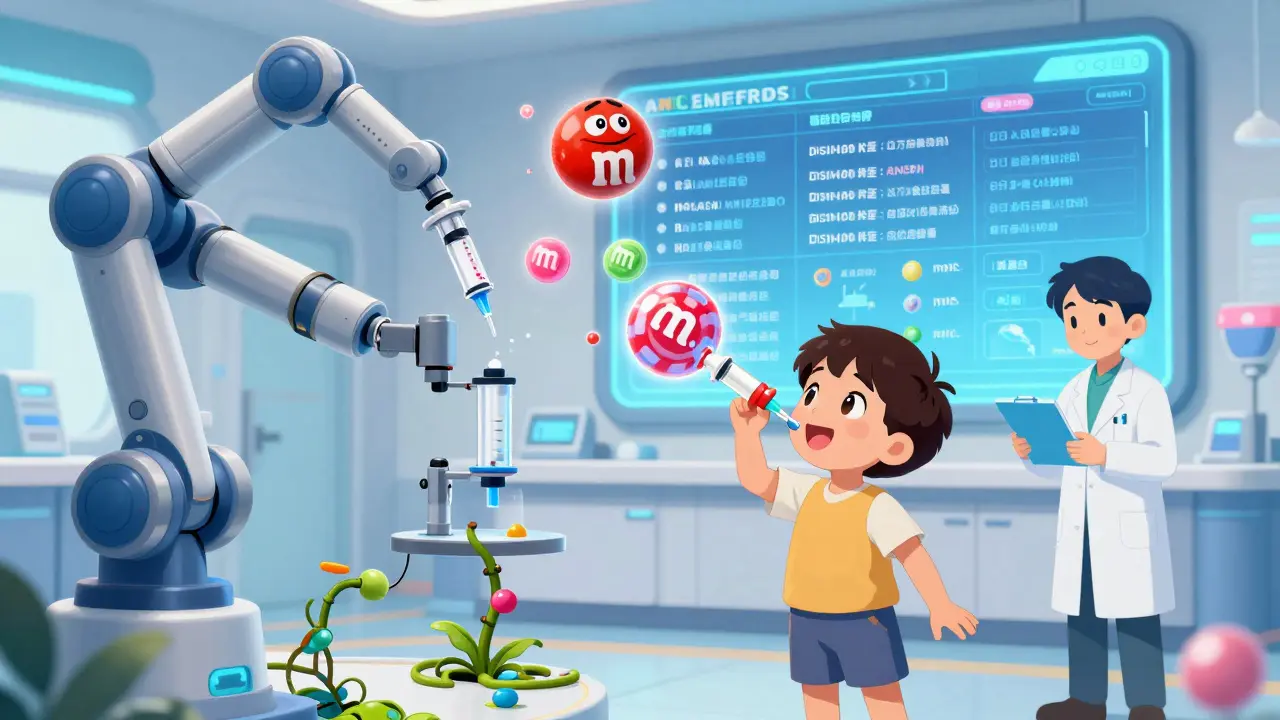
What to Do When You’re Unsure
You don’t have to guess. Call your pediatrician. But know when to wait and when to act. Call your doctor right away if your child has:- Persistent vomiting (more than 3 times in 24 hours)
- Fever over 102°F (38.9°C)
- Difficulty breathing (more than 40 breaths per minute for infants)
- Unusual drowsiness or trouble waking up
- Seizures or convulsions
Use Technology to Help
New tools are making home management easier. Apps like MedTrak Pediatric let you scan medication barcodes to confirm the right drug and dose. One trial showed a 68% drop in dosing errors. You can also set reminders for doses and log side effects directly in the app. Another simple trick: take a photo of the medication label before giving the dose. It’s a quick way to double-check the name, strength, and instructions. Early studies show this reduces wrong-medication errors by 44%.What’s Coming Next
The future of pediatric medication safety is promising. The FDA is working on a new law that would require all medications to have child-specific dosing instructions and side effect labels by 2027. Right now, only 62% do. That’s changing. Researchers are also testing genetic tests that can predict which kids are more likely to have bad reactions to certain drugs. In trials, this method caught 73% of severe side effects before they happened. It’s not widely available yet-but it’s coming. In the meantime, your vigilance is the best protection. You’re not just managing side effects-you’re keeping your child safe, one dose at a time.What should I do if my child spits out their medicine?
If your child spits out or vomits the medicine right after taking it, wait 15 to 20 minutes, then give the same dose again. If they spit it out more than 30 minutes after taking it, don’t give another dose-you don’t know how much was absorbed. Call your pediatrician for advice.
Can I give my child over-the-counter medicine with their prescription?
Not without checking with your doctor or pharmacist first. Many OTC meds-like cough syrups, antihistamines, or pain relievers-contain the same active ingredients as prescription drugs. Giving both can lead to accidental overdose. For example, giving Tylenol and a cold medicine that also has acetaminophen can cause liver damage. Always ask before combining anything.
My child refuses to swallow pills. What can I do?
Practice with candy. Start with small, soft candies like Nerds, then move to Mini M&Ms, then regular M&Ms. Do this once a day for about two weeks. Nationwide Children’s Hospital found this method works for 89% of kids aged 8 to 12. If they’re younger, ask your pharmacist if the pill can be crushed and mixed with applesauce or yogurt-but only if the label says it’s safe to do so.
Is it normal for my child to act hyper after taking diphenhydramine?
Yes. While most people feel sleepy after taking diphenhydramine (like Benadryl), about 15% of children become hyperactive instead. It’s a known side effect. Document the behavior-how long it lasts, what they’re doing-and tell your doctor. They may switch to a different antihistamine like cetirizine, which is less likely to cause this reaction.
How do I know if a side effect is serious enough for the ER?
Go to the ER if your child has trouble breathing, swelling of the face or tongue, blue lips, seizures, extreme drowsiness (can’t be woken), or a fever over 104°F (40°C). Also go if they haven’t urinated in 8 hours, are vomiting everything they drink, or seem confused or unresponsive. When in doubt, call 911 or poison control. Better safe than sorry.





Nancy Kou
December 20, 2025 AT 18:14Just started my 4-year-old on amoxicillin last week and the diarrhea was brutal. Followed the BRAT diet exactly like this said and within 36 hours she was back to normal. No more panic, just bananas and rice. Thank you for the practical advice.
Also, using the oral syringe changed everything. No more guessing if she got the full dose. Worth every penny.
Hussien SLeiman
December 21, 2025 AT 11:34Let’s be real - most of this is common sense wrapped in a CDC pamphlet. You don’t need a 2000-word essay to tell parents not to use kitchen spoons. Every pediatrician’s office has had this poster since 2008.
And the part about not stopping antibiotics? Sure. But what about the 30% of kids who get yeast infections or gut dysbiosis from unnecessary courses? Nobody talks about that. You’re just promoting pharmaceutical dependency.
Also, why is every single source a children’s hospital? Where’s the independent research? This reads like a pharma-funded blog post with bullet points.
William Storrs
December 23, 2025 AT 01:03Biggest win for me? Taking a photo of the label before each dose. I used to second-guess myself every time - is this the right one? Is it the same strength? Now I just pull up the pic on my phone. Saved me from a potential mix-up with Claritin and Zyrtec last month.
Also, the candy training method for pills? My 7-year-old finally swallowed a pill yesterday after two weeks of Nerds. I cried. You guys are lifesavers.
James Stearns
December 24, 2025 AT 17:39While the information presented is superficially accurate, the tone and structure betray a troubling lack of academic rigor. The reliance on institutional anecdotal data - Children’s Hospital of Philadelphia, Children’s Healthcare of Atlanta - without citation of peer-reviewed studies, renders this piece more promotional than informative.
Furthermore, the casual tone, replete with colloquialisms such as ‘you’re stepping into a new routine,’ undermines the clinical gravity of pediatric pharmacotherapy. A responsible publication would employ formal nomenclature and reference the FDA’s Pediatric Drug Labeling Guidelines or the American Academy of Pediatrics’ Clinical Practice Parameters.
One must ask: is this intended for laypersons or medical professionals? The hybrid approach is neither here nor there.
Nina Stacey
December 25, 2025 AT 23:00My daughter got the hyper thing from Benadryl too and i was so scared i thought she was having a seizure or something
turns out its totally normal for kids to get wired from it i didnt know that
now i just give her cetirizine and no more drama
also the syringe thing is a game changer i used to use a measuring cup and it was a mess
thanks for the tips
Frank Drewery
December 27, 2025 AT 11:26This is exactly what I needed. My son just started on ADHD meds and the hyperness had me terrified. I didn’t realize it was a known reaction - thought I was doing something wrong.
Logging everything now. Took me three days to realize he only got restless after lunchtime doses. Switched to morning only and everything’s smoother.
Also, I printed out the ER warning list and taped it to the fridge. Best decision ever.
Danielle Stewart
December 29, 2025 AT 02:43So many parents don’t realize how dangerous mixing OTC and prescription meds can be.
I once gave my kid Tylenol and a cold med that had acetaminophen too - didn’t realize until the next day. We ended up at urgent care. Thank god they caught it before liver damage.
Now I keep a list of every active ingredient in a note on my phone. Simple, but it saves lives.
mary lizardo
December 30, 2025 AT 17:12The assertion that 78% of parents confuse teaspoons and tablespoons is statistically dubious. The cited source is not provided. Furthermore, the recommendation to use 0.1mL syringes is excessive for most pediatric dosing - it implies a level of precision that is neither clinically necessary nor practically achievable in a home setting.
Moreover, the suggestion to flavor medications with cherry or grape additives is irresponsible. Artificial flavoring may mask adverse reactions or encourage noncompliance due to conditioned taste aversion.
This article reads like a marketing brochure for pediatric pharmaceutical ancillary products - not evidence-based guidance.
jessica .
January 1, 2026 AT 02:16Why are all these hospitals pushing this? Who funds them? Big Pharma owns every kids hospital now. They want you to keep giving pills. They don’t want you to try natural remedies or vitamin C or zinc.
And why are they telling you to use syringes? So they can sell you their overpriced syringes. The real solution is to stop poisoning kids with chemicals in the first place.
Also - why is the FDA pushing this? They’re bought and paid for. The CDC? Same thing. Wake up.
My kid’s fever went down with ice packs and rest. No meds needed.
Ryan van Leent
January 2, 2026 AT 03:02Why are we even talking about this like it’s a mystery? You give a kid medicine you watch them. If they throw up you call the doc. If they get a rash you call the doc. If they stop breathing you call 911.
Stop overcomplicating it. You don’t need a log. You don’t need an app. You don’t need photos of labels.
Just pay attention. That’s it. Parenting isn’t a spreadsheet.
Also the BRAT diet? That’s from the 80s. Nobody uses that anymore. It’s useless.
Sajith Shams
January 4, 2026 AT 01:32In India we don’t use syringes. We use the cap of the bottle. It’s calibrated. Everyone does it. You Americans overthink everything.
Also, 42% stomach upset? That’s normal. My cousin’s kid took antibiotics for 14 days and was fine. No BRAT diet. No logs. Just gave the medicine and moved on.
Stop creating fear. Kids are resilient. You’re making them fragile with all this tracking.
Adrienne Dagg
January 4, 2026 AT 16:14OMG YES the photo trick!! I’ve been doing that since my daughter got the wrong medicine once 😭
And the candy training? We did it with mini m&ms and now she swallows pills like a pro 🎉
Also I just started using MedTrak and it’s a lifesaver. Set reminders and logs in one place. No more panic at 2am wondering if I gave the dose 😅
Thank you for this!!
Chris Davidson
January 5, 2026 AT 19:27Stop recommending apps. You’re encouraging digital dependency. What happens when the phone dies? What happens when the app crashes? What happens when the battery runs out at 3am?
Keep a notebook. Pen and paper. It’s reliable. It’s simple. It’s been used for centuries.
Also, why are you promoting flavoring? That’s a slippery slope. Next thing you know, kids are demanding candy-flavored insulin.
This is not medicine. This is consumerism dressed as parenting advice.
Nancy Kou
January 6, 2026 AT 22:49Replying to @6009 - I get your point about tech, but when you’re juggling three kids, a job, and sleep deprivation, an app reminder is the difference between giving the dose on time or forgetting it entirely. I used to write in a notebook - then I lost it. The app saved me. Not everything digital is bad.