Mycophenolate GI Symptom Checker
Select Your Current Symptoms
Check any symptoms you are currently experiencing. This tool helps distinguish between common side effects and conditions requiring immediate medical attention.
Assessment
Select your symptoms above to receive a personalized assessment based on current medical guidelines for mycophenolate management.
Recommended Actions
- • Start by checking your symptoms
Starting Mycophenolate, a powerful immunosuppressive medication used to prevent organ transplant rejection and treat autoimmune diseases, is often the difference between keeping your new kidney or losing it. But there is a catch that catches many people off guard. Up to half of all patients experience significant gastrointestinal distress. Nausea, stomach cramps, and persistent diarrhea are not just minor annoyances; they are the leading reasons people stop taking their life-saving medication.
If you are struggling with these symptoms, you are not alone, and more importantly, you do not have to suffer through them in silence. There are proven, step-by-step strategies to manage mycophenolate-induced GI side effects without compromising your immune protection. This guide breaks down exactly why this happens, how to distinguish normal side effects from dangerous complications, and what practical changes you can make starting today.
Why Does Mycophenolate Cause Stomach Issues?
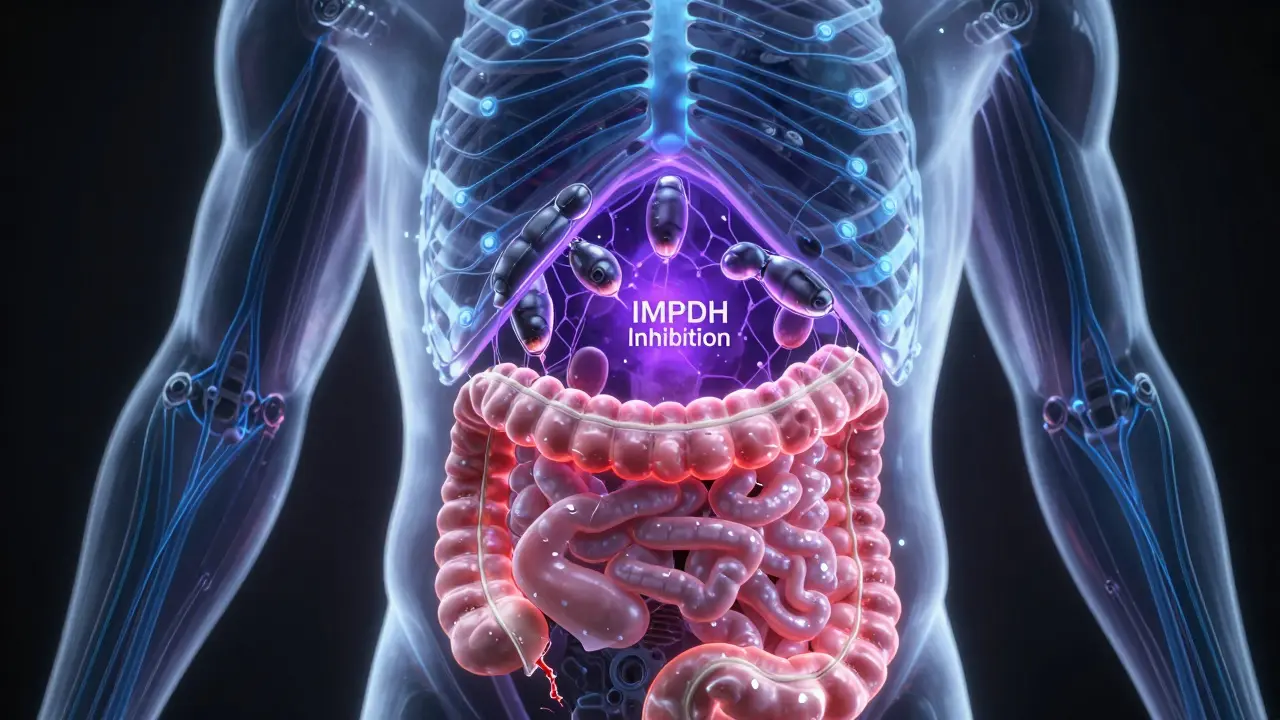
To fix the problem, we first need to understand the mechanism. Mycophenolate works by inhibiting an enzyme called IMPDH (inosine monophosphate dehydrogenase). This stops lymphocytes-the white blood cells responsible for attacking your transplanted organ-from multiplying. However, this drug isn't perfectly selective. It also affects rapidly dividing cells in your gut lining.
Your intestinal mucosa turns over quickly. When mycophenolate slows down this process, the protective barrier of your gut weakens. This leads to inflammation and irritation. According to data from the American Journal of Transplantation, nausea affects roughly 31% of patients, while diarrhea hits nearly 30%. Abdominal pain follows close behind at 21.5%. These aren't random glitches; they are direct biological consequences of how the drug protects your graft.
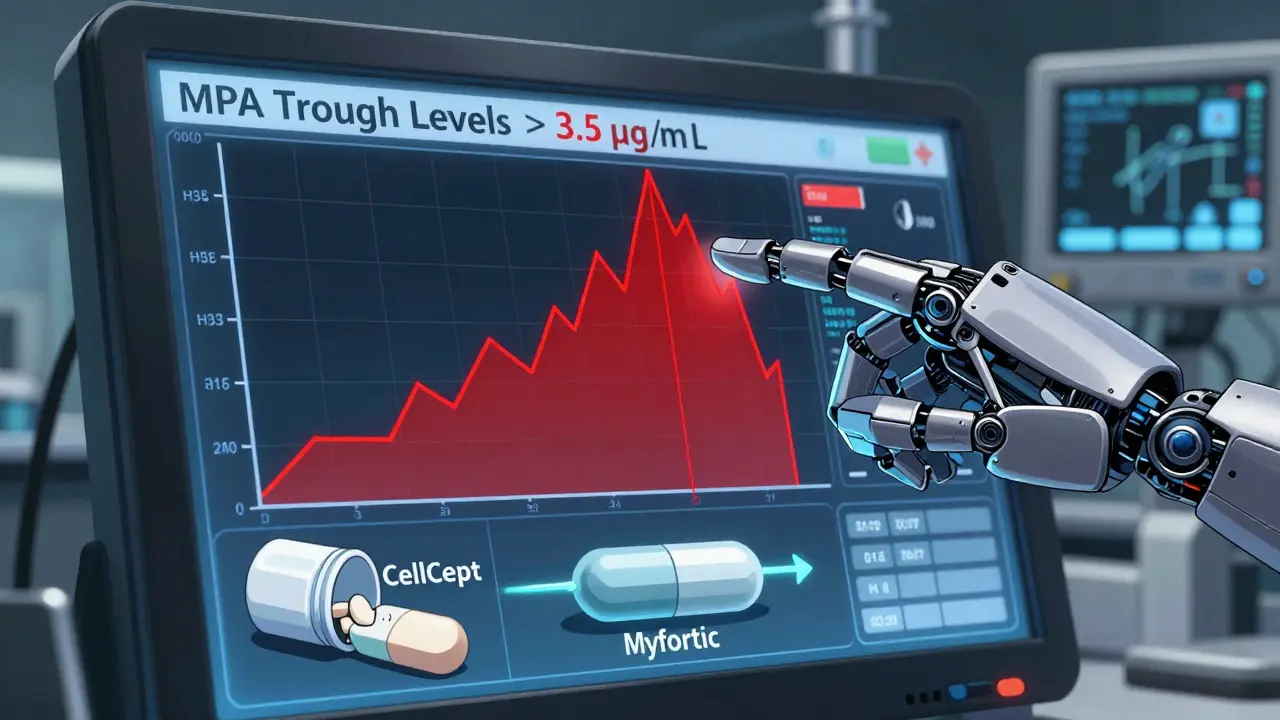
The severity often depends on the dose. The European Renal Association notes that in 68% of cases, GI side effects are dose-dependent. If your blood levels of the active metabolite, mycophenolic acid (MPA), get too high-specifically if trough levels exceed 3.5 μg/mL-the risk of severe diarrhea skyrockets. This is why understanding your specific pharmacokinetics matters more than just popping a pill.
Nausea Management: Practical Daily Strategies
Nausea is often the first symptom to appear. It can feel like a constant wave of queasiness that makes eating difficult. Since malnutrition is a serious risk for transplant recipients, managing this early is crucial. Here are the most effective, evidence-backed tactics:
- Timing is Everything: The Cleveland Clinic recommends taking mycophenolate on an empty stomach-at least one hour before or two hours after food-to ensure maximum absorption. However, if nausea is unbearable, some doctors allow taking it with a very small, bland snack. Do not change this without asking your team, as food can alter how much drug enters your bloodstream.
- The Applesauce Trick: Patient communities, including large discussions on Reddit’s r/kidneytransplant, have found success mixing crushed tablets with applesauce. In a survey of 48 respondents, 62% reported this reduced nausea significantly. The texture masks the taste, and the mild sweetness settles the stomach.
- Split Your Doses: Instead of taking a large dose twice a day, ask your doctor if splitting it into three or four smaller doses throughout the day is safe for your regimen. Lower peak concentrations in the gut mean less irritation.
- Ginger and Peppermint: While not a cure-all, ginger tea or peppermint capsules are widely recommended by transplant dietitians to soothe the stomach lining naturally.
Tackling Diarrhea: From Diet to Medication Switches
Diarrhea is the more dangerous side effect because it leads to dehydration and electrolyte imbalances, which can stress your kidneys. Mild loose stools might be manageable at home, but frequent watery diarrhea requires medical attention.
Dietary Adjustments
When your gut is inflamed, stick to the BRAT diet basics: Bananas, Rice, Applesauce, and Toast. Avoid high-fiber foods, dairy, caffeine, and spicy meals until symptoms subside. Hydration is critical. Drink oral rehydration solutions rather than just water to replace lost salts.
Probiotics: A Mixed Bag
Some patients swear by probiotics like Lactobacillus GG. A University of Michigan survey noted that 49% of users found them helpful. However, because you are immunosuppressed, you must consult your doctor before starting any probiotic. In rare cases, beneficial bacteria can cause infections in vulnerable patients.
Switching Formulations
If standard mycophenolate mofetil (CellCept) causes upper GI upset, your doctor might switch you to mycophenolate sodium (Myfortic). This version has an enteric coating designed to release the drug lower in the digestive tract, sparing the stomach. A 2022 randomized controlled trial showed this switch helped 65% of patients with persistent GI issues.
| Feature | Mycophenolate Mofetil (CellCept) | Mycophenolate Sodium (Myfortic) |
|---|---|---|
| Coating | Immediate Release | Enteric-Coated |
| Primary GI Benefit | Standard efficacy | Reduced upper GI irritation (nausea/vomiting) |
| Dosing Frequency | Twice daily | Twice daily |
| Success Rate for GI Relief | Baseline | ~65% improvement in switchers |

When Is It More Than Just Side Effects? Recognizing Colitis
There is a condition called mycophenolate-induced colitis. It occurs in about 1.9% of renal transplant recipients. This is not just "bad diarrhea." It involves actual damage to the colon lining. Symptoms include bloody stool, severe abdominal cramping, and fever.
You cannot treat this with diet alone. If your diarrhea persists for more than seven days, the American Society of Transplantation recommends a colonoscopy with biopsy. Doctors look for specific signs, such as apoptosis (cell death) in the crypt epithelial cells. This distinguishes drug toxicity from infections like CMV or C. diff, which are also common in transplant patients.
If colitis is confirmed, the standard care involves temporarily stopping the mycophenolate completely. Once symptoms resolve, doctors may reintroduce it at a much lower dose. Be aware that recurrence rates upon rechallenge are around 42%, according to European registry data. This means you need close monitoring.
Advanced Management: Dose Reduction and Alternatives
If lifestyle changes and formulation switches don't work, your medical team will likely adjust your dosage. A study from Johns Hopkins University showed that reducing the dose by 33% resolved symptoms within 48-72 hours for 78% of patients with moderate diarrhea. Crucially, these patients still maintained therapeutic drug levels.
Therapeutic Drug Monitoring (TDM) is becoming more important. While controversial, measuring the Area Under the Curve (AUC) of MPA levels gives a better picture of exposure than single trough tests. New guidelines from the International Mycophenolate Pharmacokinetics Study Group suggest AUC monitoring could reduce GI toxicity by 28% in high-risk patients.
In extreme cases where GI toxicity is intolerable, doctors may switch you to alternative immunosuppressants. Azathioprine is an older option, though less effective. Leflunomide is another antimetabolite that some patients tolerate better. Recently, extended-release formulations (MPA-ER) have shown promise, with Phase III trials indicating a 37% lower incidence of diarrhea compared to immediate-release versions.
Red Flags: When to Call Your Doctor Immediately
Do not wait for your next routine appointment if you experience:
- Bloody or black, tarry stools
- Signs of dehydration (dark urine, dizziness, dry mouth)
- Fever above 100.4°F (38°C)
- Severe abdominal pain that doesn't go away
- More than six loose stools in 24 hours despite home care
Ignoring these signs can lead to hospitalization or, worse, acute rejection due to missed doses. Your transplant team would rather you call with a "false alarm" than miss a serious complication.
Next Steps for Patients Struggling with GI Symptoms
Start by tracking your symptoms. Note when they happen relative to your dose, what you ate, and the severity. Bring this log to your next visit. Ask your pharmacist about generic vs. brand-name variations, as fillers in different generics can sometimes affect tolerance. Finally, never stop taking your medication abruptly. Always coordinate any changes with your transplant coordinator or nephrologist. Managing mycophenolate side effects is a marathon, not a sprint, but with the right tools, you can protect both your gut and your graft.
How long does mycophenolate nausea last?
For many patients, mild nausea subsides within the first few weeks as the body adjusts. However, if it persists beyond a month, it is unlikely to go away on its own. You should contact your doctor to discuss dose adjustments or switching to an enteric-coated formulation like Myfortic.
Can I take antidiarrheal medication with mycophenolate?
Over-the-counter meds like loperamide (Imodium) can help control symptoms occasionally, but they do not treat the underlying cause. Use them only after consulting your transplant team, especially if you have a fever or bloody stool, as masking symptoms can hide serious infections like C. diff.
Is mycophenolate-induced colitis permanent?
No, the damage is reversible if caught early. Treatment involves pausing the drug until the gut heals. Many patients can restart at a lower dose later, though there is a 42% chance symptoms may return. Close monitoring via colonoscopy is essential during this phase.
Does taking mycophenolate with food help nausea?
It depends on the formulation. For standard mycophenolate mofetil (CellCept), food can decrease absorption, so it's usually taken on an empty stomach. However, if nausea is severe, some doctors permit a light snack. Mycophenolate sodium (Myfortic) is less affected by food. Always follow your specific doctor's advice.
What are the alternatives to mycophenolate if I can't tolerate it?
Common alternatives include azathioprine, leflunomide, or sirolimus. Each has its own side effect profile and efficacy rates. Azathioprine is older and generally less effective at preventing rejection, while leflunomide may be easier on the stomach for some patients. The choice depends on your specific organ transplant and medical history.