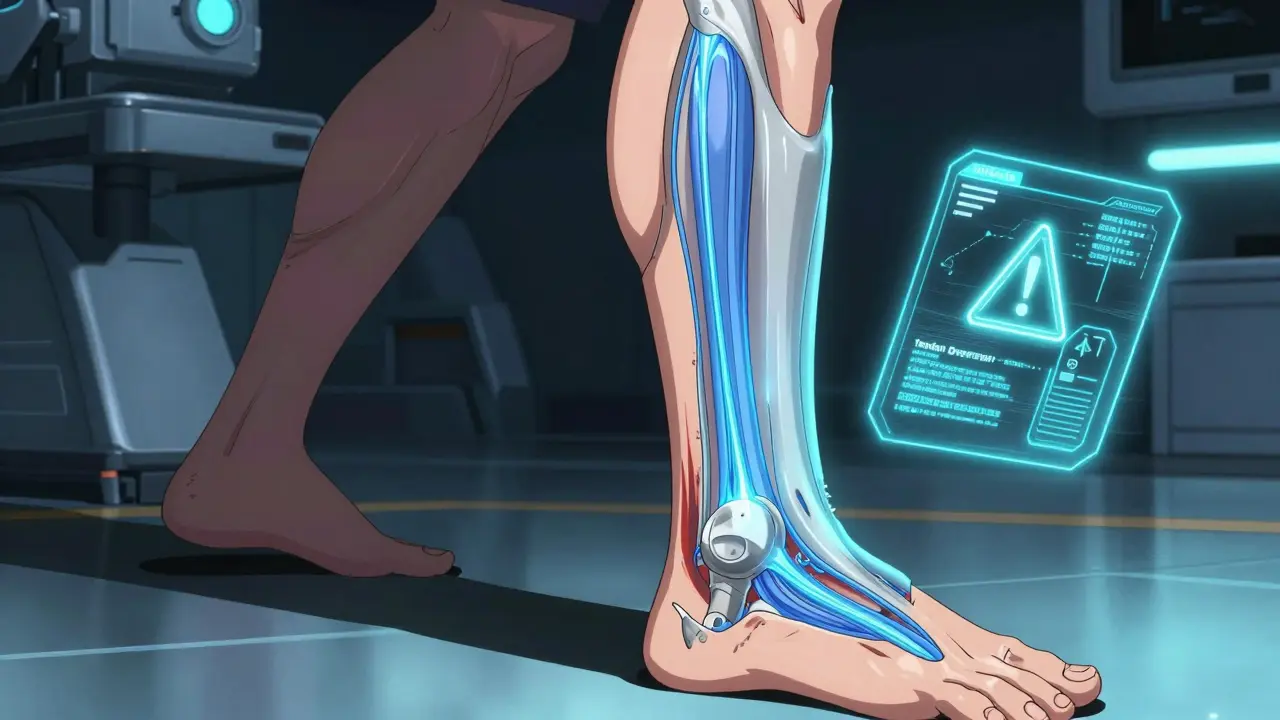
That nagging ache in your Achilles or just below your kneecap isn't just "wear and tear." It is tendinopathy, a degenerative condition where the tendon structure breaks down faster than it can repair itself. Unlike acute inflammation, this doesn't go away with rest alone. In fact, resting too long often makes it worse by weakening the tissue further. You are likely standing at a crossroads. Your doctor might suggest a quick fix like an injection, while your physiotherapist probably recommends weeks of painful exercises. Which path actually works? The answer depends on whether you want short-term relief or long-term structural healing. This guide cuts through the noise to explain why eccentric training remains the gold standard for most patients, when injections make sense, and how to navigate the pain that comes with effective rehab.
Understanding the Tendon Continuum
To treat tendinopathy effectively, you first need to understand what is happening inside the tissue. For decades, doctors called this "tendinitis," implying inflammation was the main problem. We now know that is rarely true. Instead, we look at the tendon continuum model, developed by researchers like Dr. Jill Cook from Monash University. This model categorizes tendon health into three stages:
- Reactive Tendinopathy: An early stage where the tendon swells in response to a sudden spike in load (like running more miles than usual). There is no structural damage yet. Rest and load management usually fix this within days.
- Tendon Dysrepair: The middle ground. The tendon has failed to heal properly after repeated stress. Collagen fibers become disorganized. This is where chronic pain sets in, and exercise therapy becomes essential.
- Degenerative Tendinopathy: Advanced breakdown with significant cell death and loss of tendon structure. This is rare but serious, often requiring surgical intervention if conservative methods fail.
Most people seeking help fall into the "dysrepair" category. This distinction matters because injecting steroids into a reactive tendon can cause harm, while trying to heavily load a degenerative tendon without preparation can lead to rupture. Knowing your stage dictates your treatment plan.
Why Eccentric Training Works
If you have been told to do heel drops or decline squats, you are following the protocol pioneered by Dr. Hakan Alfredson in 1998. Eccentric training focuses on the lengthening phase of a muscle contraction-lowering yourself slowly under control rather than pushing up explosively.
Why does this specific movement help? Biomechanical studies using ultrasound show that eccentric loading creates a unique mechanical stimulus. It forces the tenocytes (the cells inside the tendon) to realign collagen fibers along the lines of stress. Over time, this increases tendon stiffness by 15-20%, making it better able to handle load.
The evidence is strong. A landmark study published in the British Journal of Sports Medicine found that patients completing 12 weeks of eccentric training saw a 40-50% improvement in their VISA scores (a standard measure of tendon function). However, there is a catch: it hurts. About 68% of patients report high pain levels during the first two weeks. This initial flare-up is normal-it signals that the tissue is being stimulated-but it requires mental toughness to continue.
Eccentric Protocols by Tendon Site
You cannot use the same exercise for every tendon. The anatomy dictates the approach. Here are the two most common protocols:
| Tendon | Exercise | Frequency | Key Technique Cue |
|---|---|---|---|
| Achilles (Midportion) | Heel Drops | 3 sets x 15 reps, twice daily | Lower over 3-5 seconds. Use straight knee for gastrocnemius, bent knee for soleus. |
| Patellar (Knee) | Decline Squats | 3 sets x 15 reps, once daily | Perform on a 25-degree decline board. Keep trunk upright. Lower slowly. |
Consistency is non-negotiable. Structural changes visible on ultrasound typically take 8-12 weeks to appear. Stopping early because the pain subsides slightly often leads to relapse. The goal is not just pain-free movement, but building tissue capacity to handle your sport or daily activities again.
Heavy Slow Resistance: The Modern Alternative
While eccentric training is famous, it is not the only option. In recent years, Heavy Slow Resistance (HSR) training has emerged as a viable alternative. Instead of focusing solely on the lowering phase, HSR uses both concentric (lifting) and eccentric phases, performed very slowly (3 seconds up, 3 seconds down) with heavier weights (around 70% of your one-repetition maximum).
A comparative study by Beyer et al. in the Journal of Orthopaedic & Sports Physical Therapy found that HSR produced equivalent outcomes to eccentric training for Achilles tendinopathy after 12 weeks. Both groups improved their VISA-A scores by 60-65%. So, why choose one over the other?
Adherence. The HSR group had an 87% adherence rate compared to 72% for the eccentric group. Why? Because HSR causes less initial pain. If the burning sensation of eccentric heel drops makes you want to quit, HSR might be your ticket to compliance. It also feels more like "strength training," which some patients find psychologically easier to stick with than repetitive bodyweight movements.
The Role of Isometric Holds
Before you start loading your tendon, you need to manage pain. Isometric exercises, such as holding a shallow squat or a calf raise position without moving, offer immediate pain relief. Research shows they can reduce pain by 50% within 45 minutes of performing them.
This is known as the analgesic effect. You don't build strength with isometrics alone, but they act as a bridge. Use them before activity to dampen pain signals, allowing you to participate in work or light exercise without flaring up symptoms. They are a tool for management, not a cure for the underlying degeneration.
Injection Options: Steroids vs. PRP
When exercise feels impossible due to pain, many patients turn to injections. But the data here is nuanced and often misunderstood.
Corticosteroid Injections
Corticosteroid injections provide powerful, short-term anti-inflammatory effects. You will likely feel significantly better within days. However, this relief is deceptive. A study in the BMJ followed patients for six months and found that 65% of those who received steroids required additional intervention later, compared to only 35% of those who did exercise therapy. Worse, steroids can weaken tendon structure, increasing the risk of rupture if you return to high-load activities too soon. They are best reserved for temporary crisis management, not long-term healing.
Platelet-Rich Plasma (PRP)
Platelet-rich plasma (PRP) involves injecting your own concentrated blood platelets into the tendon to stimulate healing. It sounds promising, but the results are mixed. A 2020 systematic review in the American Journal of Sports Medicine found only a 15-20% greater improvement over placebo at six months. Given the cost and invasiveness, most experts do not recommend PRP as a first-line treatment. It may have a role in chronic cases where exercise has failed, but it is not a magic bullet.
Navigating Pain During Rehab
The biggest barrier to successful tendinopathy treatment is fear of pain. Old advice said "no pain, no gain." New science says "pain is information, but not always danger."
You need to learn to distinguish between acceptable discomfort and harmful pain. Use a 0-10 scale:
- 0-2/10: Safe. You can increase load.
- 3-5/10: Acceptable during exercise. Monitor next morning.
- 6-7/10: Caution zone. Reduce load slightly.
- 8-10/10: Stop. This indicates excessive stress.
The key metric is the "next-day test." If your pain is higher than baseline the morning after exercise, you overloaded the tendon. If it returns to baseline or improves, you are on the right track. Only 38% of self-managed patients correctly identify these thresholds, which is why working with a physical therapist boosts success rates from 68% to 92%.
Practical Steps for Success
Starting a tendinopathy program can feel overwhelming. Here is a simplified roadmap to get you moving safely:
- Confirm the Diagnosis: Ensure you have tendinopathy and not a partial tear or referred pain from the back. Ultrasound or MRI helps here.
- Start with Isometrics: Perform 5 sets of 45-second holds daily to reduce baseline pain.
- Introduce Loading: Begin eccentric or HSR exercises. Start with fewer repetitions if needed, but prioritize slow tempo.
- Monitor Load: Track your pain daily. Adjust volume based on the next-day response.
- Be Patient: Expect progress to be slow. Ten-weeks is the minimum; three months is typical for significant change.
Technology can help. Apps like Tendon Rehab provide real-time feedback and reminders, improving adherence from 65% to 85% in recent trials. If you cannot see a therapist regularly, consider using a guided digital program to ensure your form is correct.
How long does it take for eccentric training to work for Achilles tendinopathy?
Significant improvements typically require 12 weeks of consistent training. While some pain relief may occur earlier, structural changes in the tendon visible on ultrasound generally take 8-12 weeks. Most patients see a 40-50% improvement in function scores by this mark.
Are corticosteroid injections safe for tendinopathy?
They provide excellent short-term pain relief but carry risks. Studies show 65% of patients needing further intervention at 6 months post-injection, compared to 35% in exercise groups. Steroids can weaken tendon structure, increasing rupture risk if loaded too soon. They should be used cautiously and not as a standalone cure.
What is the difference between eccentric training and Heavy Slow Resistance (HSR)?
Eccentric training focuses on the lowering phase of movement, while HSR uses both lifting and lowering phases with heavier weights and slower speeds. Both produce similar long-term outcomes, but HSR often has better patient adherence due to lower initial pain levels.
Can I do tendinopathy exercises if it hurts?
Yes, mild to moderate pain (3-5/10) during exercise is acceptable and expected. The key is monitoring your pain the next morning. If pain is worse than baseline, reduce the load. If it stays the same or improves, continue. Avoid pain levels above 7/10.
Is Platelet-Rich Plasma (PRP) effective for tendon pain?
Evidence is mixed. Recent reviews show only 15-20% greater improvement over placebo at 6 months. Due to high costs and variable results, it is generally not recommended as a first-line treatment unless conservative exercise therapies have failed completely.





Francis Saul
June 8, 2026 AT 00:10thanks for putting this together its really helpful to see the diff between steroid and prp stuff i always thought injections were just a quick fix but seeing that they might weaken the tendon makes me want to stick with the exercises even if it hurts at first
Dave Villeneue
June 9, 2026 AT 22:49Your reliance on anecdotal evidence regarding pain thresholds is intellectually bankrupt. The 'next-day test' you cite lacks rigorous statistical validation in longitudinal studies. You are essentially preaching pseudo-science to laypeople who lack the medical background to discern fact from fiction. This is dangerous misinformation.
Rachel Harrypersad
June 11, 2026 AT 04:52why do we always blame the body for failing us when maybe the real issue is how we live our lives in this capitalist grind society tells us to push through pain but what if pain is just a signal that we are losing our humanity i feel so empty reading this
Nicholas Bowling
June 12, 2026 AT 22:58everyone says eccentric training is the gold standard but ive tried it for months and nothing changed so clearly its all hype and doctors just want to keep us doing useless exercises instead of giving us proper treatment
Jay Foreman
June 14, 2026 AT 19:29Look, I get that exercise is good, but let's be honest here. If you're in agony, telling someone to 'just push through' feels incredibly selfish. We need more empathy in healthcare, not just cold hard data about collagen fibers. People suffer, and sometimes a shot is exactly what they need to function again, even if it's not perfect forever. Stop judging people for seeking relief.
Cathy N
June 15, 2026 AT 07:01i appreciate the breakdown of the stages especially the dysrepair part it helps explain why resting didnt work for me last year
Adelaide Motata
June 15, 2026 AT 11:16obviously you guys dont know what your talking about because i did prp and it was amazing why listen to these stats when my own experience proves them wrong typical american ignorance
Mike Crump
June 16, 2026 AT 08:30This is such a fantastic resource! I've been struggling with patellar tendinopathy for ages and the decline squat protocol sounds terrifying but necessary. It’s wild how much science has shifted away from just 'resting' everything. I’m curious, does anyone have tips on finding a decline board that’s sturdy enough? I don’t want to build one myself and risk safety issues. Thanks for sharing this!
Jonathan Paul
June 17, 2026 AT 06:16the whole concept of pain as information is flawed because pain is subjective and therefore meaningless in a scientific context you are trying to quantify suffering which is impossible and shows a lack of understanding of the human condition
Roderick Gooden
June 17, 2026 AT 15:53I must say that while the distinction between reactive and degenerative tendinopathy is indeed quite fascinating and perhaps even somewhat illuminating for those of us who are not medical professionals, one cannot help but wonder if the emphasis on eccentric training is perhaps slightly overstated given the myriad of other factors involved in tendon health such as nutrition and sleep patterns which are rarely discussed in such comprehensive detail despite their obvious importance in the overall healing process which is a complex biological phenomenon that requires a holistic approach rather than a singular focus on mechanical loading protocols which may or may not yield the desired results depending on individual physiological responses.