
You pick up a bottle of pills at the pharmacy. You read the label and see a long list of chemical names. Most patients focus on the one thing that fixes their headache or lowers their blood pressure. But did you know the other ingredients on that list aren't just empty filler? Understanding the difference between active ingredients and inactive components isn't just chemistry trivia; it can mean the difference between relief and a reaction.
The Core Engine: Active Pharmaceutical Ingredients
When doctors prescribe a medication, they are prescribing a specific chemical substance intended to change how your body functions. We call this the active pharmaceutical ingredient, or API. According to federal regulations established by the U.S. Food and Drug Administration, this component is defined as anything in the drug product intended to furnish pharmacological activity. In plain English, this is the part of the medicine that does the work.
If you take acetaminophen for a fever, the API is the molecule that stops the pain signals in your brain. If you take atorvastatin for cholesterol, the active ingredient is the compound that slows down liver production of fat. These components undergo rigorous testing. Before an API reaches the pharmacy shelf, it typically goes through years of development. Statistics from 2022 show that over 90% of these candidates fail during clinical trials because they weren't safe enough or didn't work well enough.
| Feature | Active Ingredient | Inactive Ingredient |
|---|---|---|
| Primary Function | Treats or prevents disease | Structural support or stability |
| Regulatory Approval | Rigorous clinical trials required | Generally Recognized As Safe (GRAS) |
| Biological Impact | Direct therapeutic effect | Maintains delivery or appearance |
| Dosage Weight | Often small fraction (mg) | Often majority of tablet weight (%) |
The Silent Support: What Are Inactive Ingredients?
While the active ingredient gets all the attention, a pill cannot exist without its partners. These are the inactive ingredients, often referred to in the industry as excipients. Without them, most drugs would be impossible to manufacture or swallow. Think of a car: the engine makes it move, but you still need tires, a chassis, and paint for the vehicle to function and last. Similarly, excipients help form the shape of the tablet, control how fast it dissolves in your stomach, and prevent moisture from ruining the medicine on the shelf.
In many tablets, the active ingredient makes up less than 5% of the total weight. The remaining bulk consists of things like lactose or microcrystalline cellulose. For example, gelatin acts as a binder to hold the powder together, while magnesium stearate acts as a lubricant so the manufacturing machines can push the pill out without it sticking. Even the colorful coating on some capsules is considered an inactive ingredient designed to help identification and swallowing.
Why the Label Says "Inactive" Might Be Misleading
For decades, the medical community operated under the assumption that once an ingredient wasn't responsible for the cure, it was biologically inert. However, science has caught up with reality. A major study published in 2021 challenged this belief. Researchers screened hundreds of common excipients against human protein targets to see how they interacted with our bodies on a molecular level. The results were startling: approximately 14% of these supposedly inactive ingredients showed previously unrecognized biological activity.
This doesn't mean these ingredients are dangerous. It means the term "inactive" is more of a regulatory classification than a biological absolute. Some compounds used to keep pills stable actually bind to proteins in the body. While this might not cause a cure, it could theoretically alter how your metabolism handles other substances. This discovery prompted the FDA to launch initiatives in 2022 to re-evaluate safety profiles, specifically looking at whether chronic use of certain excipients impacts health in ways we hadn't mapped before.

Regulatory Oversight: Who Watches the Watchmen?
You might wonder who decides what goes into your medicine. The regulatory landscape differs significantly depending on the component type. Active ingredients require a New Drug Application (NDA) that proves safety and efficacy through massive trials involving thousands of volunteers. In contrast, inactive ingredients usually rely on the Generally Recognized As Safe (GRAS) pathway. This means manufacturers cite historical safety data rather than conducting new trials for every single ingredient.
However, oversight exists. The FDA maintains an Inactive Ingredient Database that catalogs acceptable levels for different routes of administration. For instance, the amount of lactose allowed in a swallowed tablet is vastly higher than the limit for something injected directly into the bloodstream. Benzyl alcohol, for example, is safe in milligrams for shots, but would be toxic in gram amounts. These limits are updated quarterly, ensuring that formulation standards reflect current safety knowledge.
Real-World Risks: Allergies and Sensitivities
This is where understanding the difference saves lives. While active ingredients are rarely allergens themselves, the carriers holding them can trigger reactions. Approximately 65% of the global population experiences some degree of lactose intolerance. If your blood pressure pill uses milk sugar as a filler, you might feel bloated or nauseous after taking it, even though the medicine itself is working perfectly.
Patients with celiac disease face similar risks with wheat starch used as a binder. Color additives like dyes can also cause issues; sulfite sensitivity affects about 8% of people, particularly those with asthma. These reactions are tracked. Data from adverse event reporting systems shows that roughly 0.5% of reported bad reactions are linked to inactive ingredients. For the average person, it's nothing. For the sensitive few, it's critical information found only on the detailed package insert.
Navigating Your Medication Labels
How do you protect yourself? Start by checking the packaging. Over-the-counter medications are legally required to list both types of ingredients on the box. Prescription drugs have this info on the leaflet inside the bottle or online via the Structured Product Labeling system. If you have known sensitivities, ask your pharmacist for a compendium listing alternatives. Pharmacies stock multiple brands of generic drugs where the active ingredient is identical, but the inactive mix varies.
Dr. Brian K. Shoichet and Dr. Laszlo Urban suggest that pharmaceutical companies are now shifting toward better screening. They recommend replacing biologically active excipients with truly inert molecules when possible. As an end-user, simply knowing to read the bottom half of the label puts you ahead of 90% of patients who ignore it completely.
The Future of Drug Formulation
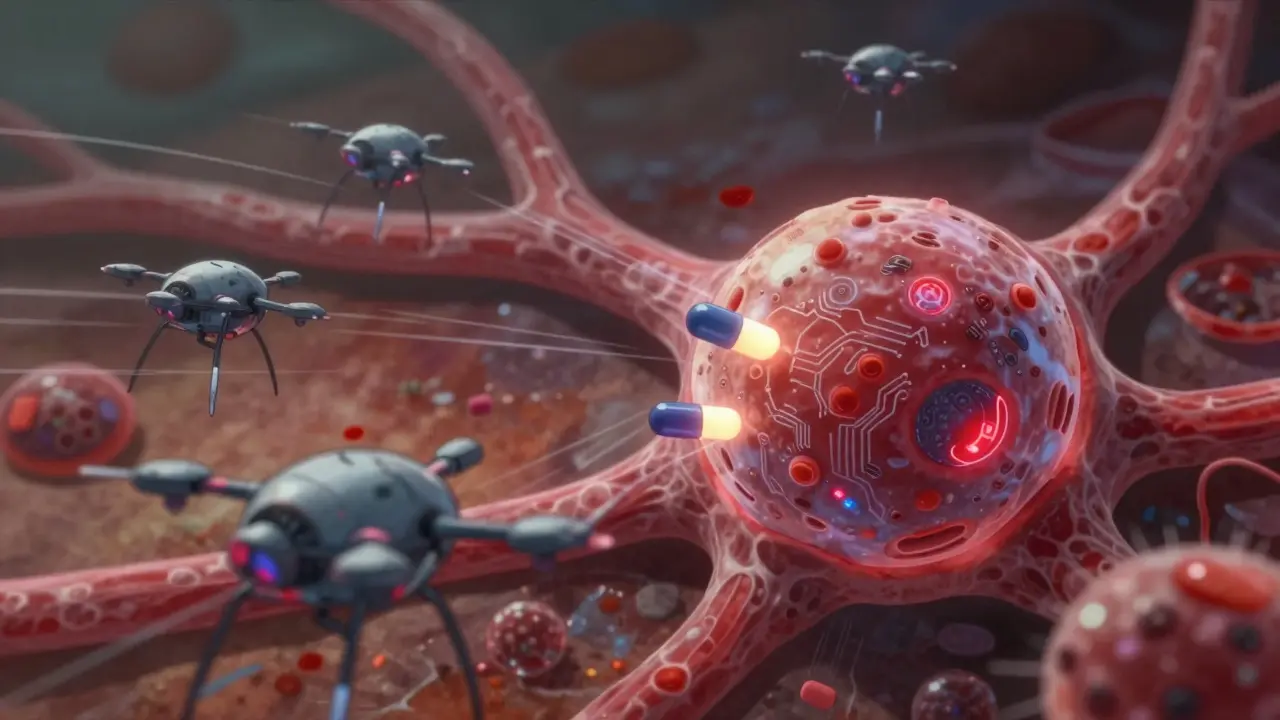
We are moving toward a new era of precision medicine where "excipients" become more than just fillers. Advances in nanotechnology allow these ingredients to act as targeted delivery vehicles, guiding active chemicals directly to diseased cells while sparing healthy tissue. The line is blurring. What was once considered a passive carrier is now sometimes engineered to actively participate in healing. As technology evolves, the definitions we rely on today will likely need to evolve with them.
What exactly is an active ingredient?
An active ingredient is the specific chemical component in a drug that produces the therapeutic effect, such as curing a disease or relieving symptoms. It is the primary reason the medication was prescribed.
Do inactive ingredients affect how the drug works?
Yes, while they don't cure the disease themselves, they control absorption rates, stability, and shelf life. Recent studies also suggest some may interact with body proteins.
Are inactive ingredients regulated?
They are regulated differently. Active ingredients need clinical trial approval, while inactive ingredients generally follow a "Generally Recognized As Safe" standard based on historical use data.
Can I be allergic to the inactive parts of a pill?
Absolutely. Common fillers like lactose, binders like wheat starch, and dyes can cause allergic reactions or digestive issues in sensitive individuals.
Where can I find a list of all ingredients in my meds?
Check the external packaging for over-the-counter drugs. For prescriptions, look at the package insert or consult your pharmacist for the full excipient list.