Drug Interaction Risk Estimator
Your Profile
Risk Assessment
Enter your details to see your estimated risk profile.
Imagine taking two medications that are perfectly safe on their own. You swallow them, go about your day, and suddenly feel dizzy, nauseous, or worse. This isn't a coincidence. It’s likely a drug interaction, defined as a situation where one medication alters the effect of another, often intensifying side effects or reducing efficacy. These hidden clashes happen more often than you might think, accounting for a significant portion of hospital visits. Understanding how these interactions work is not just medical trivia; it’s a critical safety skill for anyone managing multiple prescriptions.
Why Drug Interactions Intensify Side Effects
The human body processes medications through complex biological pathways. When you introduce a second drug, food, or supplement, you can disrupt these pathways. The result? A side effect that was mild or non-existent becomes severe. Current research indicates that drug interactions account for approximately 6-30% of all adverse drug reactions (ADRs). A 2024 study published in Scientific Reports highlighted this risk, showing that exposure to drug-drug interactions correlates with a 26% increase in adverse drug events among patients.
These interactions generally fall into two categories:
- Pharmacokinetic interactions: These affect how your body absorbs, distributes, metabolizes, or excretes a drug. For example, if Drug A slows down the enzyme that breaks down Drug B, Drug B stays in your system longer and at higher concentrations, leading to toxicity.
- Pharmacodynamic interactions: These affect how drugs act on your body’s receptors. If two drugs have similar effects-like both thinning your blood-the combined effect can be dangerously additive, increasing bleeding risk by 70-100% in some cases.
The FDA estimates that 30-50% of adverse drug reactions are preventable. Many of these are caused by interactions that healthcare providers and patients can identify before they cause harm.
The Role of Enzymes: Why CYP3A4 Matters Most
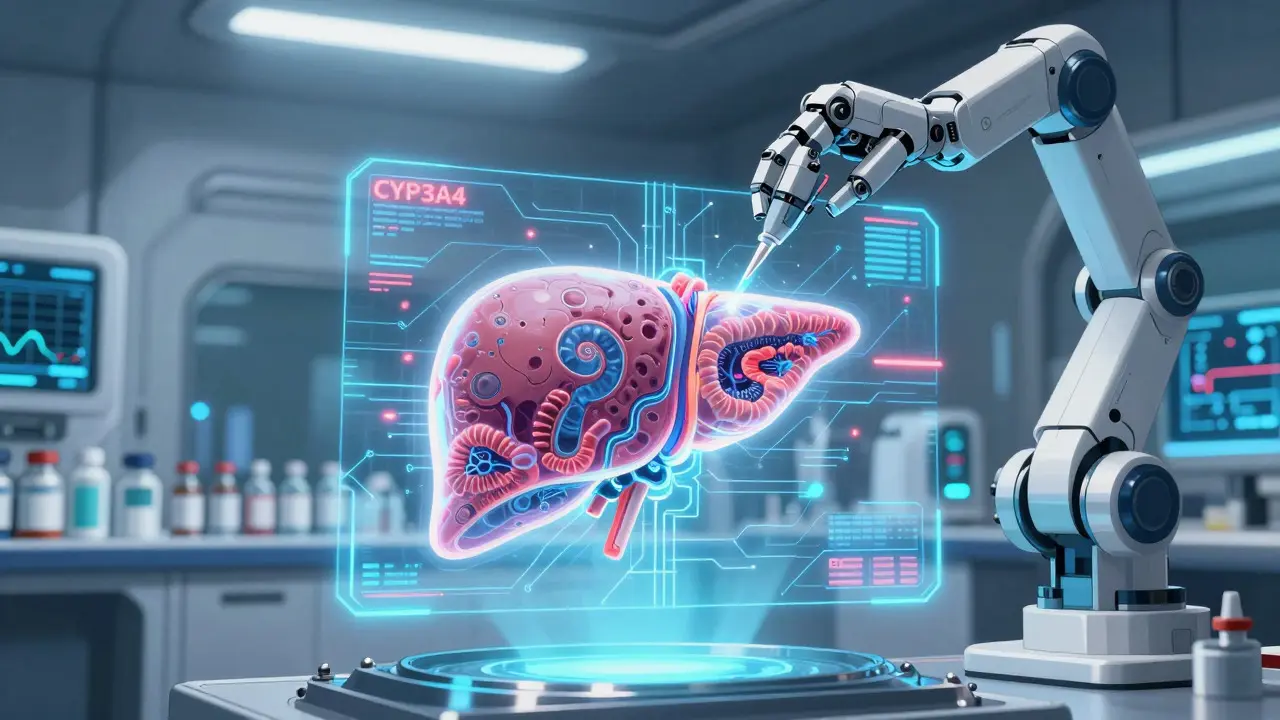
To understand why some combinations are dangerous, you need to look at the liver’s filtration system. The cytochrome P450 enzyme family is responsible for breaking down most medications. Among these, CYP3A4 is the most clinically significant enzyme, involved in metabolizing approximately 50% of all clinically used drugs.
According to FDA surveillance data from 2023, CYP3A4 inhibition is responsible for 40% of serious drug interactions. Here is how it works in practice:
- You take a statin for cholesterol.
- You also take clarithromycin, an antibiotic that inhibits CYP3A4.
- Your liver cannot break down the statin efficiently.
- Statin levels in your blood skyrocket.
- You develop rhabdomyolysis, a rare but serious condition involving muscle breakdown.
Data shows that using clarithromycin increases statin toxicity risk by 8.4-fold compared to azithromycin, which does not inhibit CYP3A4. Rhabdomyolysis rates jump from 0.3 per 10,000 patients to 2.7 per 10,000 patients when these specific drugs are combined. This is why doctors often switch antibiotics to avoid this specific clash.
| Drug Combination | Interaction Type | Risk Increase | Primary Symptom |
|---|---|---|---|
| Warfarin + Aspirin | Pharmacodynamic (Additive) | 70-100% increased bleeding risk | Internal bleeding, bruising |
| Clarithromycin + Statins | Pharmacokinetic (CYP3A4 Inhibition) | 8.4-fold toxicity increase | Muscle pain, kidney failure |
| Grapefruit Juice + Felodipine | Pharmacokinetic (Absorption/Metabolism) | 300% increase in drug exposure | Dizziness, low blood pressure |
| SSRI + Tramadol | Pharmacodynamic (Serotonin Syndrome) | Significant neurological risk | Confusion, rapid heart rate, fever |
Food and Supplements: The Hidden Triggers
We often focus on prescription pills, but what you eat and the supplements you buy over the counter play a massive role. Food-drug interactions show marked differences in severity depending on the combination.
Grapefruit juice is the most famous culprit. It contains compounds that block CYP3A4 in the gut. While it has minimal effect on some calcium channel blockers like amlodipine (only a 15% increase in absorption), it can increase the absorption of felodipine by 300%. This means a single glass of grapefruit juice can turn a standard dose into a toxic overdose.
Vitamin K-rich foods, such as spinach and kale, interact with warfarin. Since warfarin works by blocking vitamin K, eating large amounts of leafy greens can reduce the drug’s efficacy by 30-50%, leading to unstable INR levels and clotting risks. Conversely, sudden drops in vitamin K intake can spike bleeding risks. Consistency is key here.
Supplements are equally risky. St. John’s Wort, a common herbal remedy for depression, induces CYP3A4, speeding up the metabolism of many drugs. This can render oral contraceptives ineffective or lower the concentration of HIV medications, leading to treatment failure. Always treat supplements with the same caution as prescription drugs.
Polypharmacy: The Danger of Multiple Medications
The risk of interactions doesn’t just add up; it multiplies. This phenomenon is known as polypharmacy. Dr. J. E. Hughes’ longitudinal study demonstrated that taking five or more medications increases adverse drug events by 78%. If you are on ten or more medications-a state called major polypharmacy-the risk jumps by 153%.
This is particularly relevant for older adults. As people age, their liver and kidney function naturally decline, slowing down drug clearance. Combine this with multiple prescriptions for chronic conditions, and the margin for error shrinks drastically. A 2022 study found that 68% of hospitalized patients experienced at least one drug interaction. Shockingly, nurses identified 40% of adverse drug reactions that physicians missed, highlighting the complexity of tracking these combinations in busy clinical settings.
Genetics: Why One Size Doesn’t Fit All
Your DNA plays a surprising role in how you react to drug combinations. Genetic polymorphisms can make you a "poor metabolizer" or an "ultra-rapid metabolizer." For instance, 3-10% of Caucasians lack functional CYP2D6 enzyme activity. If you are a poor metabolizer and take codeine, your body may convert it to morphine too slowly (leading to no pain relief) or, in other contexts, accumulate toxic levels of precursor drugs.
The FDA reports that 30% of commonly prescribed drugs have pharmacogenetic considerations affecting interaction risk. This is why personalized medicine is growing. Pharmacogenomic testing can reveal how your unique biology will handle specific drug combinations, allowing doctors to tailor doses and avoid high-risk pairs before prescribing them.
Managing Risks: Practical Steps for Patients
You don’t need a pharmacy degree to manage these risks. The Institute for Safe Medication Practices (ISMP) recommends a four-step approach that significantly reduces errors:
- Comprehensive Medication Reconciliation: Keep an updated list of every pill, supplement, and over-the-counter medication you take. Bring this list to every doctor’s appointment. This simple step can reduce interaction-related adverse events by 30%.
- Use Validated Checkers: Before starting a new medication, use reputable online databases or ask your pharmacist to check for interactions. Tools like the University of Washington’s Metabolism and Transport Drug Interaction Database provide quantitative parameters for hundreds of drugs.
- Pharmacist-Led Management: Engage your pharmacist. They are trained to spot these clashes. Studies show that pharmacist-led medication therapy management can reduce hospitalizations by 23%.
- Patient Education: Understand the "why" behind your prescriptions. Ask questions like, "Does this interact with my coffee?" or "Can I take this with my vitamins?" Educated patients improve adherence by 35% and catch potential issues early.
Be wary of alert fatigue. Doctors often receive dozens of interaction alerts in electronic health records. Research shows 40% of these are low-severity warnings that create noise. Don’t ignore every alert, but do discuss persistent ones with your provider to determine if they are clinically relevant to your specific case.
The Future of Interaction Safety
Technology is evolving to help us stay ahead of these risks. AI-driven prediction models now achieve 89% accuracy in identifying toxic side effects from drug combinations, a 22% improvement over traditional methods. Wearable biosensors are currently in trials to monitor drug levels in real-time, potentially adjusting dosages automatically to prevent toxicity.
Regulatory bodies are also tightening standards. The FDA’s 2023 guidelines require rigorous testing for seven major CYP enzymes and three transporters for new drugs. This means future medications will come with clearer interaction profiles, helping both doctors and patients make safer choices.
What are the most common signs of a drug interaction?
Common signs include unexpected dizziness, nausea, changes in heart rate, excessive bleeding or bruising, confusion, and worsening of the condition the medication is supposed to treat. If you experience new symptoms after starting a medication, contact your healthcare provider immediately.
Can natural supplements cause drug interactions?
Yes, absolutely. Supplements like St. John’s Wort, garlic, ginkgo biloba, and vitamin K can significantly alter how medications work. For example, St. John’s Wort can speed up drug metabolism, making medications less effective, while garlic can increase bleeding risk when taken with blood thinners.
How long does it take for a drug interaction to occur?
It varies. Some interactions, like those affecting absorption, can happen within hours of taking the medications together. Others, involving enzyme induction or inhibition, may take days or weeks to build up as the body adjusts its metabolic pathways.
Is grapefruit juice dangerous with all medications?
No, it primarily affects drugs metabolized by the CYP3A4 enzyme. This includes certain statins, blood pressure medications, and immunosuppressants. However, it has little effect on many other common drugs. Always check the label or ask your pharmacist.
What should I do if I suspect a drug interaction?
Do not stop taking your medication abruptly unless instructed by a doctor, as this can cause withdrawal or rebound effects. Instead, contact your pharmacist or physician immediately. They can assess the severity and adjust your dosage or switch medications if necessary.


Prashant Shishodia
July 19, 2026 AT 03:08Man this is scary stuff. I take like three pills every morning for my back and blood pressure. Never thought about them fighting each other inside my body.
Going to show this to my wife tonight so she can check the labels. Thanks for keeping it simple.
Autumn LW
July 19, 2026 AT 06:17It is genuinely pathetic how many people treat their pharmacists as mere vending machines rather than educated professionals who actually understand biochemistry. If you cannot be bothered to read the insert or ask a question, do not complain when your liver fails. The article states that pharmacist-led management reduces hospitalizations by 23%. This statistic is ignored by the masses who believe they are smarter than medical science because they watched a five-minute video on YouTube. It is an embarrassment to modern healthcare literacy.
Scott Colter
July 20, 2026 AT 11:02There is a profound irony in how we trust these chemical interactions to balance our internal chaos while ignoring the chaos of our own minds. We seek order through pills, yet the very mechanism of healing introduces new disorder. It makes one wonder if the body is truly meant to be managed like a machine with interchangeable parts, or if there is a deeper harmony we are disrupting by forcing these synthetic compounds into our natural rhythms. Perhaps the real interaction is between our desire for control and the inherent unpredictability of life itself.
Paul Lyons
July 21, 2026 AT 03:35This is exactly why American healthcare is a disaster waiting to happen! We shove drugs down throats without any regard for the individual. In other countries they actually care about the patient but here we just get handed a script and told to go away until we end up in the ER. It is a system designed to fail us. My uncle had a reaction like this and the doctor didn't even look him in the eye. Typical corporate medicine treating humans like numbers. We need to stop trusting these big pharma pushers and start demanding real answers before they poison us with their profit-driven cocktails!
Deva Vidya
July 21, 2026 AT 10:56I think this is such a helpful reminder for everyone. We often forget that supplements are powerful too. I used to take St John's Wort casually and never realized it could mess with my birth control. Scary but good to know. Let's all be more mindful and talk to our doctors more often. Small steps make a big difference in staying healthy and safe. Keep sharing this kind of info please.
ANINDA GHOSH
July 21, 2026 AT 17:37In our culture, we often view herbal remedies as inherently safe and pure, distinct from the 'harsh' chemicals of Western medicine. However, as highlighted here, nature has its own potent chemistry. Ayurveda teaches balance, and perhaps the true wisdom lies in understanding that whether a substance comes from a lab or a garden, it interacts with our unique constitution. It is not about rejecting modern science but integrating knowledge with respect for the body's delicate ecosystem. 🌿
MiMi Stanley
July 22, 2026 AT 21:43I quietly added this to my bookmarks. The part about CYP3A4 was interesting. I never knew grapefruit juice was that bad with some meds. I drink it every morning with my statin. Guess I am switching to orange juice tomorrow. Good to know these things exist without feeling overwhelmed by them.
Najmunisa Govender
July 24, 2026 AT 12:05Oh my goodness!! This is terrifying!!! I take warfarin and I love my spinach salads!!! Does this mean I have to stop eating greens entirely??? Or just keep it consistent??? Please someone tell me I don't have to give up my kale chips!!! 😱😱😱