
Every day, millions of Americans take generic drugs. They’re cheaper, just as effective, and often the only option for people managing chronic conditions. But once a generic drug hits the market, the work doesn’t stop. In fact, that’s when the real safety work begins. The FDA doesn’t just approve generics and walk away. It watches them-closely, continuously, and with advanced tools that catch problems most people never even know exist.
Why Safety Monitoring Starts After Approval
Generic drugs don’t go through the same long clinical trials as brand-name drugs. Instead, they prove they’re bioequivalent-meaning they deliver the same active ingredient at the same rate and amount as the original. These studies usually involve just 24 to 36 healthy volunteers. That’s enough to show the drug works the same way, but not enough to catch rare side effects that might only show up in older patients, people with kidney disease, or those taking five other medications at once. The FDA knows this. That’s why they say: “It’s impossible to have complete information about the safety of a drug at the time of approval.” The real picture emerges over months and years, as hundreds of thousands of people use the drug in real life. That’s when unexpected reactions pop up-rashes, heart rhythms going off, liver stress, or even rare allergic responses that never showed up in trials.The Systems That Watch Every Pill
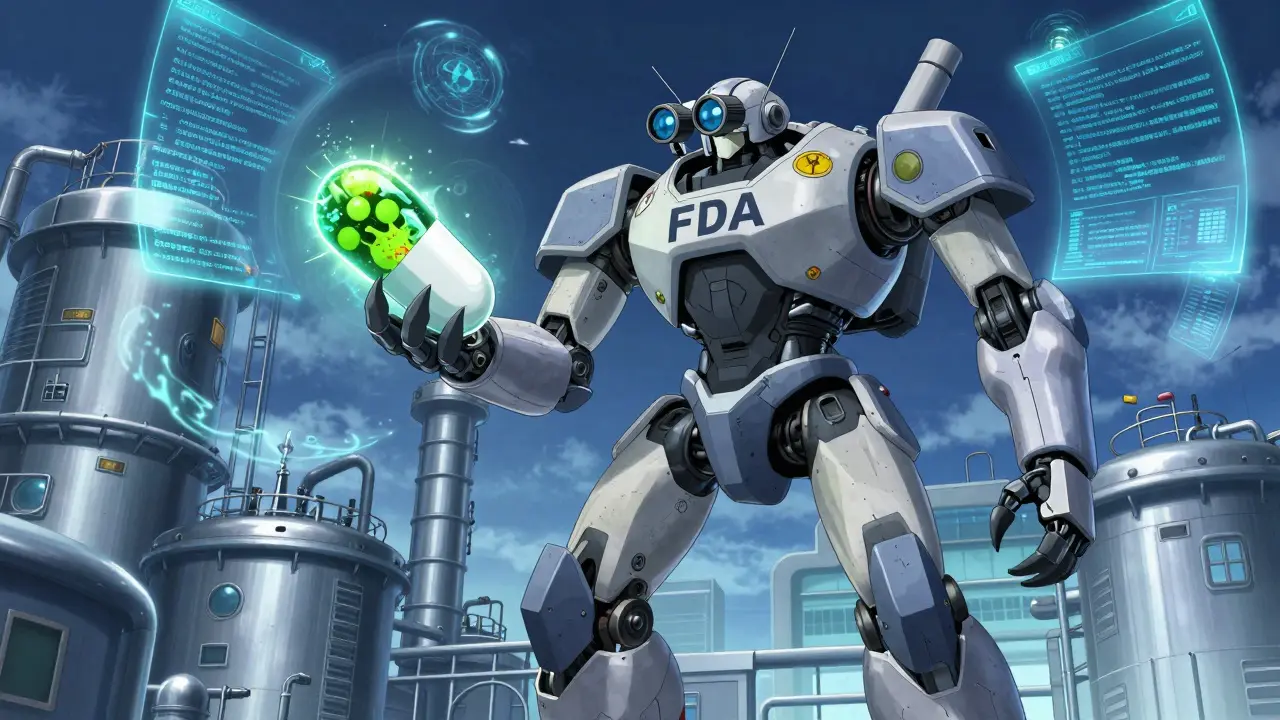
The FDA doesn’t rely on guesswork. It uses a network of systems that collect and analyze data from every corner of the healthcare system. The main tool is the FDA Adverse Event Reporting System (FAERS). It’s a massive database that collects reports from doctors, pharmacists, patients, and drug companies. In 2022, FAERS received over 2 million reports. Not all are about generics-but the FDA’s Office of Generic Drugs (OGD) filters them out and digs into patterns. If a certain generic version of a blood pressure drug starts showing a spike in reports of dizziness or fainting, investigators jump in. Then there’s the Sentinel Initiative. Launched in 2008 and expanded by the 21st Century Cures Act, Sentinel pulls data from electronic health records of over 100 million patients across hospitals, clinics, and insurers. It doesn’t wait for someone to file a report. It scans records automatically for signs like sudden spikes in hospital visits for a specific drug, abnormal lab results, or unexpected deaths. It’s like having a national early-warning system running 24/7. Manufacturing quality is watched too. The FDA inspects about 1,200 U.S. and 600 foreign drug factories every year-some scheduled, many unannounced. They check for things like contamination, incorrect ingredient amounts, or unstable packaging. A single batch of generic metformin with too much NDMA (a possible carcinogen) led to recalls in 2020. That kind of issue wouldn’t show up in a 36-person trial. But the FDA’s inspections caught it before it hurt more people.How the FDA Handles Red Flags
When something looks wrong, the FDA doesn’t wait. They have a clear process. First, they investigate. A team of doctors, chemists, and data scientists reviews all the reports, lab results, and manufacturing logs. They compare the generic drug to its brand-name version. Are the impurities the same? Is the release rate different? Are there new inactive ingredients that could be causing reactions? If they find a real safety issue, they act. That could mean:- Updating the drug’s label to warn doctors and patients about a new risk
- Issuing a “Dear Healthcare Provider” letter explaining what to watch for
- Ordering a voluntary recall of a specific batch
- In rare cases, pulling the drug off the market entirely
The Hidden Challenge: Inactive Ingredients and “Allowable Differences”
Here’s where things get tricky. Generic drugs don’t have to match the brand-name drug exactly-just be bioequivalent. That means the inactive ingredients (fillers, dyes, coatings) can be different. For most people, that doesn’t matter. But for some, it does. A person with a corn allergy might react to a generic version that uses corn starch as a filler, even if the brand-name version uses potato starch. A patient with celiac disease might react to a generic that uses wheat-based binders. These aren’t manufacturing errors-they’re legal differences allowed under FDA rules. The FDA tracks these through specialized reviews. The Office of Pharmaceutical Quality checks for impurities. The Office of Generic Drugs looks at how those differences might affect absorption or cause allergic reactions. But it’s still a gap. Experts say these “allowable differences” are the hardest part to monitor. They’re not dangerous for most, but for a small group, they can mean the difference between relief and a hospital visit.Who Reports Problems-and Why So Few Do
The FDA depends on people to report side effects. But here’s the problem: only 1% to 10% of adverse events are ever reported. Most patients don’t know how. Most doctors are too busy. And many assume the drug is safe because it’s generic. Anyone can report to MedWatch, the FDA’s online reporting system. It takes less than five minutes. If you or a loved one had a strange reaction after switching to a generic-like a rash that didn’t go away, unusual fatigue, or a sudden change in how you feel-report it. That data saves lives. Drug companies are required to report any adverse events they hear about. But the FDA also proactively screens reports for generics that are newly approved or have high sales volume. They don’t wait for a flood of complaints. They look for early signals.
The Bigger Picture: Why This Matters
Generic drugs make up 90% of all prescriptions in the U.S. but cost only 23% of total drug spending. That’s billions of dollars saved every year. But if safety monitoring fails, those savings become a public health risk. The FDA’s system isn’t perfect. Critics point out that rare side effects can take years to show up. Complex generics-like inhalers, patches, or injectables-are harder to monitor because bioequivalence is harder to prove. And with 1,000 new generic approvals each year, the workload keeps growing. But the system has improved dramatically since the 1990s. The Generic Drug User Fee Amendments (GDUFA), first passed in 2012 and renewed in 2023, gave the FDA more funding and clearer rules. Manufacturers now pay fees to help fund safety monitoring. That means more staff, better data tools, and faster responses.What You Can Do
You don’t need to be a scientist to help keep generic drugs safe.- Know your medication. If you switch from one generic to another and feel different, note it. Write down symptoms, dates, and doses.
- Report it. Go to fda.gov/medwatch. It’s free, anonymous, and fast.
- Ask your pharmacist. If you’re worried about a change in your generic drug’s appearance or how it affects you, ask if the manufacturer changed.
- Don’t assume all generics are the same. Even if they have the same name, different manufacturers can have different fillers or release rates.
Are generic drugs as safe as brand-name drugs?
Yes, generic drugs are required by the FDA to have the same active ingredient, strength, dosage form, and route of administration as the brand-name version. They must also be bioequivalent, meaning they work the same way in the body. But safety monitoring continues after approval because rare side effects can only show up after thousands of people use the drug. The FDA’s post-market systems ensure that any emerging risks are caught and addressed quickly.
Can inactive ingredients in generics cause side effects?
Yes. While the active ingredient is identical, generics can use different fillers, dyes, or coatings. For most people, this doesn’t matter. But for those with allergies (like to gluten, corn, or certain dyes) or sensitivities, these differences can trigger reactions. The FDA reviews these ingredients for safety, but patients should report any unusual symptoms after switching generics to their doctor or through MedWatch.
How does the FDA know if a generic drug is unsafe?
The FDA uses multiple tools: the FAERS database for patient and doctor reports, the Sentinel Initiative to scan electronic health records of over 100 million people, and regular inspections of manufacturing facilities. Teams of scientists and doctors analyze patterns in this data. If a specific generic shows a spike in reports of liver damage, heart issues, or allergic reactions, the FDA investigates and may require label changes, recalls, or even market withdrawal.
What happens if a generic drug is found to be unsafe?
The FDA can take several actions: update the drug’s labeling to include new warnings, send a letter to healthcare providers, recall a specific batch, or, in rare cases, remove the drug from the market. Most often, changes are made to the formulation or labeling to fix the issue without taking the drug away entirely. The goal is to protect patients while keeping affordable medications available.
Should I avoid generics because of safety concerns?
No. Generics are rigorously tested and monitored. They save billions of dollars each year and are used safely by millions. The FDA’s post-approval monitoring system is one of the most advanced in the world. If you notice a change in how you feel after switching to a new generic, report it. But don’t avoid generics because of fear-use them wisely and stay alert.



Jake Kelly
January 11, 2026 AT 07:11Really appreciate this breakdown. I’ve been on a generic thyroid med for years and never thought about how much goes on behind the scenes. Good to know someone’s watching.
lisa Bajram
January 11, 2026 AT 09:36OMG YES. I switched generics last year and started feeling like a zombie at 3pm-like, total brain fog. Thought it was stress, then I checked the label and the filler was corn starch. I’m allergic. Filed a MedWatch report within 10 minutes. They actually called me back. Wild, right? 🙌
Paul Bear
January 12, 2026 AT 22:56Let’s be precise: the FDA’s post-market surveillance infrastructure is not merely ‘advanced’-it’s a statistically rigorous, multi-modal pharmacovigilance ecosystem leveraging FAERS, Sentinel, and real-time manufacturing analytics. The 90% market penetration of generics is only viable because of this. Any claim that generics are ‘less safe’ is a gross misrepresentation of the data. The variance lies in inactive ingredients, not bioequivalence.
Michael Marchio
January 14, 2026 AT 04:10Look, I get it. The FDA’s got systems. But let’s not pretend this is foolproof. I’ve seen people on generic metformin get sick because the batch had too much NDMA. I’ve seen diabetics switch generics and end up in the ER because the absorption profile was off by 15%. And yeah, the FDA eventually catches it-but after people got hurt. They’re not stopping bad drugs, they’re just cleaning up the mess afterward. And don’t even get me started on how many reports never get filed because patients don’t know how or think it’s pointless. This system is reactive, not proactive. And reactive systems fail when it matters most.
It’s like having a fire alarm that only goes off after the house is burning down. You can call it ‘advanced’ all you want, but it’s still too late.
And don’t even get me started on foreign manufacturing. You think they’re inspecting every factory in India or China every year? Nah. They do randoms. And if you’re lucky, you get a notice three months after the bad batch hit the shelves. I’ve worked in pharma logistics. I know how this works. The paperwork looks good. The reality? A lot of gaps.
So yeah, generics are cheaper. But ‘cheap’ doesn’t mean ‘safe.’ It means ‘profitable.’ And someone’s gotta pay the price. It’s usually the guy who can’t afford the brand-name, can’t afford to miss work, and can’t afford to go to a specialist to figure out why he’s having heart palpitations after switching pills.
The FDA’s not the hero here. They’re the janitor. And we’re the ones who keep making the mess.
neeraj maor
January 14, 2026 AT 07:55FAERS? Sentinel? Please. These are PR tools. The real data is buried. Big pharma owns the FDA through GDUFA fees. You think they let them pull a drug off the market if it costs $2 billion in lost sales? No. They just tweak the label, bury the reports, and wait for the next generic to replace it. And guess who pays? The elderly. The poor. The ones who can’t afford to switch back. This isn’t safety-it’s controlled chaos. And the ‘1% reporting rate’? That’s not a flaw-it’s the design. If everyone reported, the whole system would collapse.
Aurora Memo
January 14, 2026 AT 14:25Thank you for sharing this. I’m a nurse and I’ve seen patients panic when their generic looks different. It’s not just about side effects-it’s about trust. Maybe we need better education for both providers and patients. A simple handout on what changes are normal and what to watch for could prevent so much anxiety.
Ashlee Montgomery
January 16, 2026 AT 11:57It’s fascinating how much we rely on invisible systems. We swallow pills every day without thinking about the factories, the inspectors, the data scientists, the pharmacists, the patients who reported that one weird symptom. We treat medicine like magic. But it’s not. It’s a fragile, human-built network of checks and balances. And it only works if we all participate. Not just the FDA. Not just the manufacturers. Us. The people who take the pills.
That’s the quiet revolution here. Safety isn’t a policy. It’s a practice. And it starts with noticing when something feels off.
Ritwik Bose
January 18, 2026 AT 11:34Thank you for this comprehensive overview 🙏. As someone from India, I am aware that many generic drugs are manufactured here and exported globally. It is reassuring to know that the FDA maintains rigorous oversight, even for foreign facilities. I hope more countries adopt similar post-market surveillance models. Global health requires global accountability. 🌍💊
chandra tan
January 19, 2026 AT 06:33Bro, I switched generics last month and my anxiety spiked. Didn’t think twice till I saw this post. Just filed a report on MedWatch. Took 4 minutes. If it helps one person, it’s worth it.