When your hospital runs out of morphine, or the IV antibiotics your patient needs don’t arrive, you don’t get to wait for a better day. You have to act-now. Medication shortages aren’t rare glitches anymore. They’re a constant, grinding reality in hospitals across the U.S., and they’re getting worse. In 2022, there were 287 documented drug shortages, affecting nearly one in five essential medications used in hospitals. And it’s not just about running out of pills. It’s about cancer treatments delayed, pain left uncontrolled, and patients stuck in limbo because the system isn’t built to handle this kind of pressure.
What’s Actually Running Out?
The drugs most often in short supply aren’t fancy new biologics. They’re the basics. Generic sterile injectables-things like saline, morphine, vancomycin, propofol, and chemotherapy agents like doxorubicin. These are the backbone of emergency care, surgery, and critical care. Over 63% of all shortages involve this category, and 46% of those are caused by manufacturing quality failures. That means a single contaminated batch at one factory can ripple across the country. One facility in India or China, where 80% of the active ingredients for U.S. drugs are made, can shut down production for months. And there are only three companies controlling 75% of the market for these critical injectables. No redundancy. No backup. Just one point of failure.Why This Keeps Happening
It’s not just bad luck. It’s economics. Generic drug prices have been squeezed for decades. Manufacturers make razor-thin profits, sometimes pennies per dose. When a factory needs a $2 million upgrade to meet FDA quality standards, there’s no financial incentive to pay for it-especially when Medicaid and 340B programs cap what they’ll pay. That’s why companies delay maintenance, cut corners, and then get shut down for violations. The FDA’s own data shows that quality problems have been the #1 cause of shortages for over a decade. Meanwhile, hospitals are told to “just find an alternative,” but switching drugs isn’t like swapping brands of coffee. Morphine to hydromorphone? That’s a different dosing, different side effects, different risk of error. One hospital reported a 15% spike in medication mistakes during a morphine shortage. Nurses and pharmacists are expected to be pharmacologists on the fly, with no training, no time, and no support.How Hospitals Are Trying to Cope
Some hospitals have built real systems. They don’t wait for the drug to disappear. They watch for early warning signs: a manufacturer’s notice, a delay in shipment, a supplier’s email saying “we’re short.” They set up shortage management teams that include pharmacists, nurses, IT staff, risk managers, and finance officers-all ready to act within 72 hours. These teams track every alternative considered, every error that happens, every patient impacted. They use real-time dashboards to monitor inventory levels and alert staff before a crisis hits. They keep buffer stocks-ideally 14 to 30 days’ worth of critical drugs. But only 35% of hospitals can afford that. Safety-net hospitals serving low-income patients? They’re lucky to hold 8 to 12 days. And when the shortage hits, they’re the last to get what’s left.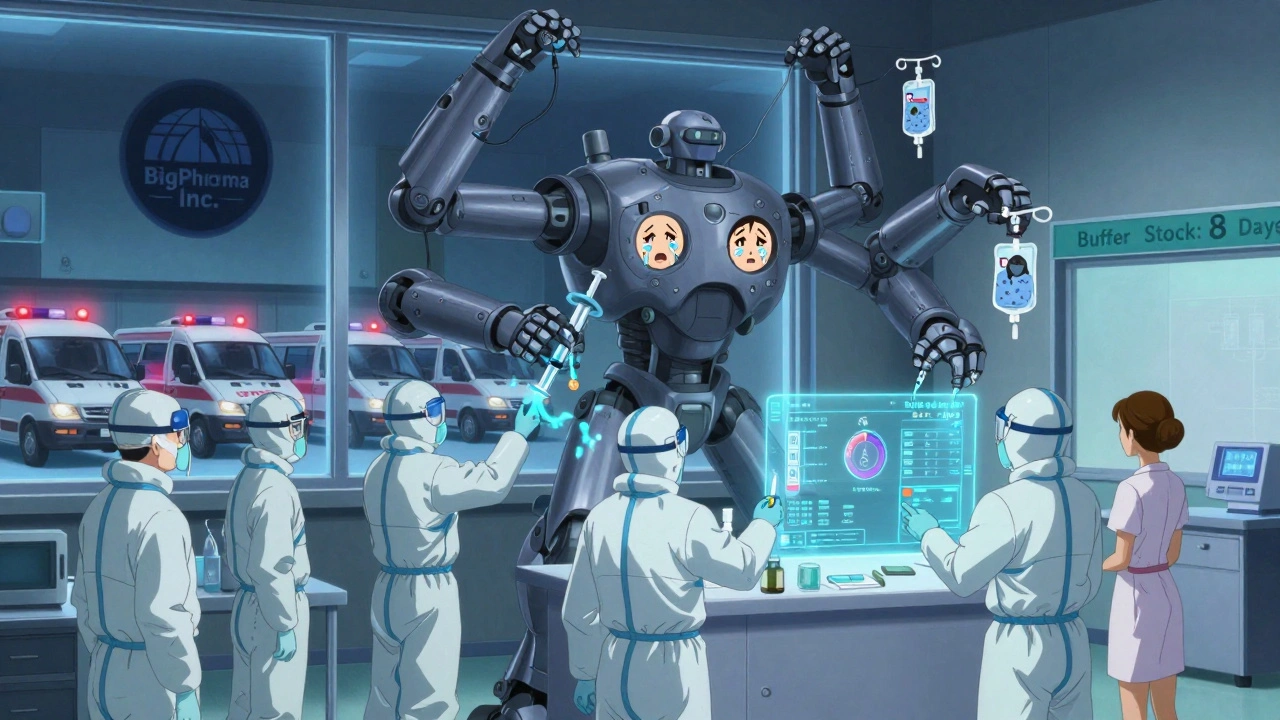
What You Can Do Right Now
If you’re a clinician, pharmacist, or hospital administrator, here’s what works:- Monitor early. Don’t wait for the pharmacy to call you. Sign up for FDA’s Drug Shortage Database. Subscribe to ASHP’s alerts. Set up Google Alerts for drug names and “shortage.”
- Build a list of alternatives. For your top 10 most-used drugs, pre-approve 1-2 clinically appropriate substitutes. Know the dosing differences. Know the risks. Practice with your team.
- Track errors. When you switch drugs, log every near-miss or mistake. This data is your leverage to demand better resources.
- Communicate with patients. If you can’t give the standard drug, explain why. “We’re having a national shortage of your usual pain medication, so we’re switching to something similar. Here’s what to expect.” Transparency reduces anxiety and builds trust.
- Push for policy. Contact your state medical association. Ask if your hospital has a shortage committee. If not, start one. Demand that leadership invest in inventory tracking tools and staff training.
What’s Being Done at the Top Level
The federal government has started to wake up. In 2022, HHS created a new role: Supply Chain Resilience and Shortage Coordinator. The FDA released draft guidance requiring manufacturers to report potential shortages earlier-and they’re expected to finalize it in mid-2024. That could cut detection time by 25%. Some states are experimenting with mandatory reporting, like France and Canada, which cut shortage duration by 37%. Germany keeps national stockpiles of critical drugs-something the U.S. still doesn’t have outside of emergency disaster supplies. And experts are pushing for a simple fix: change Medicare reimbursement. Reward manufacturers for reliability, not just low prices. One analysis estimates that paying an extra $1.5 billion a year to support quality infrastructure could reduce shortages by half.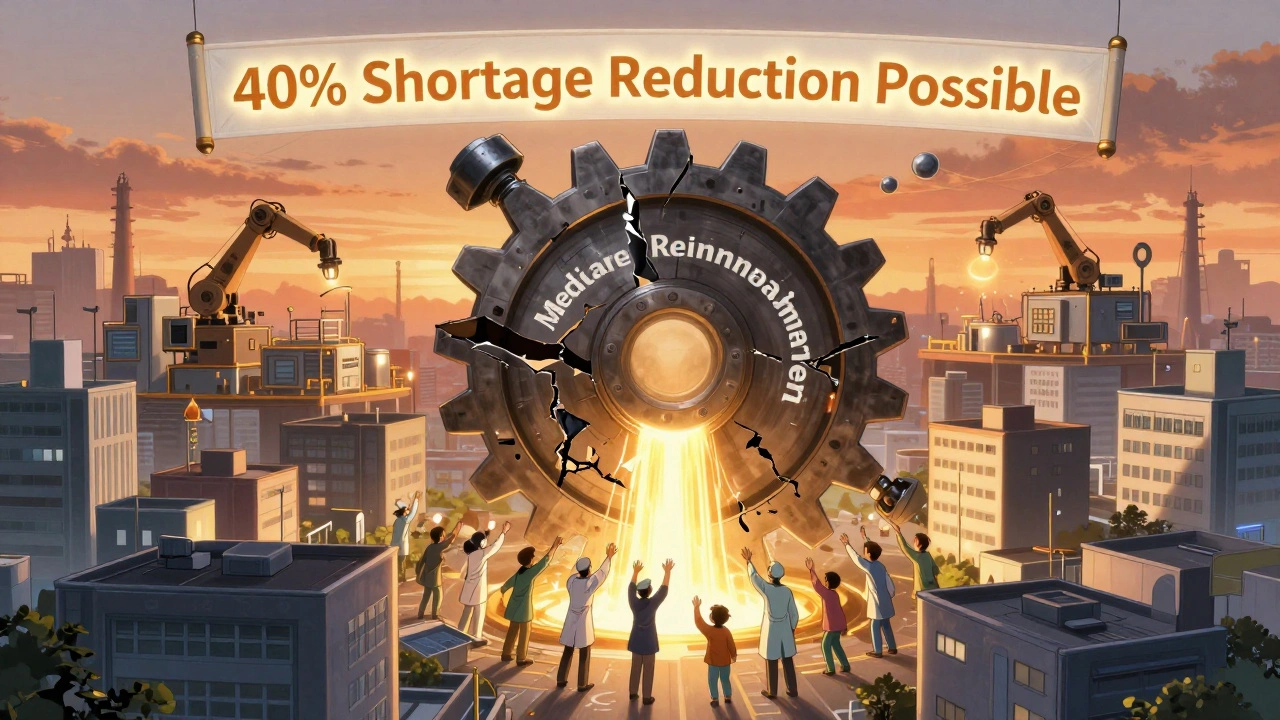
The Human Cost
Behind every shortage statistic is a person waiting for treatment. A cancer patient whose chemo was postponed. A child with sepsis who got a weaker antibiotic because the strong one was gone. A nurse working 12 extra hours a week just to find a solution. The American Medical Association found that 84% of physician practices saw a shortage in the past year. 43% said it changed how they treated a patient. 17% had to delay necessary procedures. That’s not a supply chain issue. That’s a public health emergency. And it’s not going away unless we stop treating it like a logistics problem and start treating it like the crisis it is.What Comes Next
Without major changes, the number of shortages will grow 8-12% each year through 2030. Oncology, anesthesia, and critical care drugs will be hit hardest. But there’s hope. Advanced manufacturing tech-like modular, flexible production lines-could cut factory changeover time from weeks to hours. If even half the manufacturers adopted this, shortages could drop by 40%. The tools exist. The data is clear. What’s missing is the political will and the funding to make it happen.For now, the burden falls on the people on the front lines: the pharmacists who stay late, the nurses who double-check every dose, the doctors who have to explain why the right medicine isn’t there. They’re doing everything they can. But they shouldn’t have to. The system needs to change. And it can-if we demand it.
What are the most common drugs in shortage right now?
The most common drugs in shortage are generic sterile injectables, including morphine, saline, vancomycin, propofol, doxorubicin, and other cancer therapies. These make up over 60% of all shortages. They’re used in emergencies, surgeries, and intensive care, so when they’re unavailable, patient care is directly affected.
Why do drug shortages keep happening?
Most shortages are caused by manufacturing quality issues-contaminated batches, equipment failures, or outdated facilities. These problems are worse in the generic drug market because profit margins are so thin that companies can’t afford to invest in upgrades. About 80% of the active ingredients in U.S. drugs come from overseas, mostly China and India, adding supply chain risk.
Can I substitute one drug for another safely?
Sometimes, but not without caution. Substituting morphine for hydromorphone, for example, requires a 3:1 dose adjustment and carries higher risks of respiratory depression. Always consult your pharmacy team and follow approved institutional protocols. Never guess dosing. Document every substitution and monitor for side effects.
How can hospitals prepare for shortages?
Hospitals should form a multidisciplinary shortage team that meets weekly. They should track inventory in real time, maintain 14-30 days of buffer stock for critical drugs, pre-approve alternatives, train staff on substitutions, and use FDA and ASHP alerts to detect issues early. Hospitals that run simulations see 33% fewer medication errors during actual shortages.
Is there a national stockpile for medications in the U.S.?
No, not for routine drug shortages. The Strategic National Stockpile only holds supplies for public health emergencies like bioterrorism or pandemics. There’s no federal reserve for essential medications like morphine, antibiotics, or chemotherapy drugs-unlike countries like Germany and Canada, which do maintain strategic reserves.
What’s being done to fix this long-term?
The FDA is finalizing new rules to require earlier manufacturer notifications of potential shortages. HHS created a dedicated coordinator role to improve cross-agency response. Experts are pushing to reform Medicare reimbursement so manufacturers are rewarded for reliability, not just low prices. Advanced manufacturing tech could cut production changeover time from weeks to hours, potentially reducing shortages by 40% if widely adopted.





Matt Dean
December 1, 2025 AT 14:45Let me guess - you’re one of those people who thinks hospitals should just ‘order more’ like it’s Amazon Prime. Wake up. This isn’t a stockout of toilet paper. It’s a systemic collapse of the generic drug supply chain, and no amount of ‘just try harder’ fixes a factory in India that’s been running on fumes since 2018. The FDA’s been screaming about this for a decade and nobody in Congress has a pulse. You want solutions? Start by firing every lobbyist who makes more money off Medicaid rebates than a nurse makes in a year.
Walker Alvey
December 3, 2025 AT 10:39Oh wow a 15 page essay on how capitalism broke medicine. Groundbreaking. Next you’ll tell me water is wet and oxygen is essential. The real tragedy? We still let people with MBAs run hospitals. If we treated drugs like we treat guns - mandatory backup suppliers, federal stockpiles, no profit caps - this wouldn’t be a crisis. But no. We’d rather watch nurses cry over empty shelves than pay $0.05 more per dose. Sad. Just sad.
Bee Floyd
December 5, 2025 AT 07:22I’ve been on the floor for 17 years. I’ve watched morphine vanish during a code blue. I’ve had to explain to a mom her kid’s chemo got delayed because a factory in Bengaluru had a power outage. Nobody’s coming to save us. But we keep showing up. We memorize dosing ratios. We cross-check every vial. We hold hands while we wait for a drug that should’ve been guaranteed. This isn’t about policy. It’s about people. And we’re still here. That’s something.
Jeremy Butler
December 7, 2025 AT 03:55It is axiomatic that the commodification of essential pharmaceuticals, particularly generic sterile injectables, constitutes a structural failure of the healthcare industrial complex. The absence of price elasticity coupled with the absence of regulatory enforcement mechanisms has precipitated a cascading vulnerability in the pharmaceutical supply chain. One must therefore conclude that the current paradigm is not merely inefficient, but ethically indefensible. A recalibration of reimbursement models, grounded in reliability metrics rather than cost-minimization, is not merely prudent - it is a moral imperative.
Courtney Co
December 7, 2025 AT 22:40Do you have any idea how many nights I’ve cried in the supply closet because I couldn’t get vancomycin for a septic baby? I’m not just talking about work. I’m talking about my soul. I used to love this job. Now I just count the days until I can quit. And you know what? I’m not even mad anymore. I’m just… empty. Like the shelves. Like the system. Like me.
Shashank Vira
December 9, 2025 AT 22:19How quaint. You Americans think you are the only ones who suffer from pharmaceutical fragility. In India, we export 80% of your generics, yet our own hospitals have 12-hour shortages of insulin. This is not an American problem - it is a global tragedy of market fundamentalism. The West consumes, the East produces, and the patient? The patient is merely a footnote in a quarterly earnings report. We are all complicit.
Adrian Barnes
December 10, 2025 AT 17:00The data is clear: 63% of shortages stem from manufacturing quality failures. Yet hospitals continue to blame ‘systemic issues’ rather than holding manufacturers accountable. The FDA’s delays in enforcement are indefensible. Why is there no criminal liability for executives who knowingly operate substandard facilities? Why are there no fines that actually hurt? This isn’t negligence - it’s corporate malfeasance dressed in white coats. Someone needs to go to jail.
Jaswinder Singh
December 11, 2025 AT 11:01Bro. I work in a rural ER in Punjab. We get the same drugs you do - same shortages, same delays. But here’s the thing: we don’t have dashboards or alerts. We have a guy with a phone who calls 5 suppliers. We make it work. You wanna fix this? Stop talking about ‘systems’ and start paying people to drive meds across the country. Real people. Real trucks. Real pay. No more spreadsheets. Just deliver the damn stuff.
Eric Vlach
December 12, 2025 AT 04:18My pharmacy team made a cheat sheet for our top 10 shortages. We laminated it. We put it on every med cart. We trained everyone in 15 minutes during shift change. No fancy software. No committee. Just paper and muscle. And guess what? We had zero errors last month. You don’t need a billion-dollar solution. You need a team that cares enough to write it down. Start there.
Souvik Datta
December 12, 2025 AT 10:30Let me tell you something - every shortage is a chance to innovate. Imagine modular manufacturing units that can switch from morphine to propofol in 48 hours. Imagine blockchain-tracked inventory that auto-alerts when stock dips below 10%. We have the tech. We have the data. What we lack is courage. The people on the front lines are heroes. But heroes shouldn’t have to be improvisers. Let’s build systems that honor their work - not just survive it.
Priyam Tomar
December 13, 2025 AT 16:22Wait - you’re telling me we don’t have a national drug stockpile? That’s it? That’s the whole problem? I thought this was about ‘capitalism’ or ‘FDA failures’ - turns out it’s just laziness. Germany has reserves. Canada has reserves. Even tiny Belgium has reserves. We’re the only country that thinks ‘just-in-time’ is a virtue when people’s lives are on the line. This isn’t a shortage. It’s a choice. And we chose wrong.
Jack Arscott
December 14, 2025 AT 12:18🙏 Just read this on my lunch break. I’m a nurse in Oregon. We had a propofol shortage last week. We gave a patient saline and held their hand while they waited. I cried in the parking lot. But I’m not giving up. I’m signing up for the FDA alert today. And I’m telling my boss we need a shortage team. We’re not powerless. We just need to start. 💪