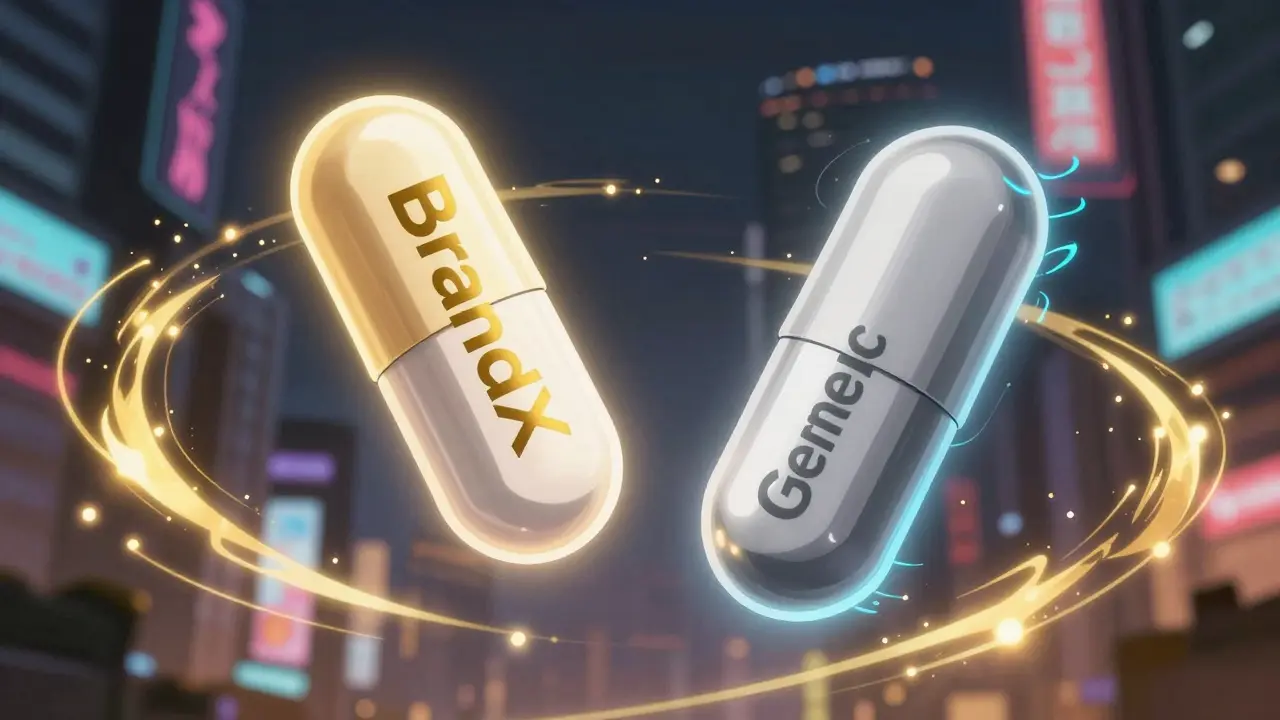
Imagine taking two pills that are chemically identical. Same active ingredient. Same dose. Same manufacturer, even. But one says BrandX on it. The other says Generic. Which one do you think works better?
If you’re like most people, you’d pick the branded one-even if you didn’t know the difference. And here’s the twist: studies show you’d probably feel better after taking it. Not because it’s stronger. Not because it’s better made. But because of the word on the label.
This isn’t magic. It’s the labeling effect-a psychological phenomenon where the name or branding of a drug changes how patients experience it, even when the medicine inside is exactly the same. And it’s happening right now, in millions of medicine cabinets across the country.
What the Label Does to Your Brain
When you see the word "generic" on a pill bottle, your brain doesn’t just read it. It interprets it. And that interpretation can trigger real, measurable changes in how you feel.
A 2019 study published in the European Journal of Public Health tested this with 72 people. Everyone got the exact same placebo pill. Half were told it was a brand-name drug. The other half were told it was generic. After just seven days, 54% of the people who thought they were taking the generic version stopped taking it. Only 33% of those who thought they were on the brand-name version quit.
And it wasn’t just about quitting. The generic-labeled group reported more pain. They were more likely to take extra pills-sometimes even over-the-counter ones-to "make up" for what they believed was a weak drug. Their bodies reacted to the label, not the chemistry.
Even more striking: in a 2016 study, researchers gave people identical placebo pills labeled as either brand-name or generic. Both groups had headaches. The brand-name placebo group reported nearly the same pain relief as people who took real ibuprofen. The generic placebo group? Their pain barely budged.
That’s not a fluke. It’s the placebo effect-but flipped. Normally, we think of placebos as inert substances that work because people believe they’re real medicine. Here, the placebo works only if you believe it’s a brand. If you think it’s generic, the placebo effect vanishes. That’s the labeling effect in action.
Why the Label Feels Like a Lie
Why does "generic" carry such negative weight? It’s not about science. It’s about culture.
For decades, drug companies spent billions on ads showing sleek bottles, smiling patients, and doctors nodding approvingly. The brand name became a symbol of quality, trust, and reliability. Meanwhile, generic drugs were sold in plain white bottles with tiny print. No ads. No celebrity endorsements. Just "cheaper."
That message stuck. A 2023 Kaiser Family Foundation survey found only 56% of Americans believe generic drugs are "as good as" brand-name ones. That’s down from 62% in 2018. The more people hear about generics, the more they doubt them-even though the FDA requires them to be bioequivalent. That means the generic version must deliver the same amount of active ingredient into your bloodstream as the brand, within a tight range.
And here’s the irony: generics are often made in the same factories as brand-name drugs. The FDA inspects them the same way. In fact, nearly 90% of all prescriptions filled in the U.S. are for generics. They save the system $373 billion a year. But if you’re told you’re getting the "generic," your brain might still think you’re getting second-rate.
When the Labeling Effect Hurts
The problem isn’t just perception-it’s outcomes.
Take high blood pressure. A patient on a generic version of lisinopril might start feeling fine after a few weeks. But because they believe the generic is "weaker," they stop taking it. Their blood pressure spikes. They end up in the ER. That’s not the drug failing. That’s the label failing them.
Same with depression, anxiety, or chronic pain. These conditions rely heavily on the body’s natural healing response-the placebo effect. If the patient doesn’t believe the drug will work, their brain doesn’t activate those healing pathways. The medicine might be perfect. But without belief, it’s like a car with a full tank and no key.
Worse, the labeling effect hits harder for people with lower health literacy. In the 2019 study, patients with less education were nearly twice as likely to quit the generic-labeled pills. They didn’t have the background to push back against the myth. And that’s not fair.
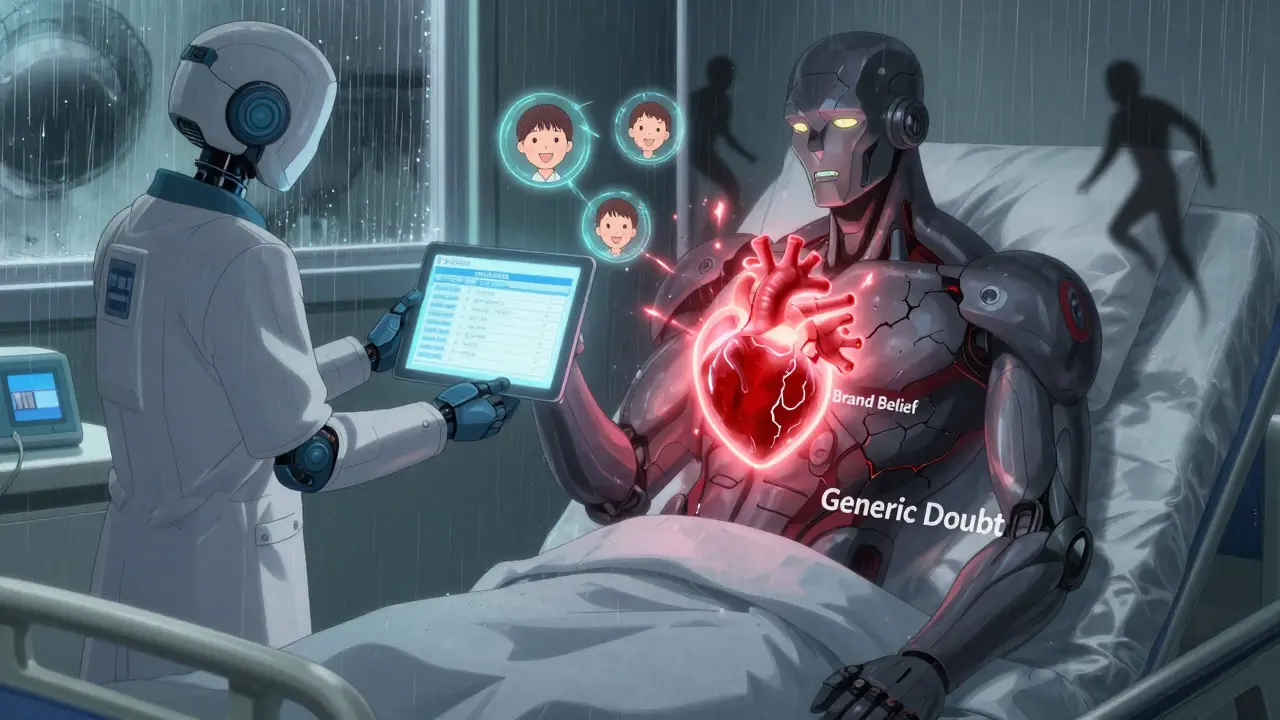
What’s in the Bottle Isn’t Always on the Label
But here’s another layer: sometimes, the label isn’t just misleading-it’s wrong.
A 2020 study analyzed 31 drugs and found that 100% of generic versions had differences in their labeling compared to the original brand. Not small differences. Critical ones. Four of them had warnings or instructions that could lead to life-threatening mistakes. Eleven others had errors that could cause serious harm.
Why? Because when a generic drug is approved, the manufacturer doesn’t have to copy the brand’s full label. They can use a "skinny label"-omitting patent-protected uses. That’s legal. But it’s confusing. A patient might read the generic label and think, "This isn’t for my condition," even if it is.
And the inactive ingredients? They can differ. A generic might use a different filler or dye. For most people, that’s fine. But for someone allergic to a certain dye, that difference could be dangerous. And if the label doesn’t clearly say what’s in it, how would they know?
What’s Being Done About It
It’s not all bad news. Health systems are waking up.
The FDA launched its "It’s the Same Medicine" campaign in 2020. It showed side-by-side photos of brand and generic pills with the same active ingredient. In pilot programs, patient concerns dropped by 28% in just six months.
Some pharmacies now add a line to generic labels: "Therapeutically equivalent to [Brand Name]." In a 2023 trial, that simple phrase cut discontinuation rates from 52% to 37%.
Hospitals are also changing. Nearly 80% now have "generic-first" policies. But they’re pairing them with education-pharmacists explaining the science, doctors reinforcing it during visits, nurses handing out simple brochures.
And the Generic Pharmaceutical Association just committed $50 million to public education under the "Generic You Can Count On" initiative. That’s a start.

What You Can Do
If you’re on a generic drug and you’re feeling unsure:
- Ask your pharmacist: "Is this the same as the brand?" They’ll show you the FDA’s equivalence rating.
- Check the active ingredient. If it matches the brand, it’s the same medicine.
- Don’t stop taking it because you "feel like it’s not working." Give it time. Your brain might just need to catch up.
- If you’re switching from brand to generic and notice a change, talk to your doctor. It might be the label, not the drug.
And if you’re a prescriber or caregiver: don’t just say, "We’re switching you to the generic." Say, "This is the exact same medicine, just less expensive. It’s been tested just as carefully. Many people feel the same way on it as they did on the brand."
The Bigger Picture
Generic drugs are one of the most powerful tools we have to make healthcare affordable. They’re safe. They’re effective. They’re everywhere.
But if we keep letting the word "generic" carry a stigma, we’re not just wasting money-we’re wasting health. People stop taking their meds. Conditions flare up. ER visits rise. Costs climb again.
Science says: the pill doesn’t change. But your belief does. And belief? That changes everything.


Erica Vest
December 18, 2025 AT 08:55The labeling effect is well-documented in clinical psychology and pharmacology. The FDA’s bioequivalence standards are rigorous-generic drugs must demonstrate within 80–125% of the brand’s AUC and Cmax. The perception gap isn’t about science, it’s about marketing. People equate price with quality, even when evidence contradicts it.
Chris Davidson
December 19, 2025 AT 14:22Kinnaird Lynsey
December 20, 2025 AT 03:05So let me get this straight-we’ve spent decades convincing people that generics are ‘just as good’ while simultaneously designing their packaging to look like discount aisle rejects. No wonder the placebo effect evaporates. If you want people to believe in it, maybe stop making it look like a coupon clipper’s last hope.
Glen Arreglo
December 20, 2025 AT 15:02As someone who grew up in a household where every pill was generic because we couldn’t afford the brand, I can tell you this: the difference isn’t in the medicine-it’s in the narrative. My mom took her generic blood pressure med for 15 years. Never had an issue. But when her new doctor switched her to the brand because ‘it’s better for peace of mind,’ she felt better immediately. Not because it worked differently. Because she finally believed it would.
We need to fix the story, not the science.
benchidelle rivera
December 21, 2025 AT 12:43It’s not just about drugs. It’s about how society assigns value. A $100 handbag vs a $10 knockoff-same stitching, same leather, same factory. But one makes you feel powerful. The other makes you feel like you compromised. The same logic applies to pills. The label isn’t lying. It’s echoing a cultural bias we’ve all internalized.
And yes, this disproportionately affects low-income patients. They’re told they’re getting the ‘budget option’-so their brain treats it like a budget outcome.
Isabel Rábago
December 21, 2025 AT 21:05People who take generics are basically accepting second-class healthcare and then wondering why they don’t feel better. If you’re going to take a drug, take the real one. Don’t gamble with your health because you’re too cheap to pay for quality. This isn’t about marketing-it’s about responsibility.
And don’t tell me about FDA standards. I’ve seen the inspections. They’re not the same as for brand-name manufacturers. You think the FDA has time to check every single generic batch? Please.
Moses Odumbe
December 22, 2025 AT 20:27Bro this is wild 🤯 I just realized I’ve been taking generic Adderall for 3 years and I thought I was just ‘not responding’ to meds… turns out my brain was just mad about the label 😭 I switched to brand and boom-focus returned. Not chemically. Psychologically. This is next level placebo stuff.
Also generic manufacturers use different dyes sometimes. My cousin had a reaction to red dye #40 in her generic antidepressant. Brand didn’t have it. So yeah. Sometimes the label isn’t wrong… it’s just incomplete.
bhushan telavane
December 23, 2025 AT 08:51In India, generics are the only option for most people. We don’t have a choice. But here’s the thing-we don’t think less of them. We know the science. We know the FDA and WHO standards. We trust the system. Maybe the problem isn’t the generic. Maybe it’s the American obsession with branding as a status symbol.
Our grandparents took generics for decades. Never had a problem. Maybe we’ve forgotten how to trust medicine without a logo.
Connie Zehner
December 24, 2025 AT 23:07OMG I’m so glad someone finally said this!! I’ve been saying this for YEARS!! My doctor switched me to generic Zoloft and I felt like I was sinking into a black hole-like my brain just gave up. I went back to brand and instantly felt like myself again. It’s not in my head!! It’s in the pill!! The generic is just… different!!
And don’t even get me started on the taste!! Generic lisinopril tastes like chalk and regret. I swear my tongue knows the difference!!
Jedidiah Massey
December 25, 2025 AT 20:01It’s a classic case of cognitive dissonance mediated by pharmacoeconomic priming. The branding heuristic overrides pharmacokinetic equivalence, resulting in a diminished placebo response in the generic cohort. The FDA’s bioequivalence thresholds are statistically significant but clinically inert when psychological expectations are misaligned.
Moreover, the inactive excipients-though non-therapeutic-can modulate gastric absorption kinetics via pH-dependent dissolution profiles, particularly in patients with altered GI motility. This is rarely accounted for in labeling.
And don’t even get me started on the ‘skinny label’ loophole. It’s a regulatory arbitrage that undermines patient safety. We need mandatory harmonized labeling across all formulations.
Alex Curran
December 27, 2025 AT 00:50Interesting read. I’m from Australia-we’ve got a similar issue but our PBS system makes generics the default. Most people don’t even know what the brand name is. We just get told ‘this is the medicine you need.’ And guess what? Compliance is higher here than in the US. Maybe because we don’t have Big Pharma ads telling us the brand is better.
Also the FDA’s ‘It’s the Same Medicine’ campaign is great. Should’ve been global.
Allison Pannabekcer
December 27, 2025 AT 12:41I’ve worked as a pharmacist for 18 years. I’ve seen patients cry because they were switched to generic insulin. I’ve seen them improve after we sat down and explained the science. One woman told me, ‘I thought I was being punished for being poor.’ That broke my heart.
If you’re a doctor or nurse reading this-don’t just say ‘We’re switching you to generic.’ Say: ‘This is the exact same medicine your body needs. The only difference is your wallet gets a break.’
Words matter. Belief matters. And sometimes, the most powerful drug in the bottle is the one we whisper into the patient’s ear.
Sarah McQuillan
December 27, 2025 AT 18:09Okay but if generics were truly equal, why do brand-name drugs still exist? Why do they cost 10x more? Because they’re better. Plain and simple. The FDA lets generics in because they’re cheaper-not because they’re equal. And don’t tell me about bioequivalence. That’s just a loophole for corporations to cut corners and make more profit.
America’s healthcare system is broken. But don’t blame the patient for wanting the real thing.