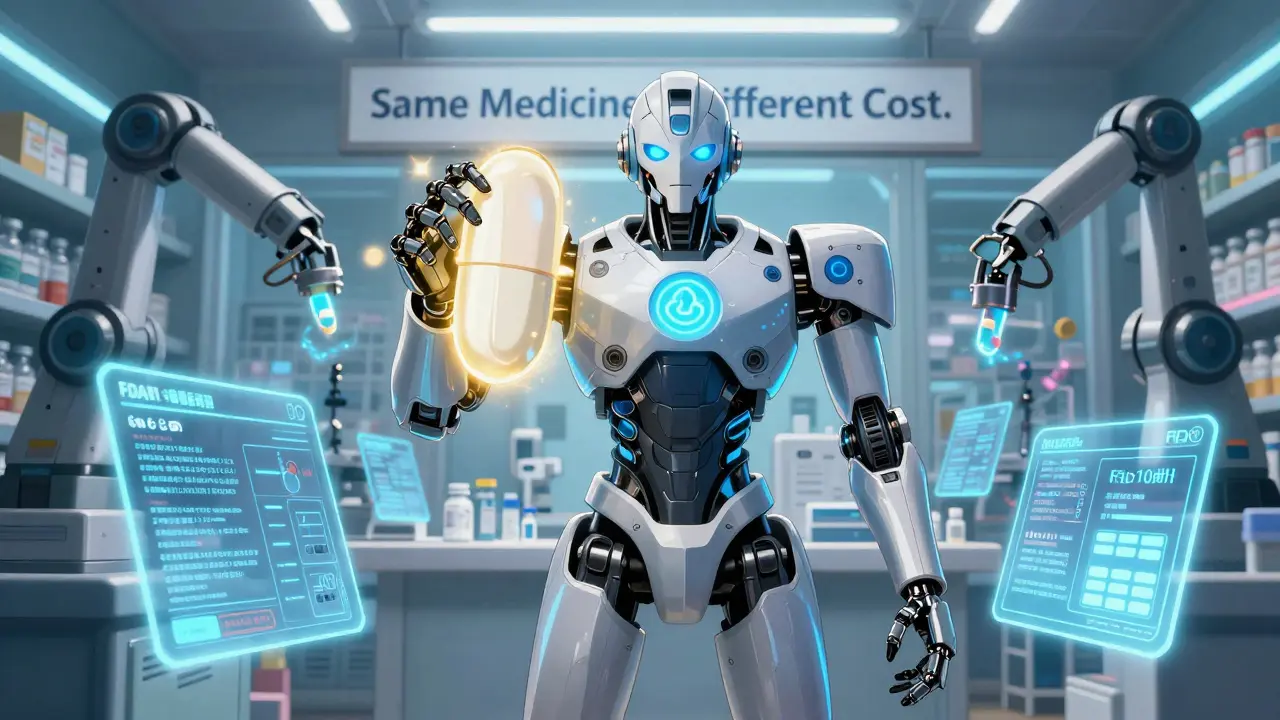
When you pick up a prescription, you might see two options: the brand-name pill you’ve heard of, and a smaller, differently colored pill with a plain label-often costing a fraction of the price. That’s a generic drug. And yes, it works just as well. But why does it cost 80-85% less? The answer isn’t about quality, secrecy, or hidden cuts. It’s about the rules of the game-and who pays for it.
They’re the same medicine, just cheaper to make
A generic drug isn’t a copycat. It’s not a knockoff. It’s the exact same active ingredient, in the exact same strength, delivered the exact same way. If your brand-name drug is atorvastatin 20mg, the generic is atorvastatin 20mg. No tricks. No watered-down formula. The U.S. Food and Drug Administration (FDA) requires that generics match brand-name drugs in purity, potency, and how fast they enter your bloodstream. They must be bioequivalent-meaning your body absorbs them at the same rate and to the same degree. That’s not a suggestion. It’s the law.Brand-name drugs pay for decades of research
Before a brand-name drug hits the shelf, it’s been through 8 to 12 years of testing. That includes lab studies, animal trials, and multiple rounds of human clinical trials across thousands of patients. The average cost? Around $2.6 billion. That’s not a typo. That’s what pharmaceutical companies spend to prove a new drug is safe and effective. They don’t do it out of charity. They need to recover that investment before competitors can jump in. That’s where patents come in. A drug company gets 20 years of patent protection from the date they file. But because clinical trials take years, the actual time they have to sell exclusively is often only 7 to 12 years. During that window, they’re the only ones allowed to make it. No competition. No price pressure. That’s how they recoup costs-and make profits to fund the next drug.Generics skip the billion-dollar research
Generic manufacturers don’t have to start from scratch. When the patent expires, they can use all the existing data. They don’t need to run new animal studies or large-scale human trials. Instead, they submit an Abbreviated New Drug Application (ANDA). The FDA reviews their data to prove their version behaves the same as the original. That process takes about 10 months on average-not years. And it costs between $1 million and $5 million, not billions. That’s the core difference. Brand-name drugs pay for discovery. Generics pay for production. And production is cheap.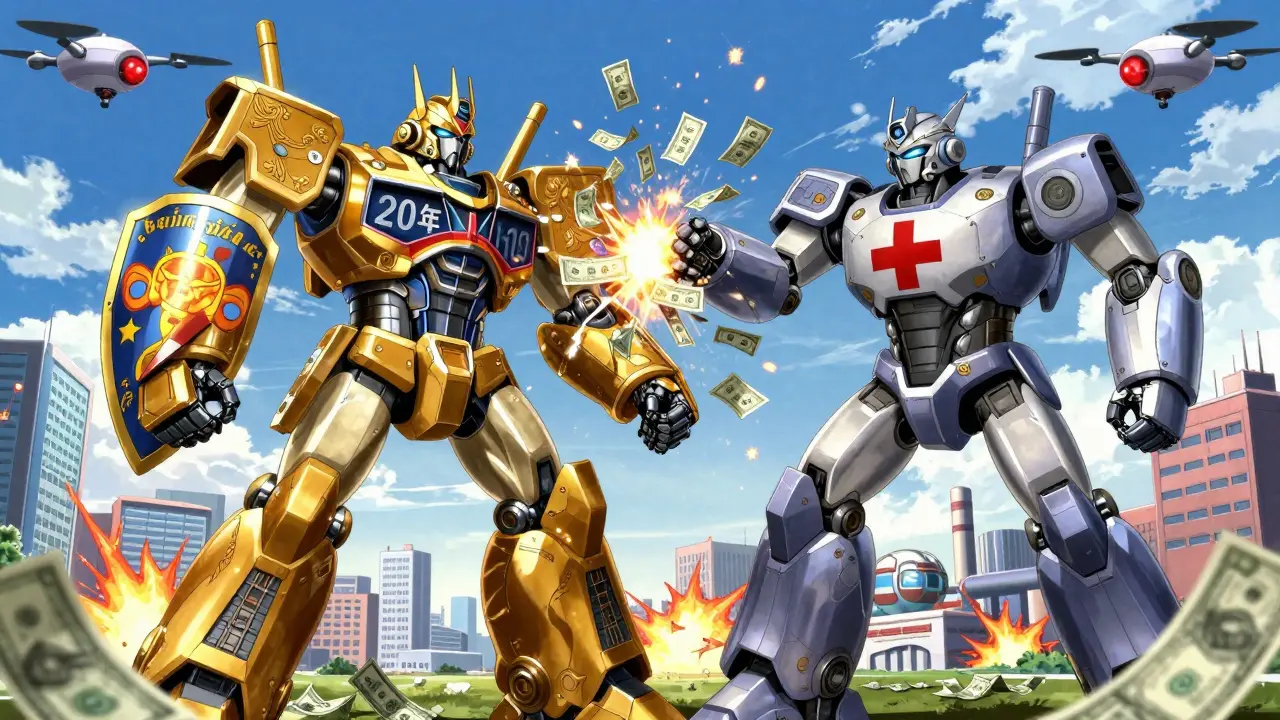
Competition drives prices down
Once a patent expires, multiple companies can start making the same drug. Within a year, you might see 5, 10, even 14 different generic versions on the market. Each one competes on price. The first generic usually drops the cost by 30-40%. Then the next one drops it another 20%. By the time 5 or 6 companies are selling it, the price can fall by 80-90%. Take Lipitor, the cholesterol drug. When it lost its patent, the brand version cost about $500 a month. The generic? Around $4. Omeprazole (Prilosec) went from $300 to $6. These aren’t outliers. They’re the norm. The Congressional Budget Office found that generic competition typically slashes prices by 80-90% in the first year after patent expiry.Same rules, same factory standards
Some people worry that generics are made in cheaper, lower-quality factories. That’s not true. The FDA inspects every manufacturing facility-brand or generic-using the same strict rules. In 2023, they did over 12,000 inspections worldwide. Generic manufacturers must follow Current Good Manufacturing Practices (CGMP), just like the big pharma companies. The pills might look different-different color, shape, or coating-but that’s only because trademark laws prevent generics from copying the brand’s appearance. The active ingredient? Identical. Even the shelf life is the same. Both brand and generic drugs must prove they stay potent within 90-110% of the labeled amount for at least 12 to 24 months. Stability testing? Just as rigorous.Why do people still hesitate?
Despite all this, many people still prefer brand-name drugs. A 2023 survey found that 62% of Americans trust brand-name medications more-even though 84% admit generics are just as effective. Why? It’s psychology. The brand name feels familiar. The color and shape matter. Some patients report feeling “different” after switching, even when there’s no clinical change. There are rare exceptions. For drugs with a narrow therapeutic index-like warfarin, levothyroxine, or phenytoin-tiny differences in absorption can matter. Some doctors prefer to keep patients on the same version, brand or generic, to avoid any potential fluctuation. But the FDA says all approved generics meet the same standard. If you’re switching and notice symptoms, talk to your pharmacist. It’s not the drug’s fault-it could be the filler ingredients, or your body adjusting.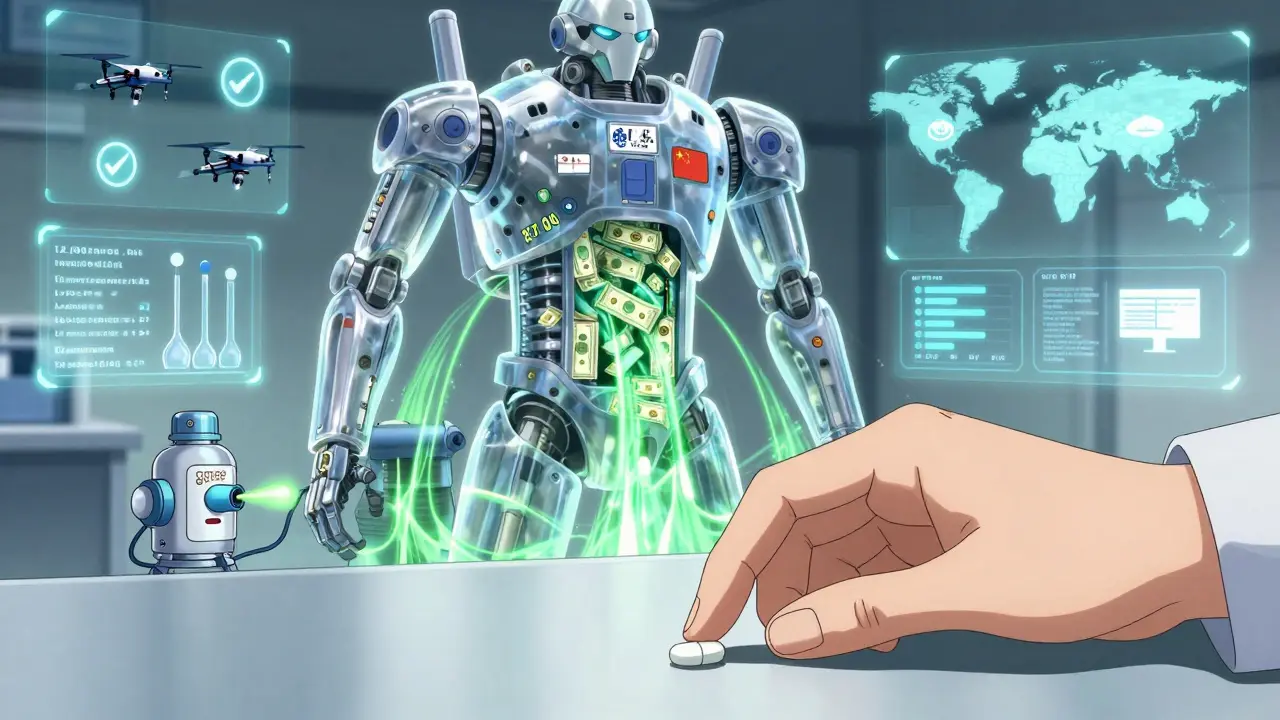
How much do you really save?
The numbers speak for themselves. In the U.S., generics make up 90.5% of all prescriptions filled. But they account for only 18% of total drug spending. That means brand-name drugs, which are only 9.5% of prescriptions, cost 82% of the money spent on medicine. From 2007 to 2016, generics saved the U.S. healthcare system $1.67 trillion. In 2022 alone, they saved $293 billion. That’s not just pocket change. That’s money that keeps people on their meds, avoids hospital visits, and keeps insurance premiums lower. Most insurance plans put generics in Tier 1-the cheapest tier. Your copay might be $0 to $15. Brand-name drugs? $25 to $50. Specialty drugs? You might pay 25-33% of the full price. If you’re paying out of pocket, the difference is even starker.What’s changing now?
The system isn’t perfect. Some brand-name companies pay generic makers to delay entry-called “pay-for-delay” deals. In 2022, the FTC found 148 of these deals, costing consumers $3.5 billion a year. The FDA is pushing to speed up approval for complex generics-like inhalers and ointments-that used to take years. New rules aim to cut approval time from 5 years to 2. Also, most of the active ingredients in generics come from China and India. That’s efficient-but it’s also a risk. During the pandemic, shortages hit hard. Over 287 generic drugs were affected. That’s why supply chain resilience is now a top concern.What should you do?
Ask your doctor: “Is there a generic version?” Most of the time, yes. Ask your pharmacist: “Can you switch me to the generic?” In 49 states, they can do it automatically unless you or your doctor say no. Don’t assume a higher price means better quality. Don’t avoid generics because they look different. If you’re worried, talk to your pharmacist. They can explain why the pill looks different and confirm it’s the same medicine. And if cost is keeping you from taking your medication? Switching to a generic might be the single best financial health decision you make this year.Are generic drugs as effective as brand-name drugs?
Yes. Generic drugs must meet the same FDA standards for safety, strength, quality, and performance as brand-name drugs. They contain the same active ingredient and are proven to work the same way in your body. The FDA requires bioequivalence testing to ensure the generic delivers the same amount of medicine into your bloodstream at the same rate as the brand.
Why do generic pills look different?
Trademark laws prevent generic manufacturers from making pills that look exactly like the brand-name version. So they change the color, shape, or markings. But these differences are only cosmetic. They don’t affect how the drug works. The active ingredient is identical. If you’re unsure, check the label or ask your pharmacist.
Can I trust generics made overseas?
Yes. The FDA inspects all manufacturing facilities-whether in the U.S., India, China, or elsewhere-using the same standards. Over 12,000 inspections are done annually worldwide. Generic drugs made overseas must meet the same quality, safety, and effectiveness requirements as those made in the U.S. The FDA has no preference for where a drug is made, only that it meets the rules.
Do generics have more side effects?
No. Side effects come from the active ingredient, which is the same in both brand and generic versions. Some people report feeling different after switching, but this is often due to changes in inactive ingredients (like fillers or dyes), not the medicine itself. If you notice new symptoms, talk to your doctor or pharmacist. It’s rare, but it can happen-and it’s fixable.
Why do insurance companies push generics?
Because they save money-for everyone. Generics cost 80-85% less, so insurers pay less per prescription. That helps keep premiums lower for all policyholders. Most plans have a three-tier system where generics are the cheapest option. If you choose a brand-name drug when a generic is available, your insurer might require prior approval or charge you a higher copay.
Are there any drugs where generics aren’t recommended?
For most drugs, generics are perfectly safe and effective. But for medications with a narrow therapeutic index-like warfarin, levothyroxine, or certain seizure drugs-doctors sometimes prefer to stick with one version to avoid small changes in absorption. Even then, switching between approved generics is generally safe. The key is consistency: if you start on a generic, stay on it unless your doctor advises otherwise.
How do I know if my generic is FDA-approved?
All legally sold generic drugs in the U.S. must be FDA-approved. You can check the FDA’s online database, “Drugs@FDA,” to confirm. But you don’t need to. If your pharmacy dispenses it and it’s labeled as a generic, it’s approved. If you’re ever unsure, ask your pharmacist to show you the FDA approval status.



anggit marga
January 2, 2026 AT 04:18Why do Americans act like generics are some kind of scam when India and China have been making them for decades and people live just fine? You think your $500 pills are magic? My cousin in Lagos takes Indian generics for hypertension and he’s still alive to roast your expensive brand names
Joy Nickles
January 3, 2026 AT 03:25Okay but like… did you know that the fillers in generics can be totally different?? Like I switched to generic omeprazole and suddenly I was bloated and dizzy for 3 weeks?? My pharmacist was like ‘oh that’s just the dye’ and I was like… DYE?? I didn’t sign up for a rainbow pill with mystery starch?? This isn’t science it’s alchemy!!
Emma Hooper
January 5, 2026 AT 03:20Let me tell you something sweet, honey-generics aren’t just cheap, they’re *brilliant*. They’re the unsung heroes of modern medicine. While Big Pharma is busy buying senators and hiking prices on insulin, generics are out here keeping grandmas alive on Social Security checks. They’re not ‘lesser’-they’re liberated. The FDA doesn’t play games. If your pill says ‘atorvastatin 20mg’ and passes bioequivalence? It’s the same molecule, same magic, same life-saving power. The only thing different? The price tag. And the dignity of not being robbed.
Also, the color? Please. That’s just trademark law being petty. The pill doesn’t care if it’s blue or green. Your body doesn’t care. Only your ego does. And your ego is paying $400 for a chemical that costs $2 to make.
Generics are democracy in pill form. They’re what happens when the people win. And honestly? I’m proud to take them. I don’t need a logo on my medicine to feel safe. I need science. And science doesn’t care who made it.
Also, if you’re still scared? Talk to your pharmacist. They’re the real MVPs. They know which generics have the best bioavailability. They don’t work for Pfizer. They work for you. And they’ll tell you the truth-even if it’s inconvenient.
So next time you’re handed a plain white pill? Don’t flinch. Smile. You just saved your rent money. And maybe your life.
Urvi Patel
January 6, 2026 AT 01:29Wow such a long post about something so obvious. Of course generics are cheaper. They don’t pay for ads or fancy packaging or celebrity endorsements. You think the $500 pill is better because it has a logo? Please. I’ve seen the manufacturing plants in Hyderabad-cleaner than your local pharmacy. The FDA doesn’t care where it’s made as long as it works. And it works. End of story. Stop romanticizing corporate greed
Martin Viau
January 6, 2026 AT 22:58From a supply chain perspective, the concentration of API production in two geopolitical regions-India and China-is a systemic vulnerability. The 2022 FDA report on critical drug shortages revealed that 89% of generic APIs originate from these jurisdictions, with 72% of finished dosage forms passing through single-source manufacturing nodes. This creates a single point of failure under stress events-pandemics, trade wars, port strikes. The economic efficiency is undeniable, but the risk profile is underappreciated. We need diversification, not just deregulation.
Marilyn Ferrera
January 7, 2026 AT 00:14Generics work. Period. The FDA’s bioequivalence standard is strict: 80–125% confidence interval for AUC and Cmax. That’s not a suggestion-it’s a legal requirement. If your body absorbs it differently, the FDA pulls it. No exceptions. No loopholes. No ‘maybe.’ You’re not taking a gamble. You’re taking science.
And if you feel weird after switching? It’s probably the filler. Not the drug. Talk to your pharmacist. They can swap you to a different generic brand with a different binder. It’s not the medicine-it’s the coating. Don’t blame the science. Blame the dye.
Robb Rice
January 7, 2026 AT 22:33Just want to say I switched to generic lisinopril last year after my insurance denied the brand. I was nervous, but I followed the advice here and talked to my pharmacist. No side effects. Blood pressure is stable. Saved me $200 a month. Honestly? I feel smarter for doing it. Not because I’m cheap, but because I’m informed. Thanks for the clear breakdown.
Harriet Hollingsworth
January 9, 2026 AT 17:18People who take generics are just letting corporations win. If you’re not willing to pay full price for your medicine, you’re basically saying your life isn’t worth the cost. And what about the scientists who spent 12 years developing it? You think they do it for fun? You’re not saving money-you’re stealing from innovation.