What Immunosuppressants Do and Why They’re Lifelong
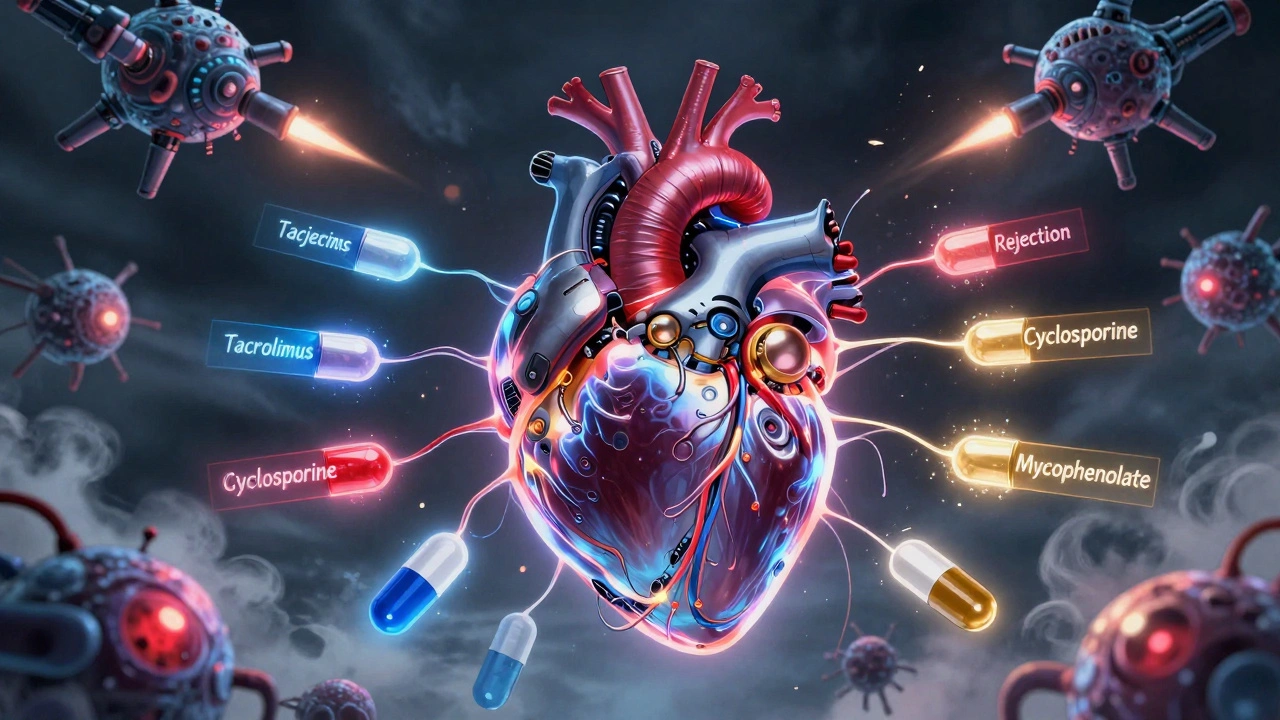
After an organ transplant, your body sees the new organ as an invader. It doesn’t matter if it’s a kidney, liver, or heart - your immune system will try to destroy it. That’s where immunosuppressants come in. These drugs don’t cure anything. They don’t make the organ work better. They simply keep your immune system from attacking the transplant. And because rejection can happen at any time, even decades later, you’ll need to take them for the rest of your life.
There’s no getting around it. Outside of rare cases like identical twins, your body won’t naturally accept a transplanted organ. That’s why 98.7% of kidney transplant recipients in the U.S. are on immunosuppressants, and nearly all of them - 92.4% - take tacrolimus. It’s the most effective drug we have. But it’s not harmless. Every pill you swallow comes with a trade-off: a lower chance of rejection, but a higher chance of side effects.
How the Main Drugs Work - And Why They Interact
Immunosuppressants don’t all work the same way. They’re like different tools in a toolbox, each targeting a different part of your immune response.
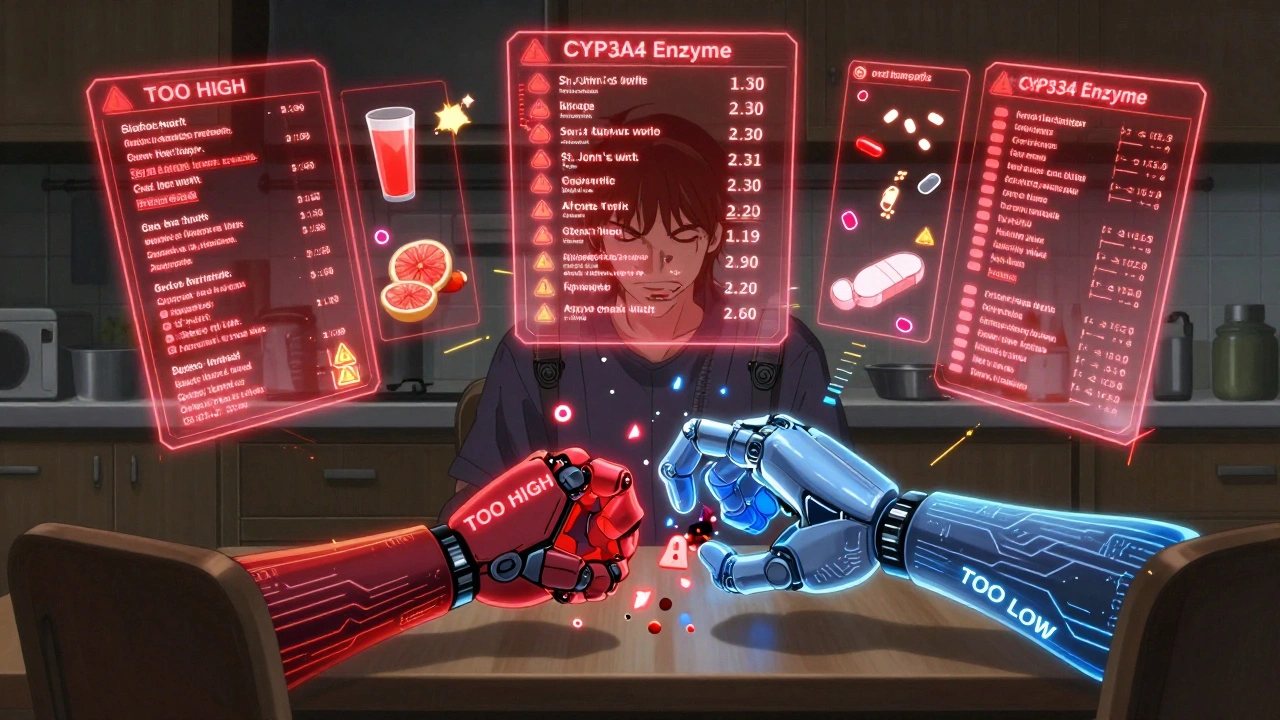
Tacrolimus and cyclosporine - the calcineurin inhibitors - block the signal that tells your T-cells to attack. They’re powerful, but they’re also messy. These drugs are broken down by an enzyme called CYP3A4 in your liver. That’s where the trouble starts. Anything that messes with that enzyme changes how much drug stays in your blood.
Take fluconazole, a common antifungal for yeast infections. It shuts down CYP3A4. That means tacrolimus builds up. Levels can jump 50% to 200%. Too high, and you risk kidney damage, tremors, or seizures. On the flip side, rifampin - used for tuberculosis - turns on CYP3A4. It burns through tacrolimus so fast your levels crash. That’s when rejection kicks in.
Mycophenolate mofetil stops immune cells from multiplying by cutting off their fuel supply. It’s less likely to interact with other drugs, but it’s brutal on your gut. About half of people on this drug get diarrhea, nausea, or stomach pain. Azathioprine is older and cheaper, but it can wipe out your white blood cells, leaving you vulnerable to infections.
Corticosteroids like prednisone are the blunt instrument. They calm inflammation everywhere - immune system, joints, skin. But they also wreck your metabolism. They cause weight gain, high blood sugar, and brittle bones. And sirolimus, an mTOR inhibitor, avoids kidney damage but causes mouth sores, high cholesterol, and slow wound healing.
The Most Common Side Effects - And How They Hit Real People
Side effects aren’t just listed in pamphlets. They’re daily realities.
At Cleveland Clinic, 68% of transplant patients reported gut problems in the first year. Diarrhea. Nausea. Cramps. It’s not just uncomfortable - it’s exhausting. You can’t plan your day when you’re afraid to leave the house.
Then there’s the face. Steroids make your cheeks puff out, your neck thicken, your skin thin. One patient on NHS Blood and Transplant’s survey said, “I didn’t recognize myself in the mirror.” That’s not just physical. It’s psychological. People report depression, anxiety, and what they call “steroid rage” - sudden bursts of anger they can’t control.
High blood pressure? Affects 78% of transplant recipients. Diabetes? 35% develop it after transplant. Cholesterol? 62% need statins. And infections? 85% of patients say they’re constantly worried about getting sick. A cold can turn into pneumonia. A cut can turn into sepsis.
And then there’s fatigue. Not just tired. Bone-deep, can’t-get-out-of-bed fatigue. 72% of patients say it’s the worst part. Sleep? Disrupted for 68%. Emotions? Unstable for 54%. It’s not laziness. It’s the drugs.
Drug Interactions You Can’t Ignore
You’re not just taking one drug. You’re on a cocktail - often 8 to 12 pills a day. And every new medication, supplement, or even herbal tea can throw it off.
St. John’s wort? It’s a natural antidepressant, but it slashes tacrolimus levels by up to 50%. Grapefruit juice? It does the opposite - makes tacrolimus skyrocket. Even over-the-counter painkillers like ibuprofen can hurt your kidneys when combined with calcineurin inhibitors.
Antibiotics? Watch out. Erythromycin and clarithromycin? Big no. They raise drug levels. Rifampin? Dangerous drop. Even some antacids and proton-pump inhibitors can interfere. And don’t forget supplements. Calcium, magnesium, zinc - they can bind to mycophenolate and stop it from working.
This isn’t guesswork. It’s science. A 2020 review found that 30% to 40% of commonly used drugs interact with immunosuppressants. That’s why every transplant center requires you to bring a full list of everything you take - including vitamins and CBD oil - to every appointment.
Monitoring: Blood Tests, Dosing, and the Daily Grind
You can’t just take these drugs and hope for the best. You need constant monitoring.
Tacrolimus levels are checked twice a week right after transplant. Then weekly for three months. Biweekly for six months. After that, monthly - unless something changes. If your level drops below 5 ng/mL, rejection risk goes up. If it goes above 12 ng/mL, you’re in danger of kidney damage or neurological problems.
Monthly blood counts check for low white cells, low platelets. Quarterly lipid panels track cholesterol. Biannual glucose tests catch new-onset diabetes early. And if you’re on sirolimus, they’ll check your protein levels - too much means your kidneys are leaking.
And adherence? It’s everything. A 2022 study found that 22% of late graft failures were due to patients missing doses. Not because they didn’t care - because the regimen was too complex. Eight pills at 7 a.m., six at 7 p.m., with food restrictions, timing windows, and drug interactions to remember. That’s why many centers now use electronic pill dispensers. They beep, they flash, they text reminders. In one study, adherence jumped from 72% to 89% with them.

The Big Picture: Survival, Cancer, and the Future
Let’s talk numbers. A kidney transplant recipient has a 65% chance of surviving 10 years. A healthy person your age? 85%. That gap? It’s mostly because of the drugs.
Cancer risk is real. Skin cancer is the most common - 23% of liver transplant recipients get it. But it’s not just skin. Gastrointestinal cancers are 100 times more common than in the general population. HPV-related cancers? Same thing. The immune system can’t spot them early anymore.
But there’s hope. In 2023, the FDA approved voclosporin - a newer calcineurin inhibitor with less kidney damage. And belatacept, a newer drug that doesn’t harm the kidneys at all, is showing promise. In one trial, patients on belatacept had 30% fewer heart attacks and 25% fewer cancers after seven years. The catch? Higher rejection rates early on.
And then there’s the dream: tolerance. The ONE Study found that 15% of kidney transplant patients could stop all immunosuppressants after receiving regulatory T-cell therapy. No drugs. No side effects. Just a functioning organ. It’s still experimental. But it’s real.
Meanwhile, most centers are moving toward steroid-free regimens. If you’re low-risk, you might be off prednisone within two weeks. That cuts weight gain, bone loss, and mood swings by 35% to 40%.
What You Can Do - And What You Must Not Do
You’re not powerless. You have control.
- Never stop or change your dose - not even for a day. Not because you feel fine. Not because you’re sick of side effects.
- Always tell every doctor - even your dentist - that you’re on immunosuppressants. They need to know before they prescribe anything.
- Keep a medication log - write down every pill, supplement, and herb. Bring it to every appointment.
- Avoid raw foods - no sushi, rare steak, unpasteurized cheese. Listeria doesn’t care how strong you are.
- Wear a mask in crowded places, especially in winter. Flu season isn’t just a nuisance - it’s life-threatening.
- Report fever above 100.4°F immediately. Don’t wait. Don’t take Tylenol and hope it goes away.
- Get skin checks every six months. Even if you’ve never had a mole.
And talk to your team. Not just your doctor. Your pharmacist. Your nurse. Your transplant coordinator. They’ve seen this before. They know what works. They can help you adjust, not just endure.
Final Thought: It’s Not Perfect - But It’s Worth It
Living with a transplant means living with a constant balance. Too much drug? Side effects steal your life. Too little? Your new organ dies.
There’s no easy path. But for most people, it’s the only path. The alternative - dialysis, waiting lists, declining health - is worse. The drugs are heavy. The side effects are real. But so is the freedom. The ability to walk without oxygen. To eat without restriction. To sleep through the night. To hold your grandchild without fear.
It’s not a cure. But it’s a second chance. And for now, that’s enough.




Iris Carmen
December 8, 2025 AT 21:53Jennifer Blandford
December 8, 2025 AT 22:48Rich Paul
December 10, 2025 AT 12:18Raja Herbal
December 10, 2025 AT 21:14Brianna Black
December 11, 2025 AT 07:10Ryan Brady
December 11, 2025 AT 07:46Taya Rtichsheva
December 11, 2025 AT 10:56Christian Landry
December 11, 2025 AT 20:03Ronald Ezamaru
December 13, 2025 AT 19:09Stacy Tolbert
December 14, 2025 AT 00:40