
Did you know that medication errors harm millions of people every year? It sounds scary, but most of us accept a doctor's scribble without a second thought. We trust the system implicitly. Yet, studies suggest that up to 21% of medical malpractice claims stem from issues right at the start-when the prescription is written down. In Bristol, London, or anywhere else in the world, being a passive recipient of healthcare puts you at risk. Taking charge of your medication safety doesn't mean challenging your doctor's expertise; it means becoming a partner in your care. When patients actively review their prescriptions, error detection rates can jump significantly.
What Exactly Counts as a Prescription Error?
It isn't just about bad handwriting anymore. While we used to hear jokes about illegible scripts, modern medicine introduces more subtle-and dangerous-mistakes. A Prescription Writing Error is defined as any preventable event during the creation of a medication order. According to the National Coordinating Council for Medication Error Reporting and Prevention, this covers anything that leads to inappropriate use or patient harm. These aren't always dramatic mistakes; sometimes they are tiny typos that lead to big trouble.
Errors usually fall into nine distinct buckets based on recent analyses of thousands of medical claims. First, there is the classic "unclear or illegible" issue, which still accounts for nearly a quarter of all problems. Next comes "wrong dosage," where the strength of the drug is off. You might get 5 mg instead of 50 mg, or vice versa. Another major category involves "drug interactions," where two medications prescribed together react badly. Imagine taking blood thinners alongside certain painkillers without knowing they clash-that's a common oversight. Then you have "incorrect sig instructions," meaning the directions on the label confuse how often you take the drug. If it says "take daily" when it should say "take four times a day," the therapeutic effect changes completely.
Beyond those obvious ones, we see technical glitches. A decimal point placed wrong-.5 instead of 0.5-can multiply your dose tenfold. There are also naming confusions. Some drugs sound almost identical, like Celebrex and Celexa. If you ask for one and get the other, the results are drastically different. One treats arthritis, the other treats depression. Finally, there are omission errors where a necessary part of your treatment plan gets left out entirely.
Why Are Doctors Making These Mistakes?
You might wonder why experienced professionals slip up. It is rarely just laziness. Dr. Dean Schillinger, a professor of medicine, points out that time pressure is the single biggest factor. In high-volume clinics, a doctor might spend only 17 seconds crafting a prescription. They are racing against the clock, managing complex patient histories, and dealing with electronic distractions.
We now rely heavily on technology to fix this, yet technology brings its own quirks. The shift toward computerized provider order entry (CPOE) has reduced handwriting errors, but it introduced "dropdown menu" traps. Studies show that prescribers sometimes select the wrong option from a list because the correct dose sits next to a similar number. For instance, picking '50 mg' instead of '5 mg' because they were visually adjacent on the screen. A 2019 study in JAMA Internal Medicine noted that electronic prescribing actually contributed to new types of errors even as old ones declined.
The system is under immense stress. Physicians report making at least one error monthly due to workload pressures alone. This systemic fatigue highlights why you cannot solely rely on the doctor or the software to catch every mistake. You need to bring a fresh eye to the process.
The Seven-Point Safety Checklist
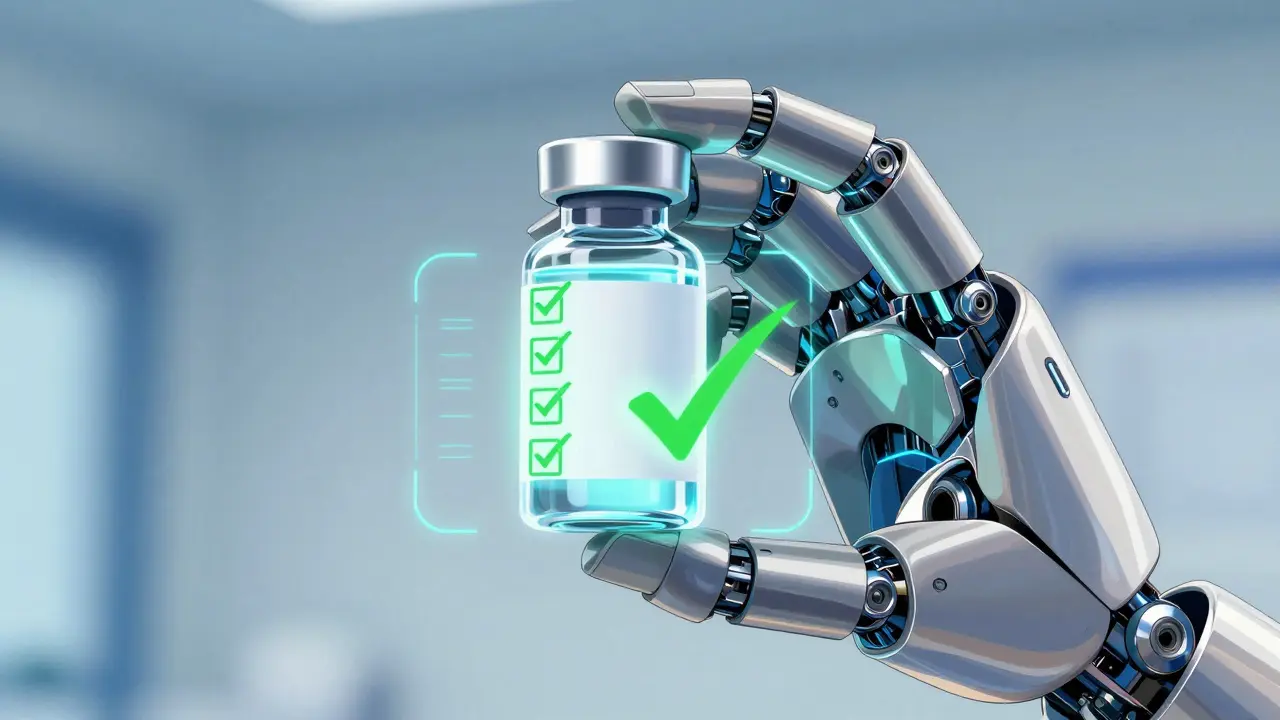
You can become your own best defense against these errors. The FDA recommends looking for seven specific elements every time you receive a new medication. Think of this as a quick security scan for your health. A university study found that patients using this checklist caught 63% of errors before leaving the doctor's office, compared to just 22% who didn't.
- Drug Name: Is the name complete? Short names or abbreviations like "MS" (which could be magnesium sulfate or morphine sulfate) are red flags. It needs to be spelled out fully.
- Precise Dosage: Check for leading zeros. A dose of .5 mg should always be written as 0.5 mg. Also, look out for trailing zeros; 50 mg shouldn't be written as 50.0 mg, as the dot can disappear or become blurry.
- Clear Frequency: Avoid Latin shorthand like QD (daily) or BID (twice a day). Ask for plain English: "once a day." This prevents confusing once-a-day dosing with four-times-a-day dosing.
- Total Quantity: Does the bottle supply match the expected duration? If you are sick for five days but get pills for five weeks, something is off.
- Purpose Statement: The prescription should state what condition it treats. If you are getting insulin, is it marked for diabetes?
- Contact Info: Ensure the prescriber's phone number is legible and accurate so the pharmacist can verify if needed.
- Expiration Date: Sometimes valid for immediate use only, but checking if the script is stale helps avoid processing delays.
Using this list takes less than a minute but acts as a massive filter against potential harm.
Understanding High-Risk Medications
Not all mistakes carry equal weight. Certain classes of drugs pose higher risks if mishandled. The Institute for Safe Medication Practices identifies "high-alert medications" that account for 72% of fatal prescription errors, despite being only a fraction of total prescriptions. Insulin, anticoagulants (blood thinners), and opioids are the usual suspects.
If you are prescribed any of these, your scrutiny needs to be extra sharp. Confusion over units is deadly here. For example, using 'U' to stand for units (of insulin) is banned because it looks like a zero. Writing "10 U" can be read as "100." Similarly, 'Ug' for micrograms can be mistaken for units, causing overdose in potent drugs like heparin. If you see these specific letters, ask for them to be spelled out immediately.
Another danger zone involves look-alike/sound-alike medications. The database of error reports lists dozens of pairs. Lamotrigine is an anticonvulsant, but someone might prescribe Lamictal (the brand name) and get confused with another drug name. Verifying the spelling of the generic name versus the brand name is a crucial step.
Talking Back: The Teach-Back Method
Silence breeds mistakes. A powerful technique validated by Johns Hopkins Medicine is called the "teach-back method." When the nurse or doctor explains your new regimen, simply repeat it back to them in your own words. Say something like, "So, just to make sure I understood, I take two tablets at breakfast and one at dinner, right?" This doesn't challenge them; it confirms clarity. Research shows this reduces misunderstanding by over 80%.
Don't be afraid to ask "The Big Three Questions." This is a strategy promoted by the National Patient Safety Foundation. They call it "Ask Me 3." First, ask: What is my main problem? Second, ask: What do I need to do? Third, ask: Why is it important for me to do this? These simple queries force a pause in the workflow and require the provider to double-check their mental model against yours. It slows things down slightly but saves lives.

Navigating the Digital Transition
In 2026, we are seeing the rollout of more integrated systems. The Office of the National Coordinator for Health IT has pushed for interoperability, meaning your data should flow freely between hospital records and pharmacies. By 2025, Electronic Health Record (EHR) systems are mandated to share real-time data via APIs. Ideally, this means your phone gets an alert confirming the prescription sent to the pharmacy matches what was ordered.
However, technology isn't magic. Many systems still lack visual clarity. Apps like MedSafety are emerging to help. These tools scan images of prescriptions and flag inconsistencies. Using technology to cross-reference is smart. When you pick up your pills, compare the pharmacy label directly against your original script. If the electronic copy sent to the pharmacy doesn't match what you saw on paper, stop and speak up. This "closed-loop verification" ensures the message wasn't corrupted in transit.
As the American Medical Informatics Association predicts, by 2030, nearly 90% of prescriptions might require a mandatory patient acknowledgment step. Until then, manual vigilance is our safety net.
Common Pitfalls to Watch Out For
Sometimes errors hide in plain sight. A common trap is assuming the doctor remembers everything. If you are seeing multiple specialists, they might not talk to each other. This leads to duplicate therapies or bad interactions. Always keep an updated list of what you take-including vitamins and over-the-counter meds-and hand it to every new doctor.
Another pitfall is assuming "standard" doses apply to everyone. Children, the elderly, and those with kidney or liver issues require adjusted doses. If a prescription looks too strong for your age or condition, question it. It is better to delay pickup for 10 minutes than to take the wrong amount for a week.
Finally, watch out for expired scripts. A prescription written six months ago for a chronic condition might be outdated. Drug guidelines change rapidly. If the prescription is older than a few months, ask the doctor if a fresh review is needed. Regulations on refills vary, but safety does not wait.
Is it rude to check my doctor's work?
Absolutely not. Most physicians welcome patient engagement. When you ask specific questions about dosage or names, it signals that you care about your safety, which actually improves the working relationship.
What should I do if I find a mistake?
Contact the pharmacy or prescriber immediately. Do not take the medication until it is clarified. Write down the exact wording of the error and keep a photo if it is a handwritten note for your own records.
Which abbreviations are most dangerous?
Avoid abbreviations like 'U' for units, 'QD' for daily, and '.5' without a leading zero. These are universally recognized as high-risk for misinterpretation by pharmacists and staff.
Can electronic prescribing be wrong?
Yes. Electronic systems can suffer from selection errors or incorrect dropdown choices. Technology removes handwriting errors but introduces clicking errors. Manual review is still essential.
Why do doctors make mistakes so often?
Time pressure and cognitive overload are the main drivers. Doctors manage dozens of patients with limited time. Systemic factors contribute far more than individual negligence.



Sabrina Herciu
March 28, 2026 AT 12:37It is absolutely critical that we understand the nuances of medical prescribing protocols.
The distinction between a simple typo and a systemic error is often missed by patients who lack clinical knowledge.
I have seen numerous cases where leading zeros were omitted and resulted in overdose scenarios.
Patients need to know exactly which abbreviations are high risk so they can flag them at the pharmacy counter.
This article provides a comprehensive overview of those specific danger zones.
Poppy Jackson
March 29, 2026 AT 10:21the stakes are incredibly high when dealing with our health care
we cannot afford to be passive recipients of treatment plans
safety requires active participation from everyone involved in the process
walker texaxsranger
March 29, 2026 AT 16:16big pharmaceutical companies push complexity to obscure negligence patterns
electronic health records are merely surveillance tools disguised as safety mechanisms
they collect data on prescription habits rather than focusing on actual patient outcomes
patients become test subjects for software algorithms designed by profit driven entities
trust in the system is misplaced because the incentive structure rewards speed over accuracy
Philip Wynkoop
March 31, 2026 AT 13:25i appreciate the focus on patient empowerment here :)
kendra 0712
April 1, 2026 AT 15:36This is such incredible advice for anyone navigating the healthcare system!!!
We must always advocate for ourselves in these situations!!!!
Being proactive can literally save a life in an emergency setting!!!
Everyone should read this and share it with their family members!!!
Knowledge is power and this information empowers us all!!!
Richard Kubíček
April 3, 2026 AT 12:38The philosophy of patient autonomy extends deeply into the realm of medication management.
We often cede control to institutions without considering the implications.
Balancing trust with verification is the essence of ethical engagement.
True partnership involves mutual respect for the provider and the individual.
Sarah Klingenberg
April 4, 2026 AT 04:37Its so nice to see resources like this circulating online 🌟
We should all normalize checking scripts just like we check grocery receipts 🙂
Small changes in routine can prevent big accidents down the line 💊
Jordan Marx
April 5, 2026 AT 22:17From an informatics perspective interoperability is the next frontier in mitigating these risks.
Current API standards allow for real time verification between EHR systems.
However latency issues still plague many legacy implementations in rural clinics.
Patient facing dashboards could aggregate data to highlight potential conflicts automatically.
We need better visualization tools for dose reconciliation workflows.
Shawn Sauve
April 7, 2026 AT 08:35Its important to maintain respectful boundaries while reviewing these documents 👍
Doctors appreciate patients who come prepared with questions rather than accusations 🙂
Clear communication protects both parties involved in the transaction
Sophie Hallam
April 8, 2026 AT 08:49Validation of prescriptions is a shared responsibility between clinician and consumer.
Maintaining professional relationships requires open dialogue without confrontation.
We must encourage culture shifts that view checking as supportive rather than adversarial.
Eva Maes
April 9, 2026 AT 04:42Nitpicking the details of pharmacology is essential but often dismissed as trivial by the general public.
Semantics matter immensely when a decimal point decides biological fate.
We tend to romanticize doctors but ignore the bureaucratic machinery producing errors.
The aesthetic of the script matters less than the integrity of the data payload.
Tommy Nguyen
April 11, 2026 AT 00:34good reminder to stay alert during appointments
Monique Ball
April 12, 2026 AT 20:59I actually did this last week when my doctor tried to rush me through the process! It felt awkward at first but I knew it was necessary! She gave me five different bottles and I had to go over each one carefully. My heart was racing but I wanted to be sure nothing was wrong. I started by looking at the spelling of every drug name on the label. Then I checked the dosage amount and made sure the zeros were in the right place. The pharmacist was very helpful when I pointed out a small discrepancy. We talked about why that specific number was written the way it was. It turns out the computer system auto-fills numbers from previous visits sometimes. That is definitely something people don't realize happens all the time. You really need to take ownership of your health records in today's world. It feels empowering to catch something before it becomes a huge problem. I recommend bringing a printed list of all your current meds to every appointment. Also, having someone else review the script with you helps double check everything. We should all get into the habit of treating prescriptions like important contracts. Always ask for clarification if something seems unclear on the bottle. Safety is truly better than being sorry later on in life. 🏥💊📝