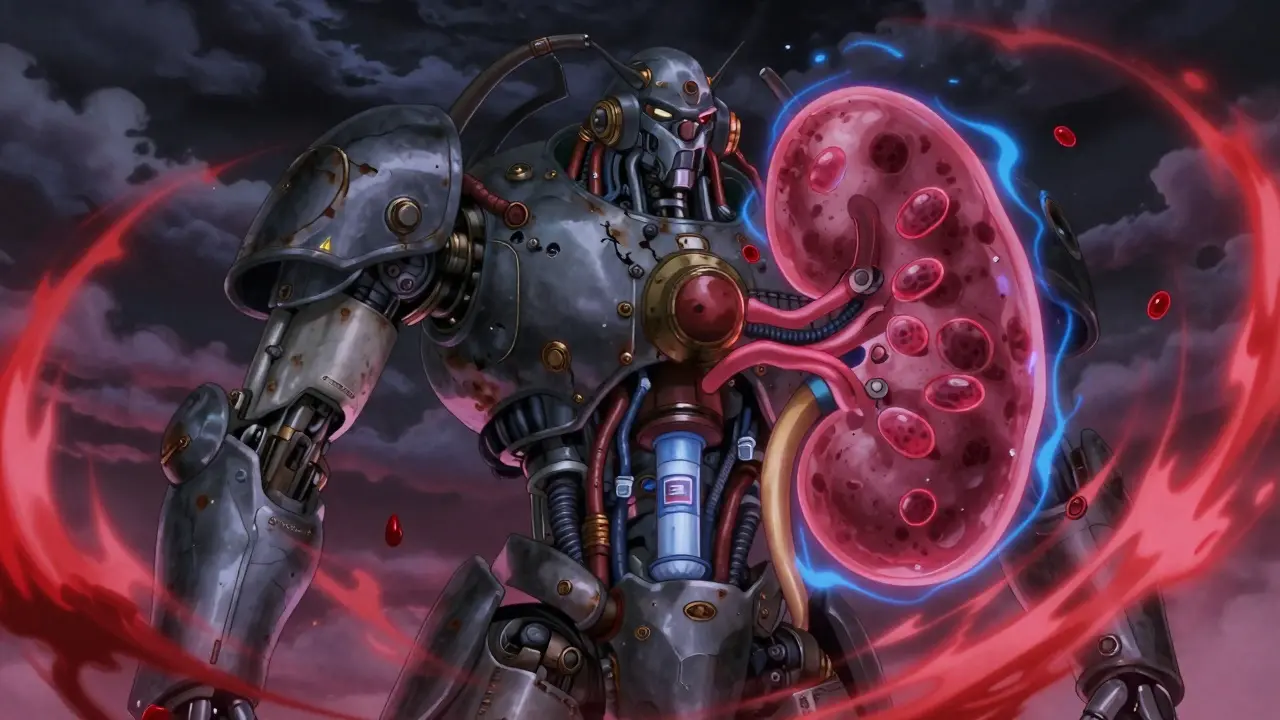
Most people don’t think about their kidneys until something goes wrong. But if you’ve been taking common medications like omeprazole, ibuprofen, or an antibiotic for weeks or months, you could be at risk for something called acute interstitial nephritis - a silent, drug-triggered kidney injury that often flies under the radar.
What Exactly Is Acute Interstitial Nephritis?
Acute interstitial nephritis (AIN) is an inflammation of the spaces between the kidney’s filtering tubes. It’s not a disease you get from being sick - it’s a reaction your body has to a drug. The immune system mistakes the medication for a threat and sends inflammatory cells into the kidney tissue. This swelling blocks normal function, leading to sudden drops in kidney performance.
It’s not rare. About 1 in every 10 cases of sudden kidney failure in hospitals turns out to be AIN. And in most of those cases - 60% to 70% - it’s caused by a medication. The most common culprits? Antibiotics, NSAIDs like ibuprofen, and proton pump inhibitors (PPIs) like omeprazole and pantoprazole. PPIs have overtaken antibiotics in recent years as the top trigger, partly because so many people take them long-term for heartburn.
Which Drugs Are Most Likely to Cause It?
Not all drugs are created equal when it comes to triggering AIN. Here’s what the data shows:
- NSAIDs (ibuprofen, naproxen, diclofenac) - Cause 44% of drug-related AIN cases. These are especially risky for older adults with existing kidney issues or high blood pressure. People on long-term NSAIDs often don’t get the classic allergy symptoms like rash or fever, which makes diagnosis harder.
- Antibiotics (penicillins, cephalosporins, sulfonamides, ciprofloxacin) - Responsible for about 33% of cases. These tend to cause more obvious reactions: fever, rash, and eosinophils in the urine. Symptoms usually show up within 10 days of starting the drug.
- PPIs (omeprazole, esomeprazole, lansoprazole) - Now the second most common cause. Even though they cause less severe inflammation, they’re the worst for long-term recovery. Only 50-60% of people fully regain kidney function after stopping them, compared to 70-80% with antibiotic-induced AIN.
Even more surprising? Immune checkpoint inhibitors - cancer drugs like pembrolizumab - are emerging as a new cause. These drugs work by revving up the immune system to fight tumors, but sometimes they accidentally turn it against the kidneys.
What Are the Symptoms? (Spoiler: They’re Not Obvious)
You might think kidney problems come with swelling, extreme fatigue, or dark urine. But AIN often hides. Many people feel only mildly off - a bit tired, nauseous, or just not themselves. Classic signs like fever, rash, and joint pain show up in less than 10% of cases. In fact, the so-called “hypersensitivity triad” is rare. That’s why doctors often miss it.
Here’s what most patients actually report:
- Feeling unusually tired or weak
- Loss of appetite
- Low-grade fever (not always)
- Mild nausea
- Decreased urine output
- Flank pain (less common)
And here’s the catch: blood tests might show rising creatinine levels - a sign of kidney trouble - but no one connects it to the pill you’ve been taking for six months. Patients in online forums say they were misdiagnosed with urinary tract infections or the flu for weeks before anyone looked at their meds.
How Is It Diagnosed?
There’s no simple blood test for AIN. Urine tests might show eosinophils (a type of white blood cell), but that’s only accurate about half the time. A gallium scan? Outdated and unreliable. The only way to be sure is a kidney biopsy.
That sounds scary, but it’s a quick, low-risk procedure. A tiny sample of kidney tissue is taken with a needle, usually under local anesthesia. Under the microscope, pathologists look for swelling, immune cells in the tissue, and signs of tubule damage. If you see those, it’s AIN.
Doctors are starting to test for new biomarkers - like urinary CD163 - which could one day replace biopsies. In a 2022 study, this marker was 89% accurate at spotting AIN. But right now, biopsy is still the gold standard.
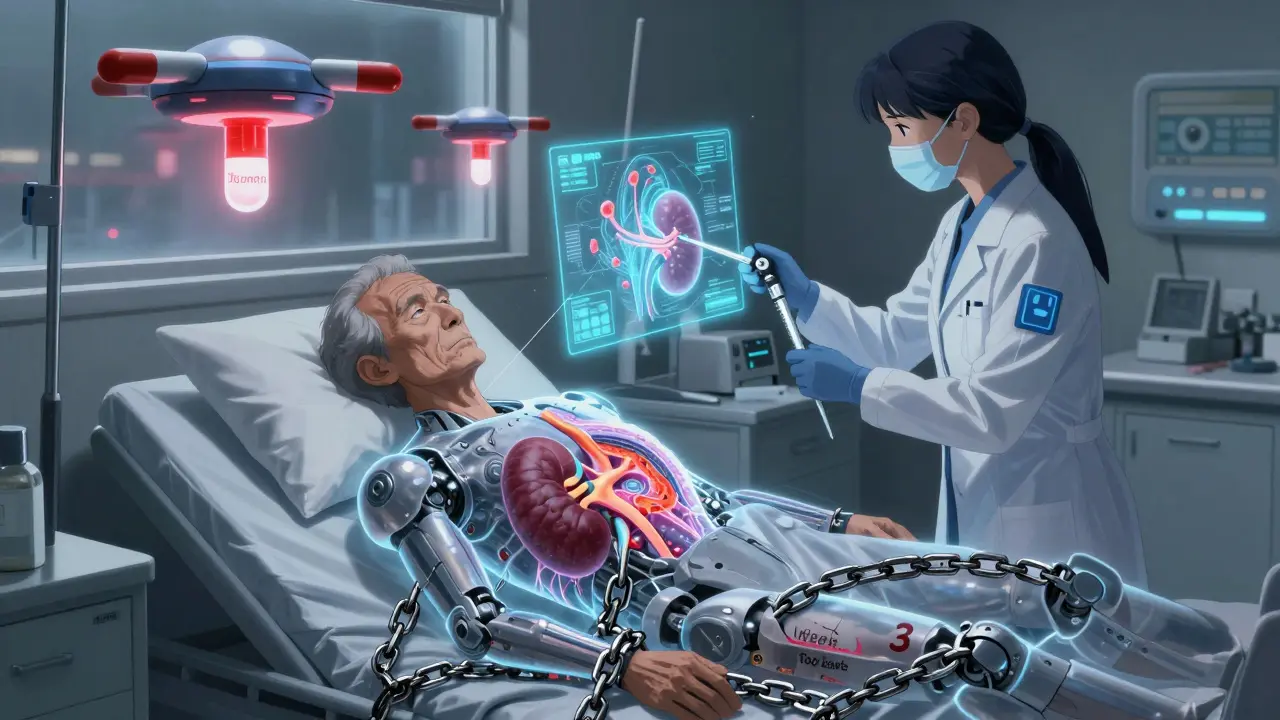
What Happens If You Don’t Stop the Drug?
Delaying action is the biggest mistake. The longer you keep taking the offending drug, the more permanent the damage becomes. If you stop within 7 days of symptoms starting, your chance of full recovery jumps by 35%. Wait until day 14 or later? You’re looking at permanent kidney scarring.
One patient case from the American Kidney Fund tells the story: a 63-year-old woman took omeprazole for 18 months. When her creatinine spiked, she was told she had “age-related kidney decline.” She didn’t stop the drug for another three weeks. By then, she needed dialysis. Even after recovery, her kidney function stayed at 45% - far below normal.
That’s why guidelines say: if AIN is suspected, stop the drug within 24 to 48 hours. No waiting. No “let’s monitor for a few more days.”
Treatment: Stopping the Drug Is Step One
The most important treatment? Stopping the drug. That’s it. For many people, kidney function starts improving within 72 hours. One survey of 120 patients found 65% felt better in just three days after stopping the culprit medication.
But not everyone recovers that fast. If your kidney function is already low (eGFR under 30), or if it keeps getting worse after stopping the drug, steroids are often added. The typical protocol: methylprednisolone (a strong steroid) for 2-4 weeks, then a slow taper of prednisone over 6-8 weeks.
There’s debate about steroids. No large randomized trials prove they work. But nephrologists agree: when kidney damage is severe, early steroids help. Dr. Ronald J. Falk, a leading kidney specialist, says, “We don’t have perfect evidence, but we’ve seen enough patients bounce back with steroids to justify using them in the right cases.”
For most people, though, stopping the drug alone is enough.
Recovery: What to Expect
Recovery isn’t the same for everyone. It depends on the drug, how long you took it, and how fast you acted.
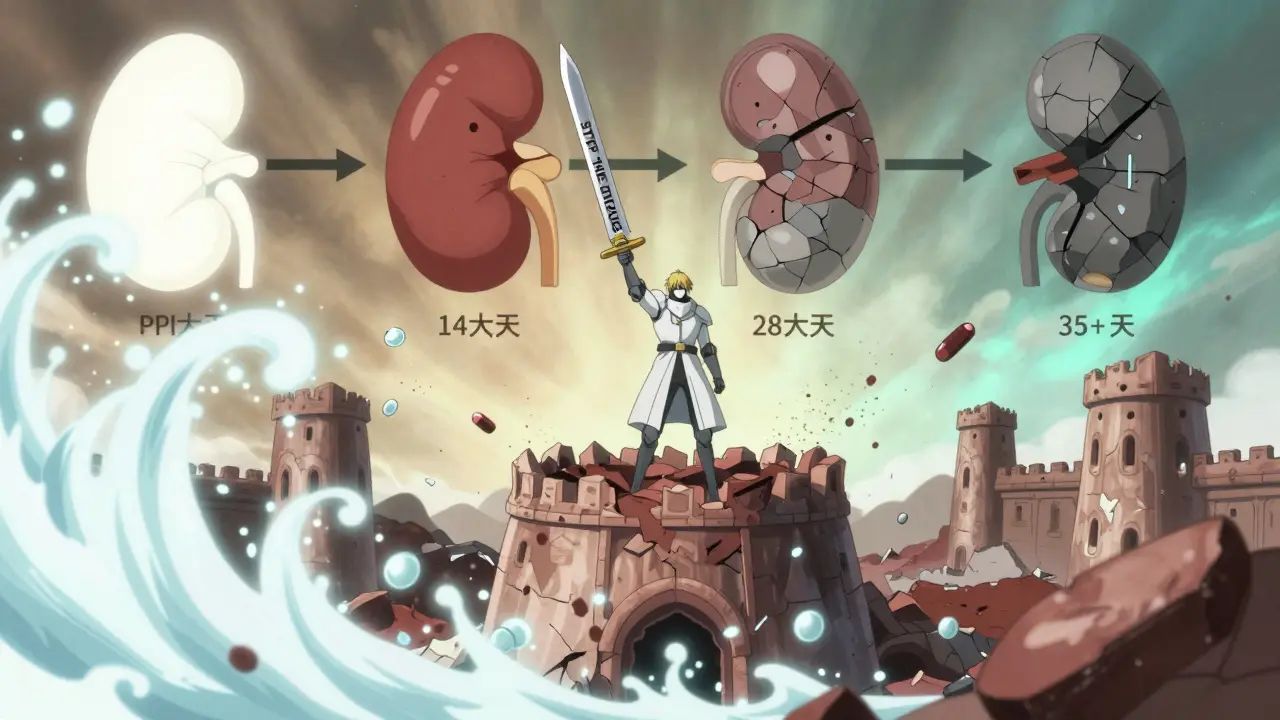
- Antibiotic-induced AIN: Median recovery time is 14 days. Most people regain full function.
- NSAID-induced AIN: Takes about 28 days. Higher risk of lasting damage - 42% develop chronic kidney disease.
- PPI-induced AIN: Takes 35 days on average. Only half recover completely. The rest are left with reduced kidney function.
Even when you feel fine, your kidneys might not be. About 42% of patients in a Medscape survey still had eGFR under 60 six months later - meaning stage 3 chronic kidney disease. That’s not normal aging. That’s preventable damage.
And here’s the hard truth: once scar tissue forms in the kidney, it doesn’t go away. You can recover function, but you can’t undo fibrosis.
Who’s Most at Risk?
You’re more likely to get AIN if:
- You’re over 65 - incidence jumps from 5 cases per 100,000 in young adults to 22 per 100,000 in seniors.
- You take five or more medications - that triples your risk.
- You have existing kidney disease, diabetes, or high blood pressure.
- You’ve been on PPIs for more than 6 months - long-term use is the biggest red flag.
And yes - it’s happening more often. Between 2010 and 2020, drug-induced AIN cases rose 27%. The rise? Almost entirely due to PPI overuse. The FDA issued a safety alert in 2021 after over 1,200 cases were reported over a decade.
How to Protect Yourself
Here’s what you can do:
- If you’re on long-term PPIs, ask your doctor if you still need them. Many people take them years after they’re useful.
- Don’t take NSAIDs daily unless absolutely necessary. Use them for short flare-ups, not chronic pain.
- Keep a list of all your meds - including supplements and OTC pills - and review it with your doctor every 6 months.
- If you feel unwell and your creatinine is rising, ask: “Could this be from a drug?” Don’t assume it’s just aging.
- Don’t ignore vague symptoms like fatigue or nausea if you’re on a new or long-term medication.
The best prevention? Awareness. AIN isn’t something you can screen for. But if you know the risks, you can catch it early - and avoid permanent damage.
What’s Next for AIN?
Researchers are working on blood and urine tests that can spot AIN without a biopsy. If they succeed, we could diagnose it in primary care clinics, not just hospitals. Also, new guidelines are being drafted to limit unnecessary PPI prescriptions - especially in older adults.
But for now, the message is simple: your kidneys don’t scream. They whisper. And if you’re on a medication that’s been linked to kidney injury, listening matters.


Brian Furnell
December 21, 2025 AT 20:16Okay, so let me get this straight: PPIs are now the #1 cause of AIN? That’s wild. I’ve been on omeprazole for 4 years for ‘acid reflux’-but honestly, I haven’t had symptoms since 2021. My nephrologist just told me to ‘taper slowly’-but now I’m wondering if I’ve already done irreversible damage. Eosinophils in urine? CD163 biomarkers? I need a full renal panel + biopsy ASAP. This isn’t just ‘heartburn medicine’-it’s an immunological landmine.
Siobhan K.
December 22, 2025 AT 16:04Of course the FDA issued a safety alert after 1,200 cases-because that’s how they roll. Wait for the body count, then issue a press release. Meanwhile, millions of people are popping PPIs like candy because their doctor said ‘it’s safe.’ Funny how ‘safe’ means ‘doesn’t kill you immediately.’ But if it slowly nukes your kidneys over 18 months? That’s just ‘normal aging,’ right?
Jackie Be
December 24, 2025 AT 02:57OMG I JUST REALIZED I’VE BEEN ON IBUPROFEN FOR 3 YEARS FOR MY BACK PAIN 😭 I THOUGHT IT WAS JUST ‘NORMAL’ TO TAKE IT DAILY I’M SO SCARED NOW
Sarah Williams
December 24, 2025 AT 09:56My dad’s creatinine spiked last year. They said it was ‘just age.’ He was on omeprazole for 5 years. Stopped it. His numbers dropped 30% in 6 weeks. Don’t wait for a biopsy. Stop the drug. Now.
Christina Weber
December 25, 2025 AT 19:38There is no such thing as ‘age-related kidney decline’ in the absence of comorbidities. The term is a euphemism for pharmaceutical negligence. If your eGFR drops after initiating a PPI or NSAID, the causal relationship is not ‘correlation’-it is causation, and the medical community’s failure to acknowledge this constitutes malpractice by omission.
Southern NH Pagan Pride
December 27, 2025 AT 17:44They’re doing this on purpose. PPIs are profitable. The FDA is owned by Big Pharma. Biopsies are expensive. They want you to believe it’s ‘just aging’ so you keep buying pills. Did you know the same companies that make PPIs also make kidney dialysis machines? Coincidence? I think not.
Cameron Hoover
December 29, 2025 AT 08:05I’m not a doctor, but I’ve seen this in my family. My uncle stopped his NSAIDs cold turkey after his creatinine jumped. He was back to normal in 3 weeks. It’s not magic. It’s biology. If your meds are making you feel off, don’t brush it off. Your kidneys don’t lie.
Orlando Marquez Jr
December 29, 2025 AT 18:27While the clinical data presented is compelling, it is imperative to contextualize these findings within the broader epidemiological framework of polypharmacy in aging populations. The rising incidence of AIN correlates directly with increased pharmaceutical utilization, particularly in cohorts with multiple chronic conditions. The absence of randomized controlled trials evaluating steroid efficacy remains a significant limitation in establishing standardized treatment protocols.
Cara C
December 31, 2025 AT 01:25Reading this made me think of my cousin who was told her fatigue was ‘just stress.’ She was on omeprazole for 7 years. When they finally stopped it, her energy came back. Not overnight-but slowly. She’s still not at 100%, but she’s alive. Don’t wait until you’re on dialysis to ask, ‘What if?’
John Hay
December 31, 2025 AT 16:18You people are panicking over a pill. I’ve been on ibuprofen since I was 22. I’m 58. My kidneys are fine. Stop scaremongering. If your doctor says it’s okay, trust them. Not some random Reddit post with fancy stats.