Imagine this: You’re a pharmacist in Bristol, and a patient walks in with a new prescription for blood pressure medication. You check their history and notice they’re already on three other drugs that could interact dangerously. But you can’t see their recent lab results, their doctor’s notes, or whether they’ve filled this script before. You call the clinic-wait 20 minutes, get a voicemail, then spend another 15 minutes on hold. By the time you resolve it, the patient is already gone. This isn’t rare. It’s the norm for most community pharmacies in the UK and US-until now.
Why EHR Integration Matters More Than Ever
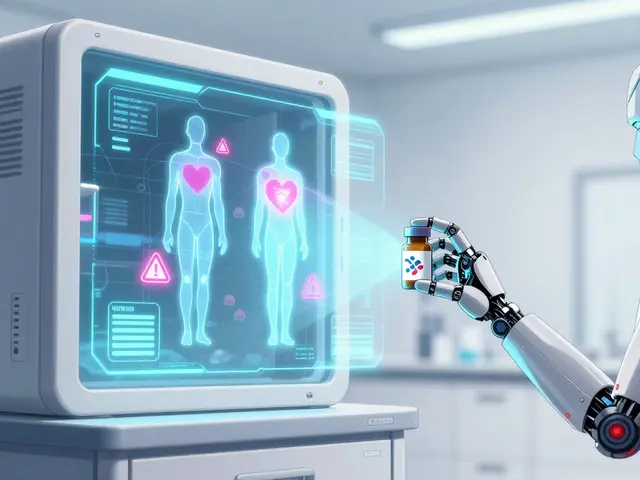
Electronic Health Record (EHR) integration between pharmacies and providers isn’t just tech buzzword. It’s the difference between a patient getting the right medication at the right time-or ending up in the hospital because no one knew what else they were taking. Since the 2009 HITECH Act pushed hospitals to digitize records, pharmacies have been left out. For years, prescriptions flowed one way: doctor → pharmacy. No feedback loop. No context. No safety net. That’s changing. Today, EHR integration lets pharmacists see real-time data: recent lab values, allergies, prior authorizations, even notes from specialists. And it works both ways-pharmacists can send back alerts, suggest dose changes, or flag adherence issues directly into the provider’s EHR. This isn’t science fiction. It’s happening in clinics across Tennessee, Wisconsin, and Australia-and the results are clear.How It Actually Works: Standards, APIs, and Real Data
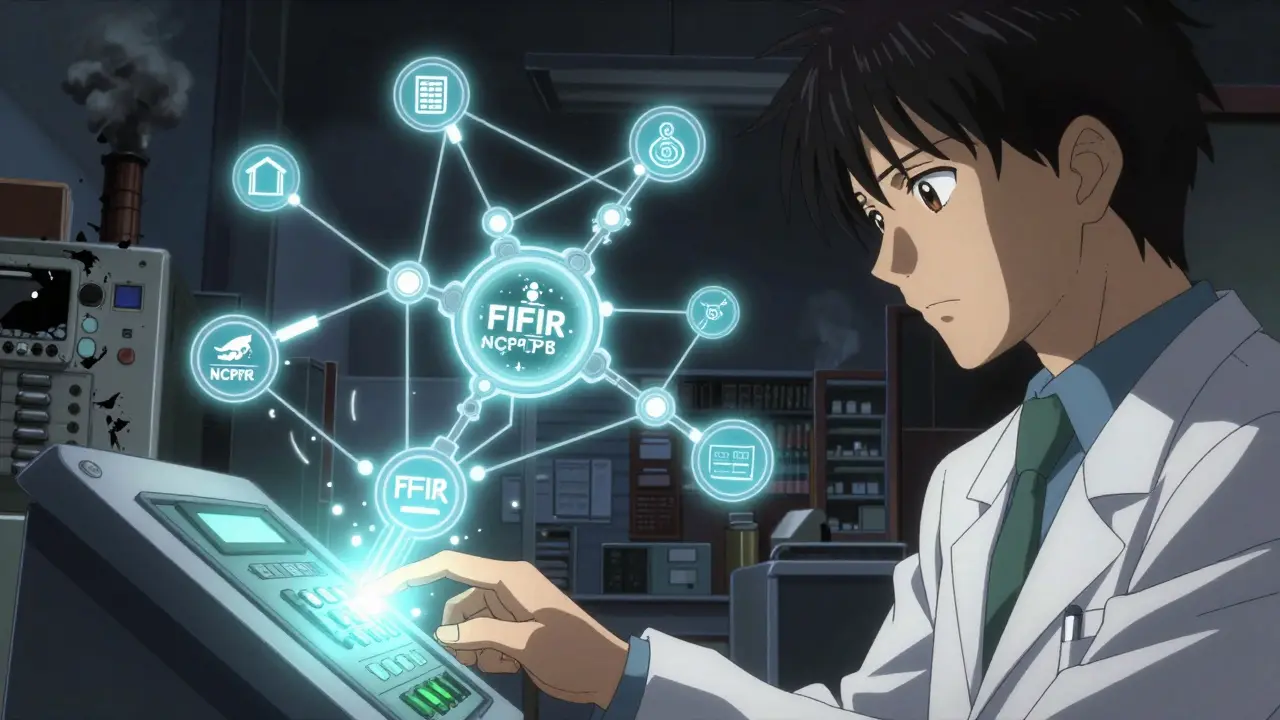
Behind the scenes, EHR-pharmacy integration runs on two main standards: NCPDP SCRIPT and HL7 FHIR. SCRIPT handles the actual prescription transmission-think of it as the digital version of a handwritten script. FHIR is the bigger picture: it carries lab results, medication lists, care plans, and even patient-reported symptoms. Together, they let systems talk in the same language. Most systems use APIs-secure digital bridges-to connect. These require OAuth 2.0 for login and TLS 1.2+ encryption to protect data. All of it must follow HIPAA and the 21st Century Cures Act, which bans "information blocking"-meaning providers can’t legally refuse to share data with pharmacies anymore. Here’s what happens in practice:- A doctor writes a prescription in Epic or Cerner.
- The system sends it via NCPDP SCRIPT to the pharmacy’s software (like PioneerRx or SmartClinix).
- The pharmacy’s system pulls in the patient’s full medication history from the EHR using FHIR.
- The pharmacist spots a conflict-say, a new statin interacting with the patient’s existing blood thinner-and sends a clinical note back to the doctor’s inbox.
- The doctor approves the change in seconds. No calls. No faxes. No delays.
The Real Benefits: Less Hospital Trips, More Lives Saved
The numbers don’t lie. When pharmacies and providers talk to each other:- Medication errors drop by 48%
- Patients are 31% less likely to be readmitted for drug-related problems
- Adherence improves by 23%
- Each patient saves an average of $1,250 per year in avoided hospital visits
Why Most Pharmacies Still Don’t Have It
Here’s the catch: Only 15-20% of US pharmacies have full bidirectional EHR integration. Even fewer in the UK. Why? First, cost. Independent pharmacies face $15,000 to $50,000 upfront just to connect. Then $5,000-$15,000 a year to maintain it. That’s a huge hit for a small business running on thin margins. Second, time. Pharmacists spend an average of 2.1 minutes per patient interaction. There’s no time to dig through EHRs if the system isn’t intuitive. Many report "alert fatigue"-dozens of pop-ups per shift, most irrelevant. That makes them ignore the warnings they need. Third, compatibility. There are over 120 different EHR systems and 50 pharmacy platforms. Not all talk to each other. A pharmacy using MediScript might not connect to a clinic using Allscripts. Even when they do, data often gets scrambled-lab values in one system are labeled differently in another. And reimbursement? Only 19 US states pay pharmacists for the time they spend reviewing EHR data and coordinating care. In the UK, NHS funding for pharmacist-led medication reviews is still patchy. Without payment, integration becomes a charity project-not a sustainable service.Who’s Doing It Right-and How
Some players are leading the way:- Surescripts processes 22 billion transactions a year and connects 97% of US pharmacies. Their Medication History service gives pharmacists instant access to a patient’s full fill history across pharmacies.
- SmartClinix offers pharmacy-specific EHR tools starting at $199/month, with built-in integration to Epic and Cerner. Pharmacists say it’s easy to use-but the learning curve is steep.
- DocStation focuses on provider networks, helping pharmacies manage prior authorizations and billing in one place.
- UpToDate integrates clinical drug info directly into doctors’ EHRs, so when a prescriber opens a med, they see pharmacist-reviewed safety notes.

What’s Next: AI, Patient Control, and Policy Shifts
The future is already here. In 2024, CVS and Walgreens started piloting AI tools that scan integrated EHR-pharmacy data to predict which patients are at risk of non-adherence or dangerous interactions. Early results? 37% more interventions caught before they become problems. Patients are also getting in on it. The new CARIN Blue Button 2.0 lets people download their own prescription and lab data-and share it with their pharmacist. Imagine a patient sending their EHR directly to their local pharmacy before their appointment. No more guessing. Policy is catching up too. CMS now requires Medicare Part D plans to integrate medication therapy management by 2025. California’s SB 1115 mandates EHR integration for pharmacy services by 2026. And the Office of the National Coordinator for Health IT has set a goal: 50% of community pharmacies in the US will have bidirectional EHR access by 2027. But without payment models, none of this scales. As Dr. Lucinda Maine of the American Association of Colleges of Pharmacy put it: "Without sustainable payment, EHR integration will remain a luxury, not a standard of care."What You Can Do Today
If you’re a pharmacist:- Ask your pharmacy software vendor: "Do you support HL7 FHIR and NCPDP SCRIPT 2017071?" If not, start looking.
- Partner with a local clinic. Even one connection can start a chain reaction.
- Use Surescripts’ Medication History tool-it’s free for most pharmacies and gives you instant access to 97% of US fills.
- Ask your pharmacist if they can see your full medication history.
- Use your NHS app or patient portal to download your records and bring them to your pharmacy visit.
- Speak up if you’ve had a medication error or delay. Your voice pushes change.
FAQ
What is EHR integration in pharmacy practice?
EHR integration in pharmacy practice means electronically connecting a pharmacist’s system with a healthcare provider’s Electronic Health Record. This allows pharmacists to see a patient’s full medical history-including allergies, lab results, and other medications-and send back clinical recommendations directly to the provider’s record. It turns pharmacists from dispensers into active care team members.
How does EHR integration reduce medication errors?
EHR integration reduces medication errors by giving pharmacists real-time access to a patient’s complete medication list, allergies, and lab results. Automated clinical decision support flags dangerous interactions, duplicate therapies, or incorrect dosages before the prescription is filled. One study showed a 48% drop in errors when pharmacists had full EHR access.
Can independent pharmacies afford EHR integration?
It’s expensive-$15,000 to $50,000 upfront, plus $5,000-$15,000 yearly-but not impossible. Many use Surescripts’ Medication History service for free, which gives them access to 97% of prescriptions. Some join regional health information exchanges that share costs. Others start small: integrate with one clinic first, then expand. The key is not to wait for perfection-start with one workflow, like prior authorization or medication reconciliation.
What standards do pharmacies use to connect to EHRs?
Pharmacies primarily use NCPDP SCRIPT 2017071 to send prescriptions and HL7 FHIR Release 4 (R4) to share clinical data like medication lists, lab results, and care plans. FHIR is the newer, more flexible standard that allows two-way communication. Systems must also use OAuth 2.0 for secure logins and TLS 1.2+ for encrypted data transfer.
Why don’t all pharmacies have EHR integration yet?
Three main reasons: cost, complexity, and lack of reimbursement. Small pharmacies can’t afford the upfront investment or ongoing maintenance. Many EHR and pharmacy systems don’t talk to each other due to incompatible formats. And in most places, insurers don’t pay pharmacists for the time spent reviewing EHRs-so there’s no financial incentive to adopt it.


Donna Fleetwood
January 31, 2026 AT 14:30This is exactly why I got into pharmacy. I used to spend half my shift playing phone tag just to confirm a med list. Now, with FHIR, I see everything in real time. Last week, I caught a warfarin interaction before the patient even left the counter. No calls. No delays. Just peace of mind.
It’s not perfect, but it’s miles ahead of where we were. Small shops can start with Surescripts-it’s free and connects to 97% of prescriptions. No need to reinvent the wheel.
Holly Robin
January 31, 2026 AT 18:18LOL so now the government wants us to trust Big Pharma’s EHRs? 😂
Ever heard of data breaches? Or how the same system that tracks your blood pressure also sells your data to insurers? This isn’t integration-it’s surveillance with a white coat. They’ll ‘flag’ you for being ‘non-adherent’ and raise your premiums before you even know it. Wake up, sheeple.
Melissa Cogswell
February 1, 2026 AT 19:55Just wanted to add a real-world note: even with full integration, alert fatigue is real. I had 47 pop-ups yesterday. Only 3 were clinically relevant. The rest were ‘watch out for caffeine with this med’ or ‘this drug is discontinued.’
What we need isn’t more data-it’s smarter filtering. AI that learns what matters to *your* patient population. Otherwise, we’re just drowning in noise.
Kimberly Reker
February 2, 2026 AT 07:04My grandma got her meds filled at our local indie pharmacy last month. They pulled up her entire history-every pill she’s ever taken since 2018. She cried. Said she felt ‘seen.’
That’s what this is really about. Not tech. Not billing codes. Just someone who cares enough to look.
kate jones
February 3, 2026 AT 16:58From a clinical informatics standpoint, the adoption curve follows the diffusion of innovation model. Early adopters-mostly integrated health systems-are leveraging FHIR’s RESTful architecture to enable bidirectional interoperability. The real bottleneck lies in the semantic heterogeneity of terminologies across legacy EHRs.
Standardized value sets (e.g., SNOMED CT, RxNorm) are critical, yet only 38% of community pharmacies implement them consistently. Without this, even perfect APIs yield fragmented clinical context.
Bobbi Van Riet
February 3, 2026 AT 17:07I work at a small pharmacy in rural Ohio. We didn’t have the budget for fancy integration, so we started simple: we asked the local clinic if they’d let us email them a PDF of our medication reconciliation sheet after each visit. They said yes.
Now we do it for three clinics. One doc started replying with notes back. Then another. Then a nurse practitioner joined. It’s not fancy tech-but it’s human. And it’s working.
Don’t wait for the perfect system. Start with one person who’s willing to listen. That’s how change happens.
Rohit Kumar
February 3, 2026 AT 19:59In India, we don’t have EHRs like this-but we have something better: trust. The pharmacist knows your family. Knows if you’re skipping meds because you can’t afford them. Knows when your son is sick and you forgot to refill.
Technology is great, but don’t mistake data for care. Sometimes, a phone call and a cup of tea do more than any API.
Natasha Plebani
February 4, 2026 AT 09:22The 21st Century Cures Act’s prohibition on information blocking is a necessary but insufficient condition for true interoperability. The real challenge is not technical-it’s institutional. EHR vendors are locked into proprietary ecosystems designed to maximize vendor lock-in, not patient outcomes.
FHIR is the open standard, yes-but if Epic and Cerner continue to implement it with custom extensions and opaque mappings, we’re just building a more elegant version of the same siloed mess.
What we need is a public, non-commercial FHIR registry with enforced conformance profiles. Otherwise, we’re just rearranging deck chairs on the Titanic.
Yanaton Whittaker
February 5, 2026 AT 10:01USA FOR LIFE! 🇺🇸
Other countries can keep their socialist health systems. We’ve got the BEST tech in the world. Why are we even talking about this? We’re #1 in innovation! If your pharmacy can’t afford integration, maybe you shouldn’t be in business. Free market, baby! 💪
Beth Cooper
February 5, 2026 AT 15:45Wait… so you’re telling me that if I’m on 12 meds, and the system says ‘possible interaction,’ but the pharmacist doesn’t know my cousin is a doctor who said ‘ignore it’… then what? Is the computer smarter than my cousin?
Also, I heard the government is putting microchips in these systems to track our meds. That’s why they’re pushing this so hard. I’m not taking anything until I know who’s reading my data.
Rob Webber
February 6, 2026 AT 11:48This is why we’re all dying. The system is rigged. Pharmacies are being forced into these ‘integrations’ so Big Pharma can upsell you more pills. You think they care about safety? No. They care about profit margins. That 48% drop in errors? Probably because they stopped prescribing the cheap stuff and pushed expensive generics they own.
I’ve seen it. I’ve seen the charts. This isn’t healthcare. It’s a corporate shell game.
Eliana Botelho
February 7, 2026 AT 10:25Okay but have you considered that maybe patients don’t WANT their data shared? Like, what if I’m hiding that I’m taking Xanax for anxiety and my boss’s wife is the pharmacist? What if my ex is my pharmacist and sees I’m on antidepressants? What if my religious community thinks mental health meds are sinful?
This isn’t progress-it’s a violation. You’re trading privacy for convenience, and that’s not a trade most people would make if they knew the cost. The system assumes everyone wants to be ‘transparent’-but not everyone’s life is a TED Talk.
And don’t even get me started on how often the data is wrong. I had a prescription flagged as ‘duplicate’ because the system thought ‘ibuprofen’ and ‘Advil’ were different drugs. I had to call the pharmacy twice. Who’s saving lives here?
Kathleen Riley
February 8, 2026 AT 17:20It is incumbent upon the profession of pharmacy to transcend its traditional, dispensational role and assume its rightful position as a frontline clinical steward within the interprofessional care team. The advent of standardized, bidirectional health information exchange-particularly through the adoption of HL7 FHIR Release 4 and NCPDP SCRIPT 2017071-constitutes not merely an operational enhancement, but a fundamental epistemological shift in the ontology of pharmaceutical practice.
The absence of equitable reimbursement models for clinical decision support services, however, constitutes a structural impediment to the institutionalization of this paradigm. Without the alignment of payment incentives with value-based outcomes, the integration of pharmacists into the EHR ecosystem remains an aspirational construct rather than a sustainable clinical reality.
One must therefore interrogate the sociopolitical architecture of healthcare financing, not merely the technical architecture of APIs. The question is not whether we can connect systems-but whether we are willing to reconfigure the moral economy of care to reflect the true value of pharmaceutical expertise.
Blair Kelly
February 10, 2026 AT 11:00You people are missing the point. This isn’t about tech. It’s about control. The government, the EHR vendors, the big pharmacy chains-they all want you dependent on their systems. They want to own your data. They want to decide what meds you get, when, and why.
And you’re celebrating? You’re applauding as they take away your autonomy? This isn’t innovation. It’s a Trojan horse. And when they turn off the system-or sell your data to the highest bidder-you’ll be the one left holding the bag.
Don’t be fooled. This is power. And they’re not giving it to you. They’re taking it.