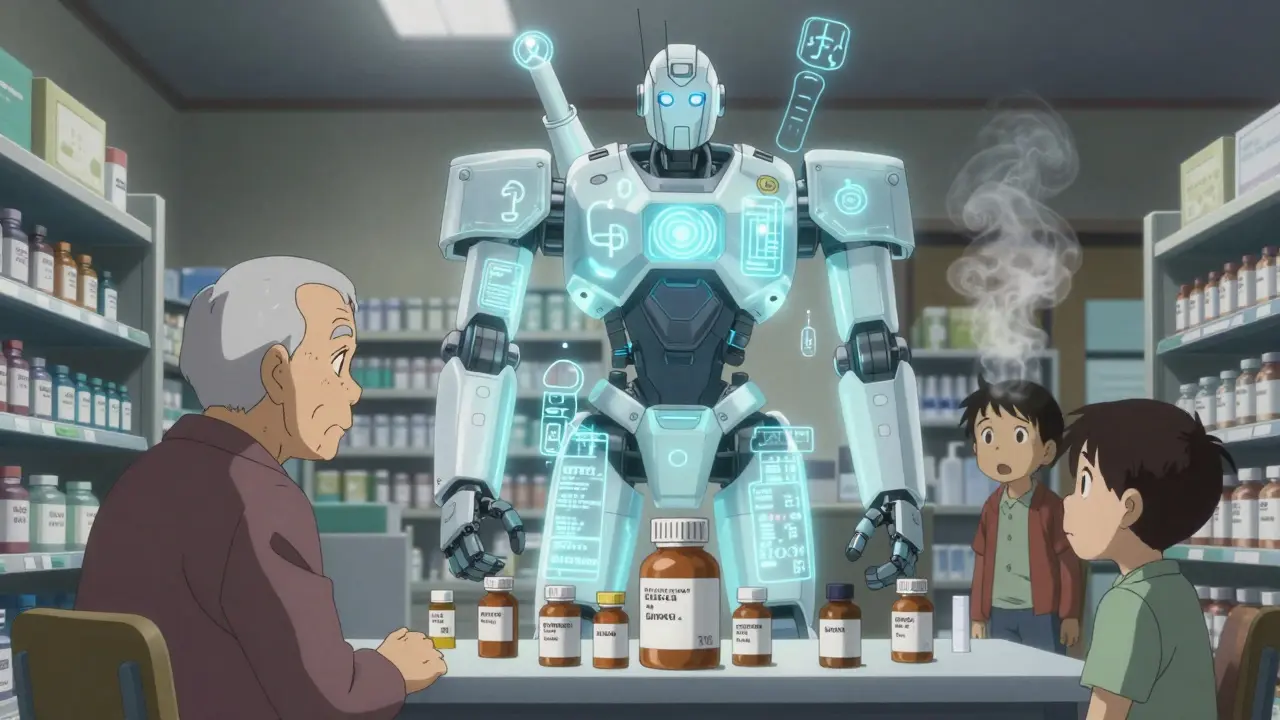
Imagine taking a life-saving medication but not knowing how much to take, when to take it, or what side effects to watch for. For millions of people with limited English proficiency, this isn’t a hypothetical scenario-it’s daily reality. Language barriers in healthcare don’t just make conversations awkward. They put lives at risk. Medication errors tied to poor communication are one of the most dangerous, and most preventable, problems in modern medicine.
Why Language Barriers Lead to Dangerous Mistakes
When a patient doesn’t understand their doctor or pharmacist, the consequences show up in the numbers. A 2022 study from the Children’s Hospital of Philadelphia found that children in families with limited English proficiency had medication errors at nearly twice the rate of English-speaking families-17.7% versus 9.6%. That’s not a small gap. That’s a life-or-death divide. These errors happen because translation isn’t just about swapping words. It’s about understanding medical terms like “dropperful,” “take with food,” or “for thirty days.” A 2021 study in the Bronx showed that 31% of pharmacies couldn’t print prescription labels in Spanish, even though that’s the primary language of half their patients. One Reddit user shared how their Spanish-speaking mother was given incorrect insulin doses because the pharmacy used Google Translate. She ended up in the hospital. Even when someone speaks a little English, they might not understand complex medical instructions. A 2020 review found that 34.7% of non-English-speaking patients couldn’t clearly understand how to use their medications. And when family members try to help-like a teenager translating for their parent-up to 25% of what’s said gets twisted, missed, or misunderstood. Medical vocabulary isn’t something you pick up from casual conversation.What Works: Professional Interpreters Save Lives
The solution isn’t guesswork. It’s professional interpretation. Studies show that using trained medical interpreters cuts medication error rates by up to 50%. That’s not a guess-it’s backed by data from the Agency for Healthcare Research and Quality (AHRQ) and peer-reviewed journals. There are three main ways to get professional help:- In-person interpreters: Often available in hospitals and larger clinics. They cost $50-$100 per hour, but they’re the most reliable for complex situations like explaining a new drug regimen.
- Telephone interpretation: Services like LanguageLine Solutions charge $3.50-$5.00 per minute. Useful for quick questions or when an in-person interpreter isn’t available.
- Video remote interpretation: Costs about $4-$6 per minute. Especially helpful for detailed discussions, because you can see facial expressions and gestures-key for confirming understanding.
What Doesn’t Work: Family, Friends, and Apps
Too many pharmacies and clinics still rely on untrained people to translate. A Milwaukee study found that nearly half of pharmacies rarely or never provide non-English prescription labels or instructions. And 1 in 9 pharmacies admit they use family members or friends as interpreters. This is dangerous. A child translating for a parent doesn’t know what “take on an empty stomach” means. A neighbor who speaks some English might not know the difference between “once daily” and “every 12 hours.” Even AI tools like Google Translate fail with medical terms. They don’t understand context, dosage units, or drug interactions. They’re not trained to handle the stress of a patient in pain or confusion. And here’s the hard truth: if you’re using a family member to interpret medication instructions, you’re gambling with safety. The data doesn’t lie-errors are far more common when untrained people are doing the translating.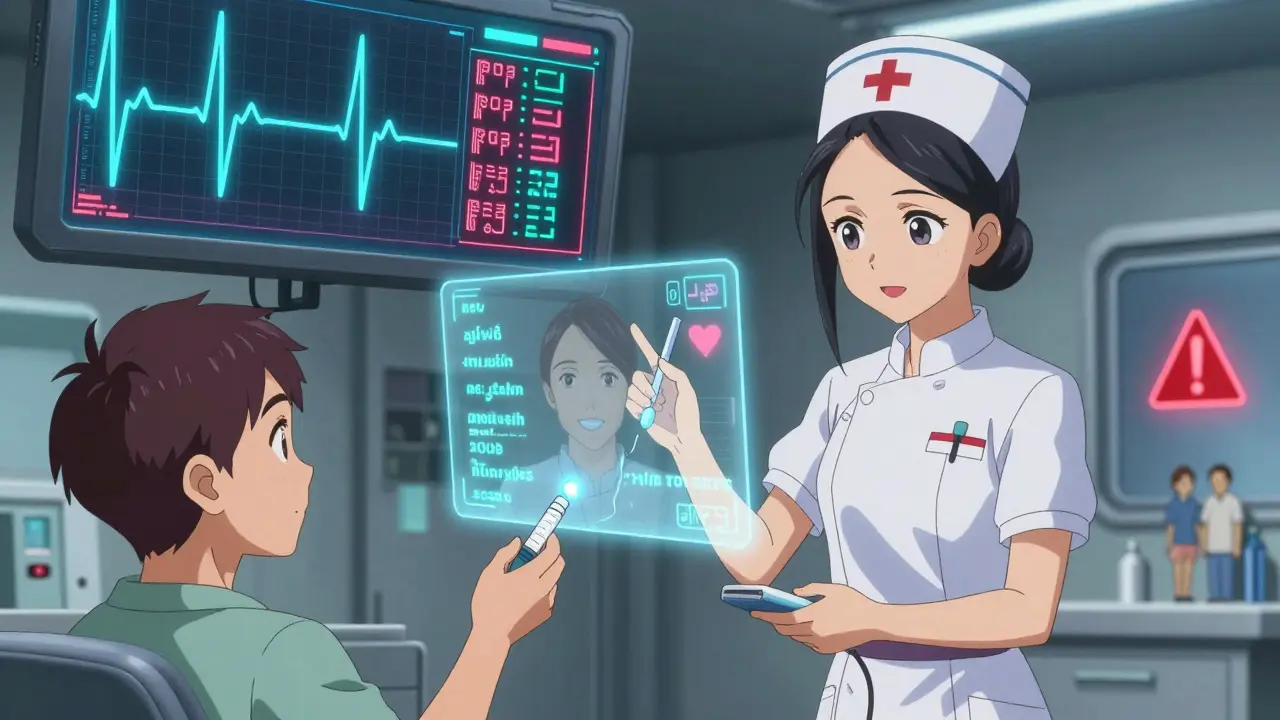
Directly Observed Dosing: A Simple Fix for High-Risk Medications
Sometimes, even with an interpreter, patients still don’t fully understand how to take their meds. That’s where directly observed dosing comes in. It’s simple: a nurse or pharmacist watches the patient take their medication-right there, in front of them. This method has been proven effective in the Journal of General Internal Medicine. It works for insulin, blood thinners, and other high-risk drugs. The patient doesn’t just hear the instructions-they show they can do it correctly. If they get the dose wrong, the provider corrects them immediately. It takes a few extra minutes. But it prevents hospitalizations. And for someone who doesn’t speak the language, it’s one of the safest ways to ensure they’re getting the right treatment.What You Can Do: Practical Steps for Patients and Families
You don’t have to wait for the system to fix itself. Here’s what you can do right now:- Ask for an interpreter. Every hospital and clinic receiving federal funding is legally required to provide one. Say: “I need a professional interpreter to understand my medication instructions.”
- Request translated materials. Ask for the prescription label, dosing guide, and side effect sheet in your language. If they say no, ask to speak to a supervisor.
- Use the teach-back method. After the provider explains, say: “Can you please show me how to take this?” or “Can you explain it back to me in my own words?” If you can’t repeat it correctly, they haven’t explained it well enough.
- Bring a written list. Write down your medications, doses, and times. Ask the pharmacist to check it. This helps avoid mix-ups.
- Know your rights. Title VI of the Civil Rights Act says you have the right to language help in healthcare. If you’re denied, you can file a complaint with the Office for Civil Rights.
What Health Systems Must Do
Hospitals and pharmacies aren’t just being asked to do the right thing-they’re legally required to. But many still don’t. Here’s what needs to change:- Identify language needs at intake. Too many hospitals (68%) don’t ask patients what language they speak until after they’re already in the exam room. That’s too late. Ask at registration.
- Train staff. Nurses and pharmacists need 4-8 hours of cultural competency training. They need to know how to use interpretation tech and how to slow down for clarity.
- Translate high-risk instructions. Labels for insulin, anticoagulants, and seizure meds must be available in the top 5-10 languages spoken in that community.
- Use EHR systems that support language preferences. Epic and Cerner now have built-in tools to flag language needs. If your clinic doesn’t use them, push for it.
The Future Is Coming-But Not Fast Enough
There’s progress. The FDA is planning new rules in 2024 for multilingual prescription labels. The NIH is funding AI tools designed specifically for medical translation. Medicare now reimburses for remote interpretation in telehealth visits. But here’s the problem: 29% of hospitals still don’t offer digital language services. And 4 in 10 LEP patients say fewer than half their visits were with someone who spoke their language. Demographics won’t wait. By 2030, 25% of the U.S. population will speak a language other than English at home. The system has to catch up-or more people will die from something that’s entirely preventable.Final Thought: Safety Isn’t Optional
Medication safety isn’t about being fancy or expensive. It’s about being human. If someone can’t understand how to take their medicine, they’re not being cared for-they’re being endangered. Professional interpreters aren’t a luxury. Translated labels aren’t a bonus. Direct observation isn’t extra work. They’re the bare minimum. If you’re a patient: speak up. Ask for help. Don’t be afraid to say, “I don’t understand.” If you’re a provider: don’t assume. Don’t rely on family. Don’t use apps. Do the work. Because someone’s life depends on it.Can I be charged for an interpreter at the hospital?
No. Under Title VI of the Civil Rights Act, hospitals and clinics that receive federal funding must provide professional interpreters at no cost to the patient. You should never be asked to pay for interpretation services.
What if my pharmacy doesn’t have my language on the label?
Ask for a printed version in your language. If they can’t provide it, request a verbal explanation from a pharmacist using an interpreter. You can also ask for a bilingual staff member or call the pharmacy’s customer service line-many larger chains have translation services available by phone.
Are family members ever okay to use as interpreters?
Only in emergencies, and even then, it’s risky. Family members often lack medical vocabulary, may unintentionally soften or omit serious information, and can be emotionally overwhelmed. Professional interpreters are trained to be neutral, accurate, and complete. Never rely on them for complex medication instructions.
What languages are most commonly supported in U.S. pharmacies?
Spanish is the most commonly supported language, followed by Mandarin, Vietnamese, Arabic, and Russian. But support varies widely by region. In areas with large populations of Somali, Hmong, or Karen speakers, services may be limited. Always ask-don’t assume.
How do I know if a provider is using a qualified interpreter?
A qualified medical interpreter will have certification from a recognized body like the National Council on Interpreting in Health Care (NCIHC). They won’t interrupt, add personal opinions, or simplify medical terms. They’ll translate everything accurately-even if it’s uncomfortable. If they seem untrained or are making up translations, ask to speak with a supervisor.
Is video interpretation as good as in-person?
Yes, for most situations. Video interpretation allows providers to see facial expressions and gestures, which helps with understanding. It’s especially useful for complex discussions about medication side effects or dosing schedules. In-person is better for physical exams or when the patient is very anxious, but video is a strong, reliable alternative.
What should I do if I’m denied an interpreter?
Ask to speak with a supervisor or patient advocate. If you’re still denied, note the date, time, location, and names of staff involved. Then file a complaint with the Office for Civil Rights at HHS.gov. You have a legal right to language assistance-no one can legally refuse you.





wendy parrales fong
December 26, 2025 AT 01:58It’s wild how we expect people to navigate life-or-death stuff just because they’re trying their best. I’ve seen grandparents fumble with pill bottles because the label was in English and their grandkid was at school. No one should have to gamble with their health like that.
Ryan Cheng
December 26, 2025 AT 06:33Professional interpreters aren’t a luxury-they’re a legal obligation and a moral baseline. I work in a clinic and we had a guy come in for insulin training. His daughter was translating. She said ‘once a day’ when it was ‘twice daily.’ He ended up in the ER. After that, we made interpreter access mandatory. No excuses.
josue robert figueroa salazar
December 26, 2025 AT 09:07Stop wasting money on interpreters. Just use Google Translate. People are overreacting. It’s not that hard.
Shreyash Gupta
December 28, 2025 AT 00:48bro why u so mad about interpreters 🤡 maybe they just need to learn english 😅
david jackson
December 28, 2025 AT 12:15Let me tell you about my cousin in Texas. She’s diabetic. Her pharmacy gave her a label in Spanish-except the word for ‘daily’ was mistranslated as ‘every other day.’ She took half her dose for three weeks. Her HbA1c spiked to 12.8. She almost lost a toe. And the pharmacy? They said ‘we don’t have someone who speaks your language right now.’ That’s not negligence. That’s systemic abandonment. We’re not talking about convenience. We’re talking about people dying because we’d rather save $50 than save a life.
Matthew Ingersoll
December 29, 2025 AT 16:50I grew up in a Hmong household. My mom used to call me into the room every time she got a new prescription. I’d translate, but I didn’t know what ‘anticoagulant’ meant. I just said ‘take this pill.’ We got lucky. Others don’t. The system fails people like us every single day. It’s not about language-it’s about dignity.
Jay Ara
December 30, 2025 AT 15:21my aunt in india she got her medicine from usa pharmacy and the label was all wrong she took wrong dose and got sick but no one care. people need to understand this is real life not some study
carissa projo
January 1, 2026 AT 03:46Imagine if your car manual was written in a language you didn’t speak-and if you got it wrong, your engine exploded. We wouldn’t accept that for a vehicle. Why do we accept it for a human body? This isn’t about politics or cost. It’s about basic human decency. We owe it to each other to make sure no one is left behind because of a language gap.
Jeanette Jeffrey
January 1, 2026 AT 03:58Oh wow, another ‘language barrier’ sob story. Newsflash: if you’re in the US, learn English. It’s not that hard. Stop expecting everyone to bend over backward for you. Maybe if you stopped clinging to your native tongue, you’d integrate instead of demanding translation services like a privilege.
SHAKTI BHARDWAJ
January 2, 2026 AT 11:46OMG I CRIED reading this. My mom almost DIED because the pharmacist gave her the wrong insulin dose and she had to be rushed to the hospital and now she has PTSD from the whole thing and i hate how no one takes this seriously and why do they even have pharmacies if they dont care about people???
Jody Kennedy
January 2, 2026 AT 14:22Directly observed dosing? YES. I’m a nurse. We started doing it for our LEP diabetic patients. One lady kept saying she understood-until we watched her. She was squirting insulin into her pocket. We caught it. She cried. We hugged. Now she takes it right. It takes 3 minutes. It saves lives. Do the thing.