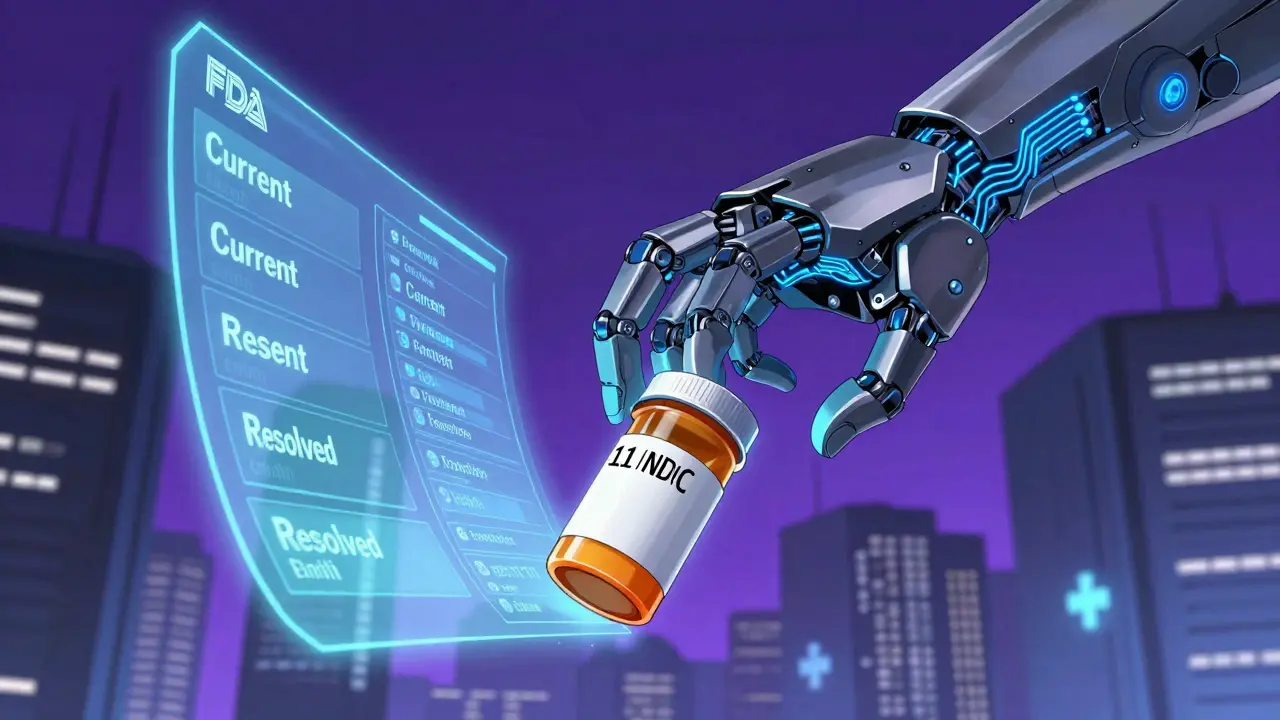
When you or someone you care about needs a specific medication, finding out it’s in short supply can be terrifying. You’re not alone - in 2024, over 290 drugs were listed as in short supply in the U.S., with many of them being essential injectables like insulin, antibiotics, and painkillers. The FDA drug shortage database is the most trusted source to find out if your medication is affected, why, and when it might come back. It’s free, official, and updated daily. But knowing where to look and how to read the data makes all the difference.
What the FDA Drug Shortage Database Actually Shows
The FDA’s database isn’t just a list of drugs that are hard to find. It’s a detailed, government-mandated record of shortages that impact the entire U.S. supply chain. Each entry includes the generic name of the drug, the exact National Drug Code (NDC) - a unique 11-digit number tied to the manufacturer, strength, and packaging - and the company responsible for making it. You’ll also see why the shortage exists. About 68% of shortages are due to manufacturing problems: contaminated batches, equipment failures, or raw material delays. Another 15% are linked to quality control issues, and the rest are from production halts or supply chain breakdowns.
Every entry shows the current status: Current, Resolved, or Discontinued. A Resolved status doesn’t mean shelves are full again - it means supply now meets demand, but restocking can take weeks. Some drugs even have an Extended Use Date, meaning expired stock can still be safely used under FDA guidance. This is critical for life-saving drugs like epinephrine or heparin.
How to Access the Database
You don’t need special access. The main site is www.accessdata.fda.gov/scripts/drugshortages/default.cfm. It works on any browser, even on older phones. But if you’re a healthcare worker or someone who checks this often, the FDA Drug Shortages app is faster. Available on iOS and Android, it lets you search by drug name, active ingredient, or therapeutic category - like "antibiotics" or "diabetes meds." You can turn on push notifications for new shortages in your重点关注 drugs. The app doesn’t require an account to search, but if you want to report a shortage you’ve seen, you’ll need to verify your email.
There’s also a downloadable dataset on data.gov for tech-savvy users, but for most people, the website or app is all you need.
How to Search Effectively
Don’t just search for "insulin." You might get 15 different versions. Instead, find the exact NDC on your prescription bottle or pharmacy label. It looks like this: 0002-8745-01. Enter that into the search bar. If you don’t have the NDC, search by the generic name - like "metformin" or "vancomycin." Then look at the results. Each drug may have multiple NDCs because different companies make it. One might be in short supply while another isn’t. That’s why checking the NDC matters.
Filtering helps too. Since July 2024, you can filter by manufacturer, dosage form (tablet, injection, capsule), and therapeutic category. If you’re looking for a 500mg tablet of amoxicillin, use the filters to hide all the injections or 250mg versions. This cuts down the noise.
Understanding the "Reason for Shortage" Codes
This is where people get stuck. The FDA uses short codes like "MFG" for manufacturing, "QAL" for quality, or "MAT" for raw material. These aren’t plain English. But each one links to a full explanation. Click on the code and you’ll see details like "failure of sterilization process" or "delay in active pharmaceutical ingredient (API) delivery from overseas." If you see "MAT," it often means the problem isn’t with the drug itself - it’s with a chemical made in India or China. That kind of shortage can last months.
Some shortages are temporary. Others are structural. If the reason says "discontinued by manufacturer," that drug may never come back. In those cases, your doctor will need to switch you to an alternative.
What the FDA Database Doesn’t Tell You
Even the best system has gaps. The FDA database doesn’t show regional shortages. A drug might be available in your city but gone in another state. It also doesn’t track compounded medications - those made by specialty pharmacies. And while the FDA requires manufacturers to report shortages, there’s often a 7-10 day lag. Sometimes, your pharmacist knows about a shortage before the FDA updates its site.
That’s why many professionals use two resources: the FDA database for official verification, and the ASHP Drug Shortages site for clinical advice. ASHP gives you alternatives - like which drug can replace a shortage one, or how to adjust dosing. The FDA tells you what’s broken. ASHP tells you how to fix it.
What to Do If Your Drug Is Short
If you find your medication listed as in short supply, don’t panic. First, call your pharmacy. They might have a different NDC that’s still available. If not, ask them to check with other local pharmacies. Many have access to national distribution networks.
If your doctor needs to switch your prescription, make sure they know the exact reason for the shortage. If it’s a manufacturing issue with one brand, another brand of the same drug might be safe. But if the shortage is due to a problem with the active ingredient - like with heparin - then all versions might be affected. In those cases, your doctor may need to choose a completely different class of drug.
Never stop taking a critical medication because it’s hard to find. Work with your care team. The FDA encourages you to report suspected shortages you’ve experienced by emailing [email protected]. Your report helps them catch gaps faster.
Staying Updated Without Checking Every Day
You don’t need to log in daily. The FDA sends free email updates every Tuesday and Friday. Sign up on their website under "Subscribe to Updates." These emails list new shortages, resolved ones, and changes to extended use dates. If you’re on a long-term medication, this is the easiest way to stay informed.
Also, if you use the mobile app, turn on notifications for specific drugs. You’ll get an alert the moment a shortage is added or resolved. That’s how many hospitals and clinics stay ahead of the curve.
Why This Matters Beyond Just Getting Your Prescription
Drug shortages aren’t just an inconvenience. They lead to delayed treatments, increased hospitalizations, and even deaths. In 2023, a delay in heparin availability led to complications in over 300 patients across 12 hospitals, according to a Johns Hopkins study. The FDA database helped track the root cause - a single contaminated batch from one supplier - and allowed the system to pivot before more harm occurred.
But the system still reacts instead of predicting. Only 35% of shortages are reported before patients feel the impact. That’s why the FDA is testing AI models to forecast shortages based on global supply trends, manufacturing delays, and weather disruptions affecting raw material transport. These tools are still in testing, but by 2026, they could cut the lag from days to hours.
Final Tips
- Always check the NDC - not just the drug name.
- Use the FDA app for push alerts on your key medications.
- Pair FDA data with ASHP for clinical alternatives.
- Don’t assume "resolved" means it’s back on shelves - ask your pharmacy.
- Report shortages you see - your input helps improve the system.
- Subscribe to the weekly email updates - it’s free and saves time.
The FDA drug shortage database isn’t perfect, but it’s the most reliable tool we have. It doesn’t fix shortages - but it gives you the information to make smarter, safer choices when they happen.
Is the FDA drug shortage database free to use?
Yes, the FDA drug shortage database is completely free to access through their website or mobile app. No registration is required to search for drugs, and there are no subscription fees. The database is funded by federal appropriations and maintained as a public service.
How often is the FDA drug shortage database updated?
The FDA updates the database daily. New shortages, resolved shortages, and status changes are added as soon as manufacturers report them and the FDA verifies the information. The mobile app and website sync in real time, so you’ll see the latest info as soon as it’s posted.
What’s the difference between FDA and ASHP drug shortage lists?
The FDA database only includes shortages that affect the entire U.S. supply chain, based on strict federal criteria. ASHP includes localized or temporary shortages that may not meet that threshold. ASHP also provides clinical guidance on alternatives and dosing adjustments, while the FDA focuses on official status and manufacturer details. Most healthcare providers use both: FDA for verification, ASHP for action.
Why does the FDA list an NDC number? Can’t I just use the drug name?
The same drug can be made by multiple manufacturers with different packaging, strengths, or delivery methods. Each has a unique NDC. A shortage might affect only one version - say, the 500mg tablet - while the 250mg capsule is still available. Using the NDC ensures you’re checking the exact product you need.
What should I do if my drug is listed as "resolved" but my pharmacy still doesn’t have it?
"Resolved" means the national supply now meets demand, but restocking takes time. Pharmacies order in batches, and distribution networks move slowly. Call your pharmacy to ask when they expect delivery. You can also ask if they can source it from another location or if a different NDC is available. Don’t assume it’s back in stock just because the FDA says it’s resolved.
Can I report a drug shortage I’ve noticed?
Yes. If you’re a patient, pharmacist, or provider and you notice a shortage not listed in the FDA database, you can report it by emailing [email protected]. Include the drug name, NDC, manufacturer, and where you’ve seen the shortage. Your report helps the FDA identify gaps and update the database faster.
Are there any alternatives to the FDA database for checking drug availability?
The FDA database is the only official U.S. government source. Private companies like IQVIA offer paid services with predictive analytics, but they’re expensive and not necessary for most people. For clinical guidance, ASHP’s site is the best free alternative. For real-time pharmacy inventory, your local pharmacist is your most reliable source.
Next Steps if You’re Worried About Your Medication
Start today. Open the FDA Drug Shortages app or visit the website. Search for every medication you take regularly. Note which ones are affected. Talk to your pharmacist - they can help you understand the NDCs on your bottles. If something’s short, don’t wait until you run out. Ask your doctor now about backup options. The goal isn’t to predict every shortage - it’s to be ready when one happens.



Kiranjit Kaur
December 22, 2025 AT 11:01OMG this is LIFE-SAVING info!! 🙌 I’ve been panicking every time my insulin runs low and I can’t find it-now I know exactly where to check. Just used the FDA app and found my NDC was flagged, but another brand was available! Saved my ass. Thank you for sharing this!! 💖
Sai Keerthan Reddy Proddatoori
December 23, 2025 AT 21:57They don’t want you to know this. The FDA is just a puppet. The real reason drugs are short? Big Pharma is hoarding to jack up prices. They let shortages happen on purpose. I saw this in India-same thing. They don’t care if you die. Just buy their overpriced stuff.
Johnnie R. Bailey
December 23, 2025 AT 23:28What’s fascinating to me is how this system reveals the fragility of global supply chains. That ‘MAT’ code? It’s not just ‘raw material’-it’s often a single factory in Gujarat or Shanghai producing 80% of the API for a class of drugs. When that plant shuts down for a week, the entire U.S. insulin supply trembles. We’ve outsourced our medical resilience to places we can’t control, and now we’re paying the price in delayed care and scared patients. This database is a mirror-and it’s ugly.
Tony Du bled
December 24, 2025 AT 16:27Been using the FDA app for a year now. Best thing I ever did. Got a notification last month that my metformin was flagged-called my pharmacy, they had a different NDC in stock. Didn’t even know I needed to check that. Now I do. Simple. Free. No BS.
Art Van Gelder
December 25, 2025 AT 09:28Let me tell you something that keeps me up at night. The FDA database says a drug is ‘resolved’-but that doesn’t mean your local CVS has it. It means the manufacturer shipped a truckload to a distributor in Ohio. That truck might not reach your town for three weeks. And meanwhile, your grandma is skipping doses because she can’t afford to drive 40 miles to the next pharmacy. We treat drug access like a logistics puzzle, not a human right. The database gives us data-but it doesn’t fix the fact that rural America gets left behind while urban centers get priority. And no one talks about that. Not even the experts.
Kathryn Weymouth
December 26, 2025 AT 14:56It’s important to clarify that the FDA’s definition of ‘resolved’ is strictly quantitative: supply meets demand at the national level. It does not account for geographic distribution, pharmacy inventory cycles, or patient-specific access barriers. Therefore, while the database is an indispensable tool, its interpretation must be contextualized by local pharmacy communication and clinical judgment. Misunderstanding this distinction can lead to dangerous assumptions.
Sam Black
December 27, 2025 AT 15:15Love that the FDA app lets you filter by therapeutic class. I’m a nurse in a small clinic-we don’t have time to dig through 20 versions of amoxicillin. Now I just click ‘antibiotics’ > ‘oral’ > ‘500mg’ and boom-only the relevant ones show up. Simple, elegant, and actually useful. Props to whoever built that filter.
Herman Rousseau
December 28, 2025 AT 13:55Just want to say-this is the kind of public service that makes me proud to be American. No ads, no paywall, no corporate spin. Just pure, clean, government data that saves lives. And if you’re not using the email alerts? Start today. Set it up for your top 3 meds. It takes 90 seconds. Do it for your future self.
Vikrant Sura
December 30, 2025 AT 06:18Why are we even talking about this? It’s just drugs. People will figure it out. Or they won’t. The system works fine. Stop making it a drama.
Candy Cotton
December 30, 2025 AT 18:24While I appreciate the intent of this article, it is deeply irresponsible to encourage the general public to rely on a mobile application for critical medical decision-making. The FDA database is a regulatory instrument, not a consumer tool. The proliferation of third-party apps and informal reporting mechanisms undermines the integrity of the federal data collection process. Patients must be directed to official channels only-no exceptions.