
Every year, thousands of people end up in the hospital with liver damage-not from alcohol, not from viruses, but from something they thought was safe: a common painkiller. Acetaminophen is in more than 600 medications, from cold remedies to prescription opioids. And when you take more than one, you might be poisoning your liver without even knowing it.
Why Combination Products Are Dangerous
Acetaminophen, also known as paracetamol, is a powerful pain reliever and fever reducer. It’s harmless when taken as directed. But when it’s mixed with other drugs-like hydrocodone in Vicodin or oxycodone in Percocet-it becomes a silent threat. The problem isn’t the opioid. It’s the acetaminophen hiding in plain sight. Most people don’t realize that Tylenol, Excedrin, Darvocet, and even some cough syrups all contain acetaminophen. If you’re taking a prescription painkiller with acetaminophen and also reach for an OTC cold medicine, you could easily hit 5,000, 6,000, or even 8,000 mg in a single day. The safe limit? 4,000 mg for most adults. Exceed that, and your liver starts to die. The FDA forced manufacturers to cap acetaminophen at 325 mg per tablet in prescription combinations back in 2014. That helped-but it didn’t solve the problem. A 2019 study in Hepatology found that nearly 3 out of 10 cases of acetaminophen-related liver injury still came from combination products. And 7 out of 10 of those were unintentional. People weren’t trying to overdose. They just didn’t know they were doubling up.How Your Liver Gets Damaged
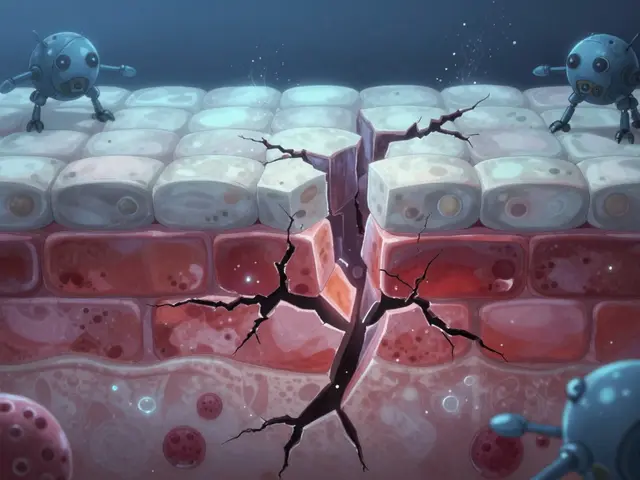
Your liver breaks down acetaminophen using two main pathways: glucuronidation and sulfation. These are safe and efficient-until you take too much. Then a third, dangerous pathway kicks in. It produces a toxic byproduct called NAPQI. Normally, your liver neutralizes NAPQI with glutathione, a natural antioxidant. But when you overdose, glutathione runs out. NAPQI starts attacking liver cells, especially the mitochondria-the energy factories inside your cells. Once mitochondria are damaged, a chain reaction begins. Oxidative stress builds up. Inflammatory signals flare. The JNK protein activates and accelerates the destruction. Within hours, liver enzymes like ALT and AST spike. Within days, acute liver failure can set in. The damage can be irreversible. This isn’t theoretical. A 2022 FDA report showed 1,842 adverse events tied to acetaminophen combination products that year. Many of these were people who took their prescribed painkiller and then grabbed a bottle of Advil Cold & Sinus-both containing acetaminophen. They didn’t read the labels. Or they didn’t understand what they were reading.What You Can Do to Stay Safe
The good news? Almost all of these injuries are preventable. You don’t need to avoid painkillers. You just need to know what you’re taking.- Check every label. Look for “acetaminophen,” “APAP,” or “paracetamol.” If it’s on the list, don’t take another product with it. That includes cold medicine, sleep aids, and even some migraine pills.
- Know your daily limit. 4,000 mg is the max for healthy adults. But if you drink alcohol regularly, have liver disease, or are underweight, cut that to 2,000-3,000 mg. Your body can’t handle the same dose.
- Ask your pharmacist. When you pick up a new prescription, ask: “Does this contain acetaminophen?” Pharmacists are trained to catch these interactions. A 2021 study found pharmacist counseling reduced unintentional overdoses by 41%.
- Use one pharmacy. If you fill all your prescriptions at the same place, the pharmacist can track what you’re taking. They’ll spot duplicates before you do.
What Doctors and Pharmacies Are Doing
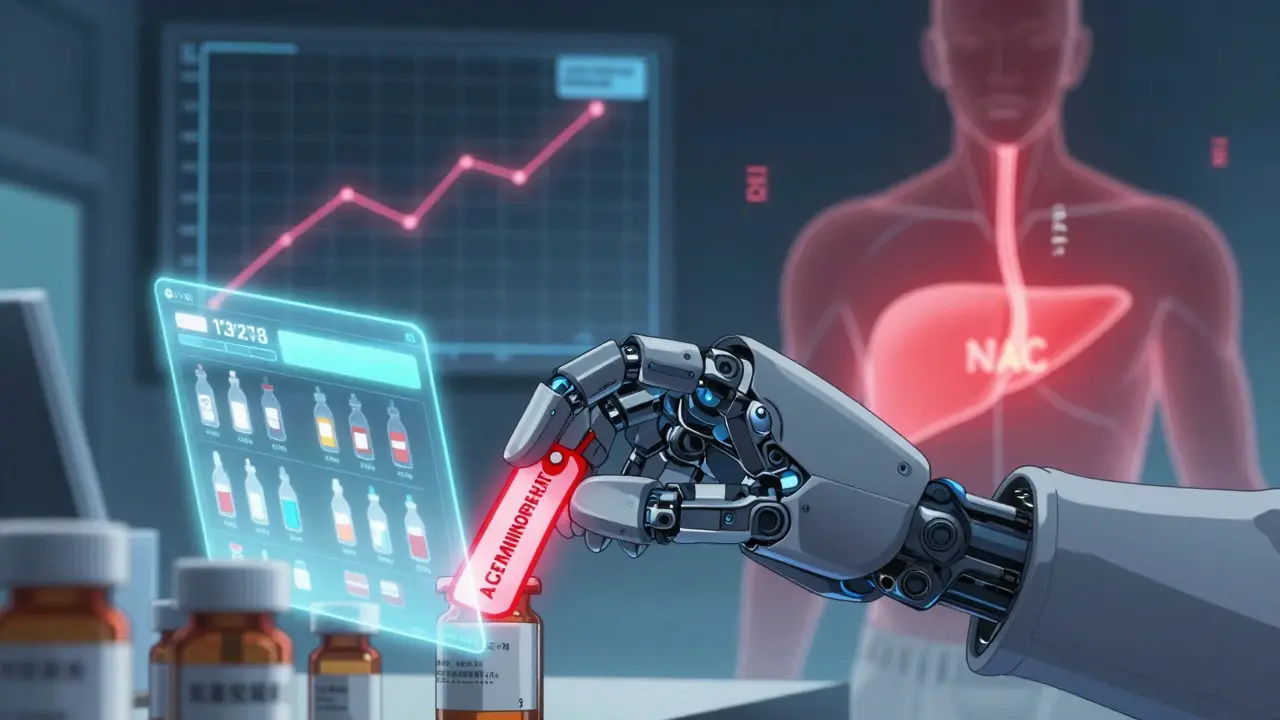
Regulators and healthcare systems are stepping up. Since 2014, prescription labels must highlight acetaminophen content in bold red text. Many OTC bottles now have clearer warnings. Electronic health records (EHRs) in 87% of U.S. clinics now track cumulative acetaminophen doses across all prescriptions. That means if you’re prescribed Vicodin and then get a new script for Tramadol-APAP, your doctor’s system will flash a warning. The CDC now recommends that doctors use EHR alerts to remind patients about acetaminophen limits. But training matters. A Johns Hopkins study found that even after 3 hours of training, only 62% of patients understood the risk right after their appointment. Language barriers make it worse. Spanish-speaking patients are 2.3 times more likely to accidentally overdose, according to a 2020 study. To fix this, the FDA now offers medication guides in 14 languages. The “Know Your Dose” campaign has reached nearly 90 million Americans since 2012. And it’s working. From 2018 to 2022, reported adverse events dropped by 17%.What Happens If You Overdose?
If you think you’ve taken too much acetaminophen-whether it’s one pill too many or a whole bottle-don’t wait. Call poison control or go to the ER immediately. Time is everything. The antidote is N-acetylcysteine, or NAC. It works by restoring glutathione and protecting mitochondria. If you get it within 8 hours of overdose, it can prevent liver failure almost entirely. Even after 12 hours, it still helps. After 48 hours, the benefit drops-but it’s still worth trying. The Rumack-Matthew nomogram is the tool doctors use to decide if you need NAC. It plots your blood acetaminophen level against the time since ingestion. If you’re above the treatment line, you get NAC. No guesswork. In 2021, the FDA approved a new option: fomepizole. It blocks the enzyme that turns acetaminophen into NAPQI. It’s not a replacement for NAC, but when used together-especially in late-presenting cases-it can reduce severe liver injury by 32%. A new extended-release form of NAC, approved in early 2023, is easier to take at home. Instead of a 72-hour IV drip, you can now take pills every 12 hours. Compliance has jumped from 40% to over 80% in early trials.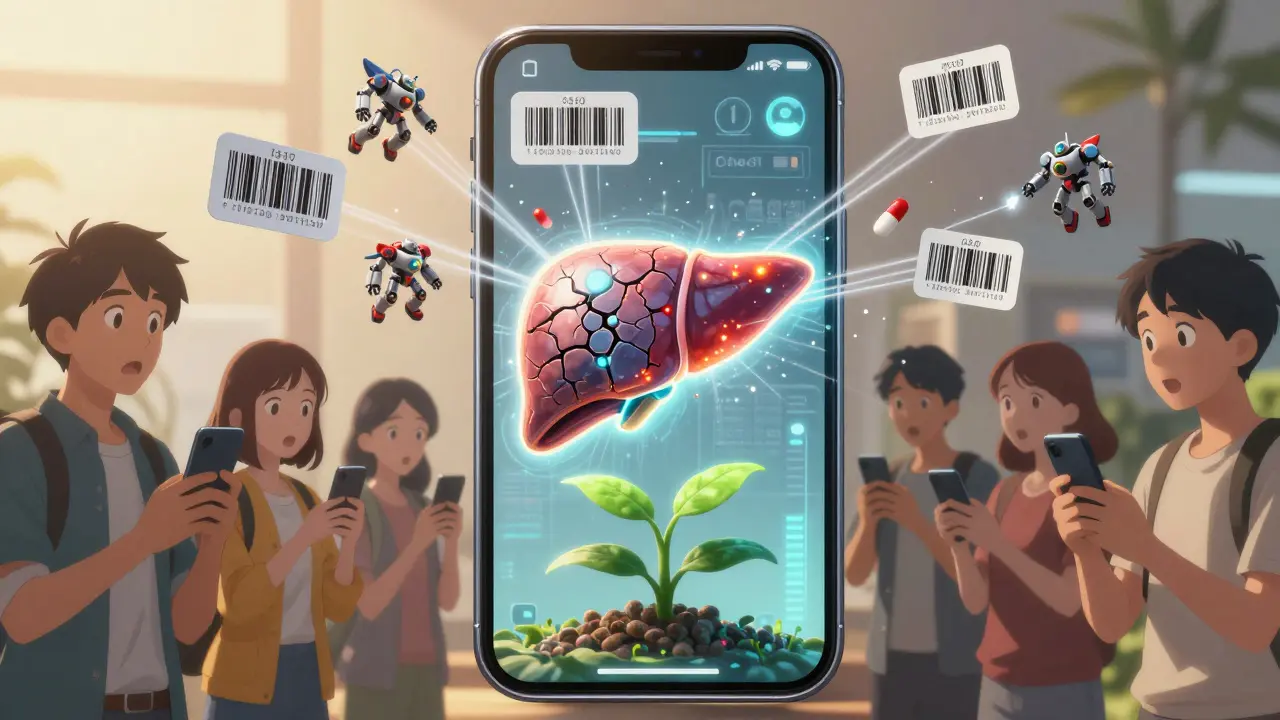
New Tools on the Horizon
Technology is helping too. A smartphone app now in beta testing lets you scan the barcode of any medication. It tells you exactly how much acetaminophen is in it-and adds it up across all your pills. Beta testers got it right 89% of the time across 150 different products. Researchers are also exploring natural compounds like emodin, found in rhubarb, which protected mice from liver damage by activating antioxidant pathways. But these aren’t ready for humans yet. Don’t try to self-treat with supplements. One idea that’s sparked debate: adding protective agents directly into combination pills. Some scientists think it could act as a safety buffer. But experts like Dr. Neil Kaplowitz warn it could create false confidence. If people think the pill protects them, they might take more. Education still wins.What’s Changing in the Market
Prescriptions for opioid-acetaminophen combos have dropped 43% since 2010. That’s partly because of the opioid crisis, but also because doctors are more aware of the liver risks. The OTC acetaminophen market is growing, but so are safety features. Over two-thirds of OTC bottles now have child-resistant caps and dose-tracking designs. The FDA is considering lowering the maximum dose per tablet from 1,000 mg to 650 mg. That would mean you’d need to take three tablets to hit 2,000 mg instead of two. It’s a small change-but it could prevent a lot of mistakes. Meanwhile, lawsuits continue. Over 1,200 have been filed since 2010, with more than $1.2 billion paid out. Manufacturers are being held accountable for unclear labeling and inadequate warnings.Final Advice: Be the Gatekeeper of Your Own Health
You’re not alone if you’ve taken acetaminophen without knowing it was in your medicine. Most people don’t. But now you know. Here’s your action plan:- Write down every medication you take-prescription and OTC.
- Circle every one that says acetaminophen, APAP, or paracetamol.
- Add up the total daily dose. Don’t guess. Check the label.
- If you’re over 3,000 mg, talk to your doctor. Don’t stop your meds-just ask for alternatives.
- Use one pharmacy. Ask questions. Keep a list.
- Set a phone reminder: “Check acetaminophen today.”
Can I take acetaminophen if I drink alcohol?
If you drink alcohol regularly-more than 3 drinks a day-you should limit acetaminophen to no more than 2,000 mg per day. Alcohol depletes glutathione, the liver’s main defense against acetaminophen toxicity. Even one drink with a normal dose can increase your risk. If you have liver disease from alcohol, avoid acetaminophen entirely unless your doctor says otherwise.
Is Tylenol safer than other painkillers?
Tylenol (acetaminophen) is safer for your stomach than NSAIDs like ibuprofen or naproxen. But it’s not safer for your liver. In fact, it’s the leading cause of acute liver failure in the U.S. The danger isn’t the brand-it’s the dose and how many products you’re mixing. A 1,000 mg pill of Tylenol is no different than a 325 mg pill in Vicodin. Both add to your total daily intake.
What are the early signs of acetaminophen liver damage?
There often aren’t any early signs. Nausea, vomiting, and fatigue can appear 12-24 hours after overdose, but many people feel fine. By the time jaundice (yellow skin or eyes) or abdominal pain shows up, damage is already severe. That’s why blood tests are critical. If you suspect an overdose, get your liver enzymes checked-even if you feel okay.
Can I take NAC as a preventive supplement?
No. NAC is only effective as a treatment after an overdose has occurred. Taking it daily as a supplement won’t protect you from acetaminophen toxicity. Your liver makes enough glutathione on its own when you’re not overdosing. Taking extra NAC won’t help-and it could interfere with other medications. Only use NAC under medical supervision after a known or suspected overdose.
Are children at risk from acetaminophen combination products?
Children don’t typically get acetaminophen combination products. These are prescription painkillers meant for adults. But children can accidentally overdose on liquid acetaminophen if the wrong dosage is given. Always use the measuring device that comes with the medicine. Never use a kitchen spoon. For kids, the safe dose is based on weight, not age. Ask your pediatrician for the correct amount.
What should I do if I took too much acetaminophen?
Call Poison Control immediately at 1-800-222-1222 (U.S.) or go to the nearest emergency room. Don’t wait for symptoms. Don’t try to induce vomiting. Bring the medication bottle with you. The sooner you get NAC, the better your chances. Even if it’s been more than 8 hours, treatment can still save your liver.


Josh McEvoy
January 23, 2026 AT 23:10Chloe Hadland
January 24, 2026 AT 18:39Amelia Williams
January 25, 2026 AT 10:13Sharon Biggins
January 26, 2026 AT 03:50John McGuirk
January 27, 2026 AT 05:01Michael Camilleri
January 27, 2026 AT 18:45lorraine england
January 28, 2026 AT 14:55Kevin Waters
January 29, 2026 AT 00:23Karen Conlin
January 30, 2026 AT 18:30Darren Links
February 1, 2026 AT 02:19